
Habits, Not Hacks: Stories and Strategies for Grad School That Stick
Our goal is to infuse the grad school conversation with emotional intelligence, resilience, and sustainable success - exactly what many students crave but often struggle to articulate. This story-driven, reflective series tailored for the unique challenges of academic life. Through short essays, mini-memoirs, and hard-earned lessons, we spotlight small but meaningful habits that make academic life more livable and less overwhelming.
Each habit also comes with a companion PI/Supervisor Edition, because sustainable success in grad school isn’t a solo effort.
All names and scenarios are fictional or composite. Any resemblance to real people is coincidental. Stories are crafted to illustrate common experiences in research training.
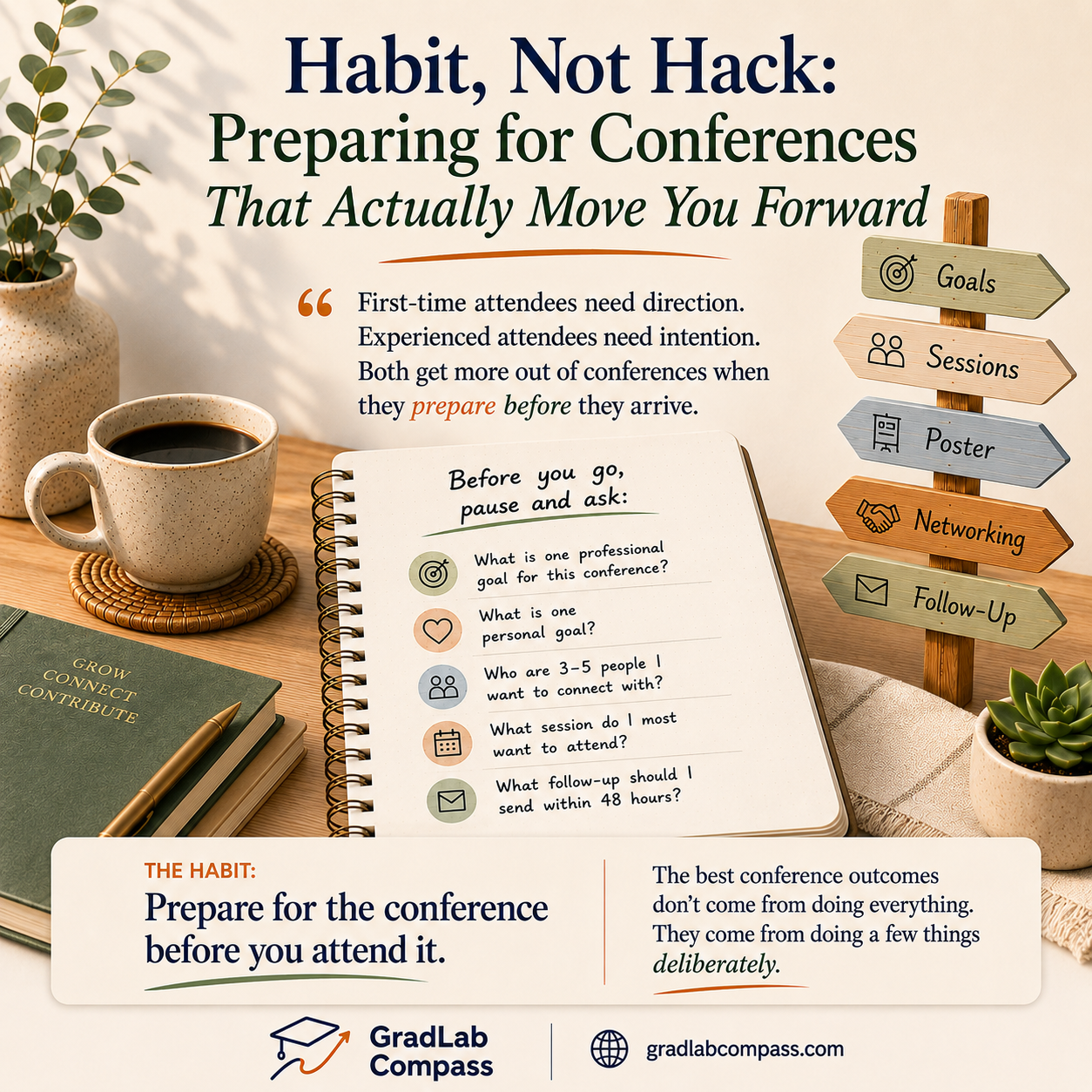
Habit, Not Hack: Preparing For a Conference (Trainee)
Two researchers, one conference — only one came home with something that lasted. The difference wasn't confidence. It was preparation.
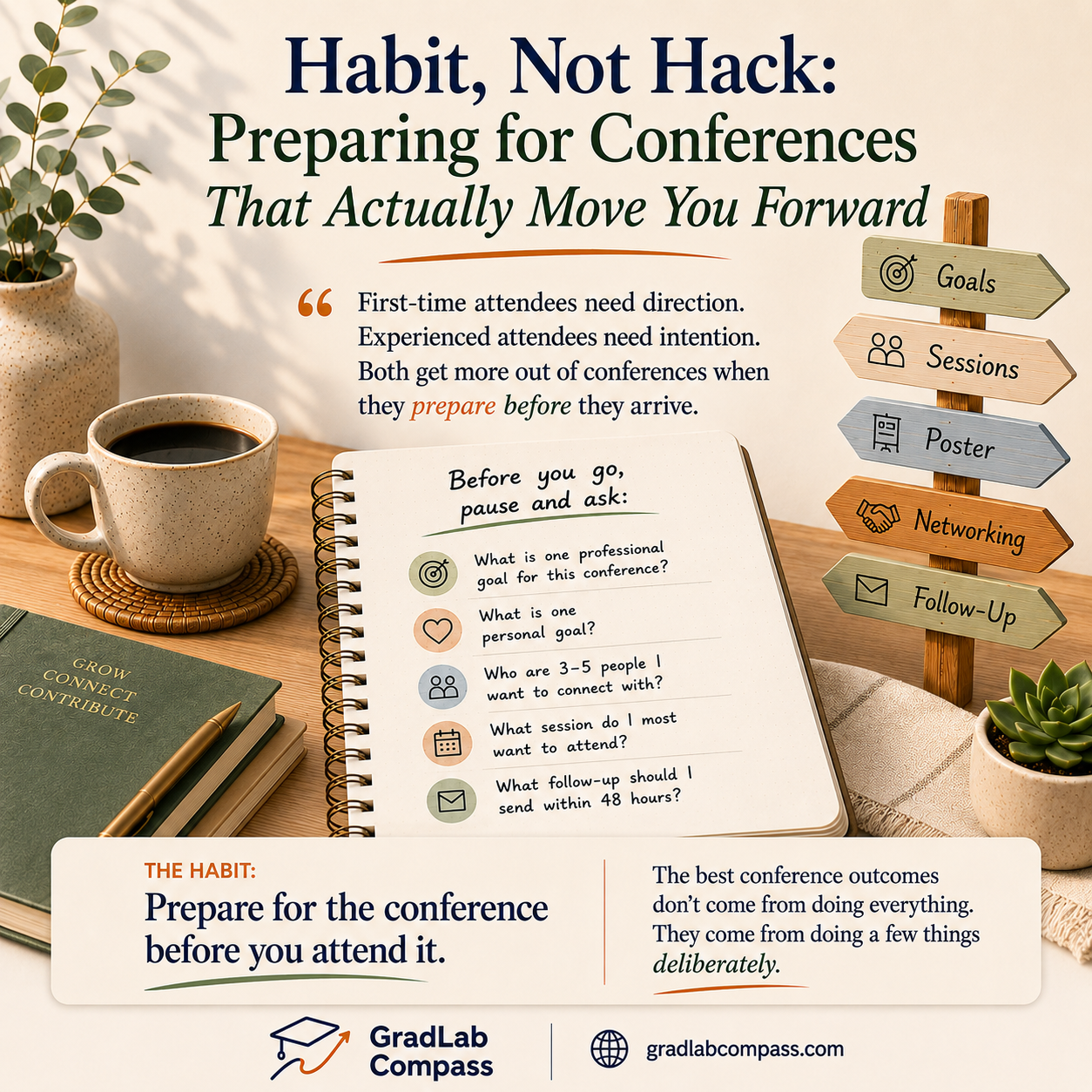
Habit, Not Hack: Preparing For a Conference (Mentor)
One trainee was told to "have fun." The other got fifteen minutes, three names, and one introduction. Conference skills are mentored skills — most labs treat them as instincts.
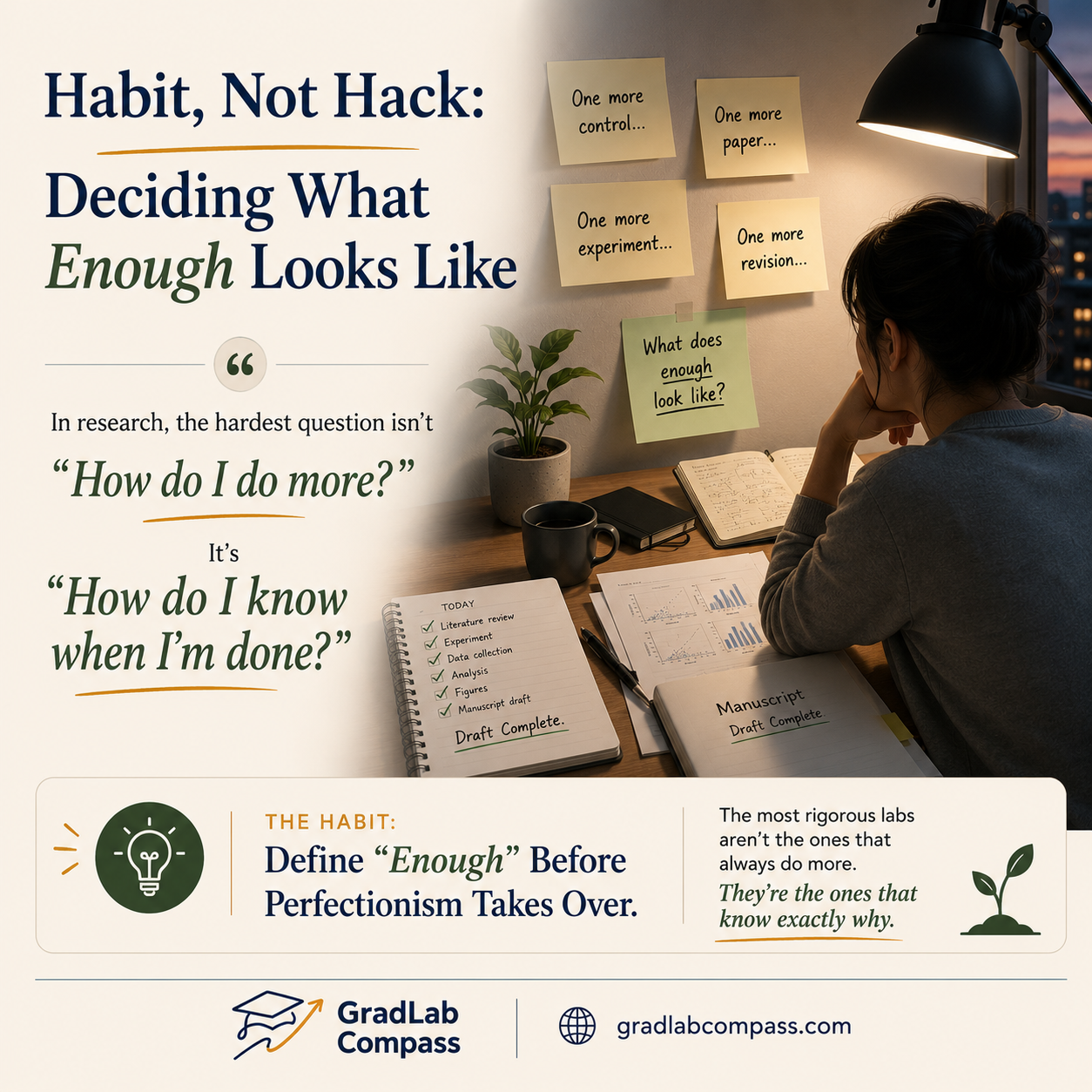
Habit, Not Hack: Deciding What Enough Looks Like (Trainee)
In research, the hardest question isn't "how do I do more?" It's "how do I know when I'm done? Perfectionism in research isn't always a personality trait. Sometimes it's a systems failure — nobody defined what done looks like, so done never arrives. The researchers who finish things aren't always the ones who care less. They're the ones who care enough to be precise about what they're aiming for. Define the line. Reach it. Then move.
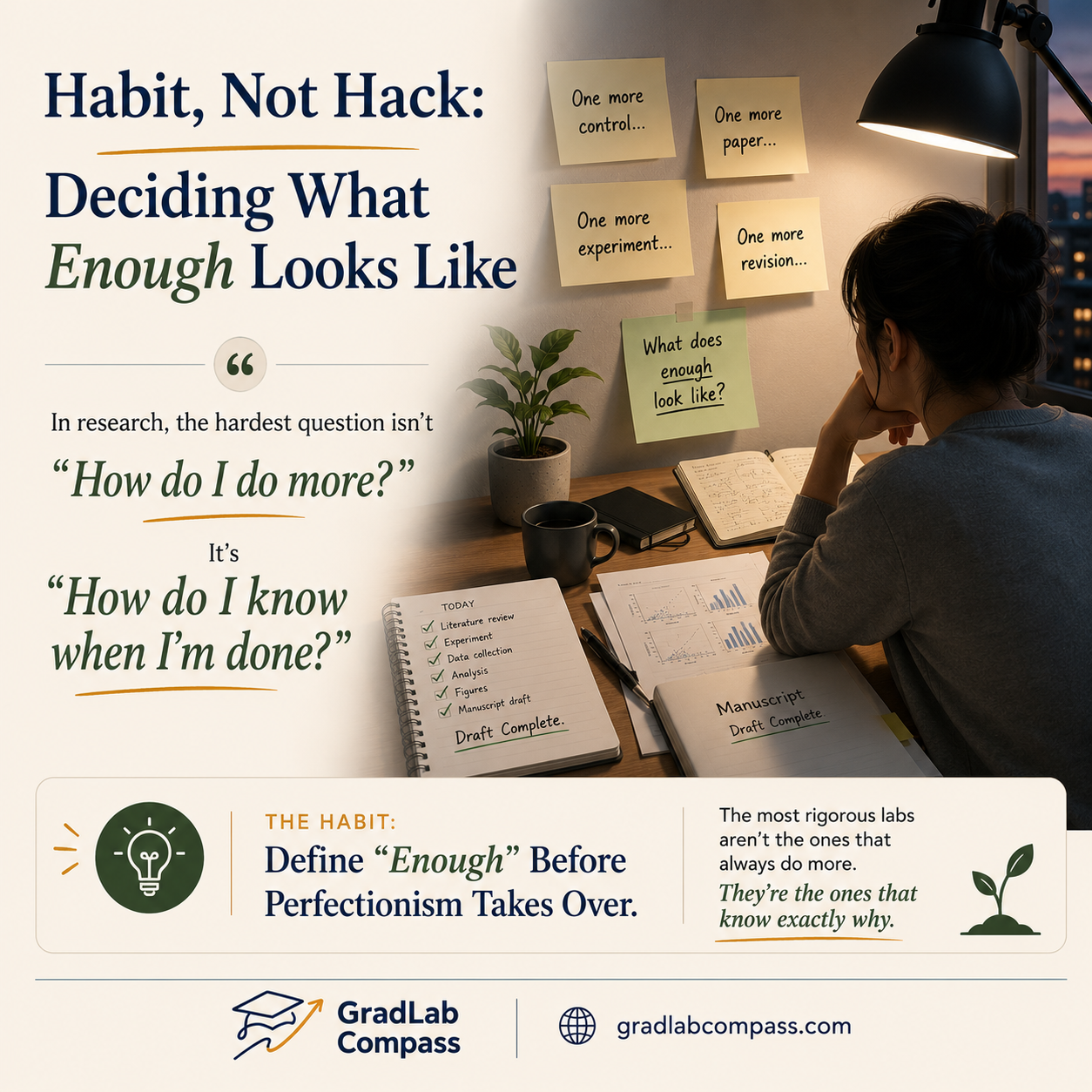
Habit, Not Hack: Helping Trainees Decide What Enough Looks Like (Mentor)
The most rigorous labs aren't the ones that always do more. They're the ones that know exactly why. Mentors who never define "done" don't create rigor — they create endless work. When trainees can't tell the difference between a must-have and a nice-to-have, they don't know when they're allowed to stop. And a trainee who can't stop isn't being thorough. They're just waiting for permission. Clarity about enough doesn't lower standards. It protects them.
Habit, Not Hack: Nurturing Strengths and Accepting Weaknesses (Trainee)
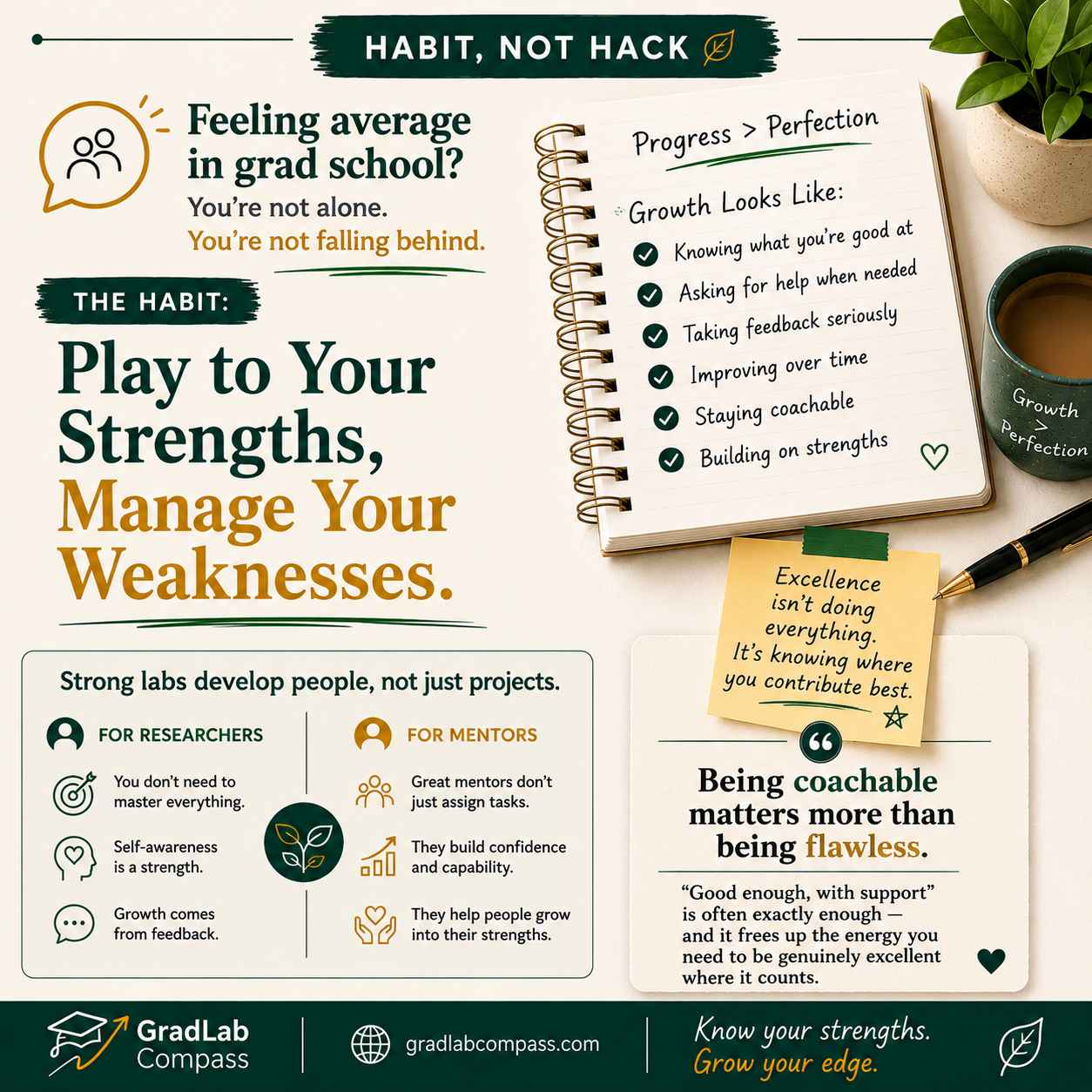
Feeling average in grad school? You’re not alone and you’re not falling behind. You don’t need to master everything to succeed in grad school, you just need to know what you’re great at and stay open to growth. Learn why being coachable matters more than being flawless, and how to turn self-awareness into your most powerful academic advantage.
Habit, Not Hack: Nurturing Strengths and Accepting Weaknesses (Mentor)
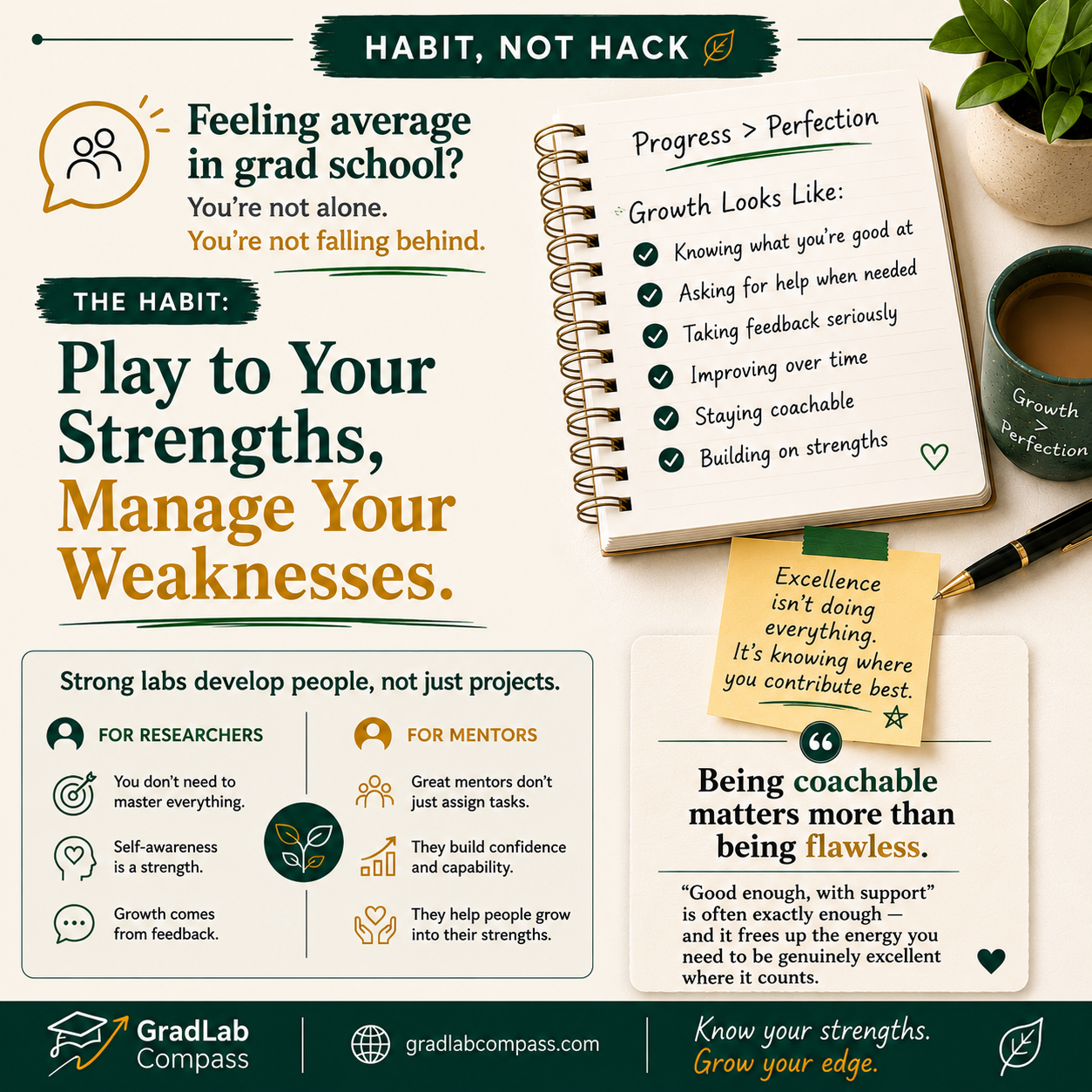
Great mentors don’t just assign tasks, they develop people. Learn how to lead with strengths, coach through challenges, and support real growth in your trainees. Build a lab culture where researchers thrive, not just produce.
Habit, Not Hack: Make Group Meetings Matter (Trainee)
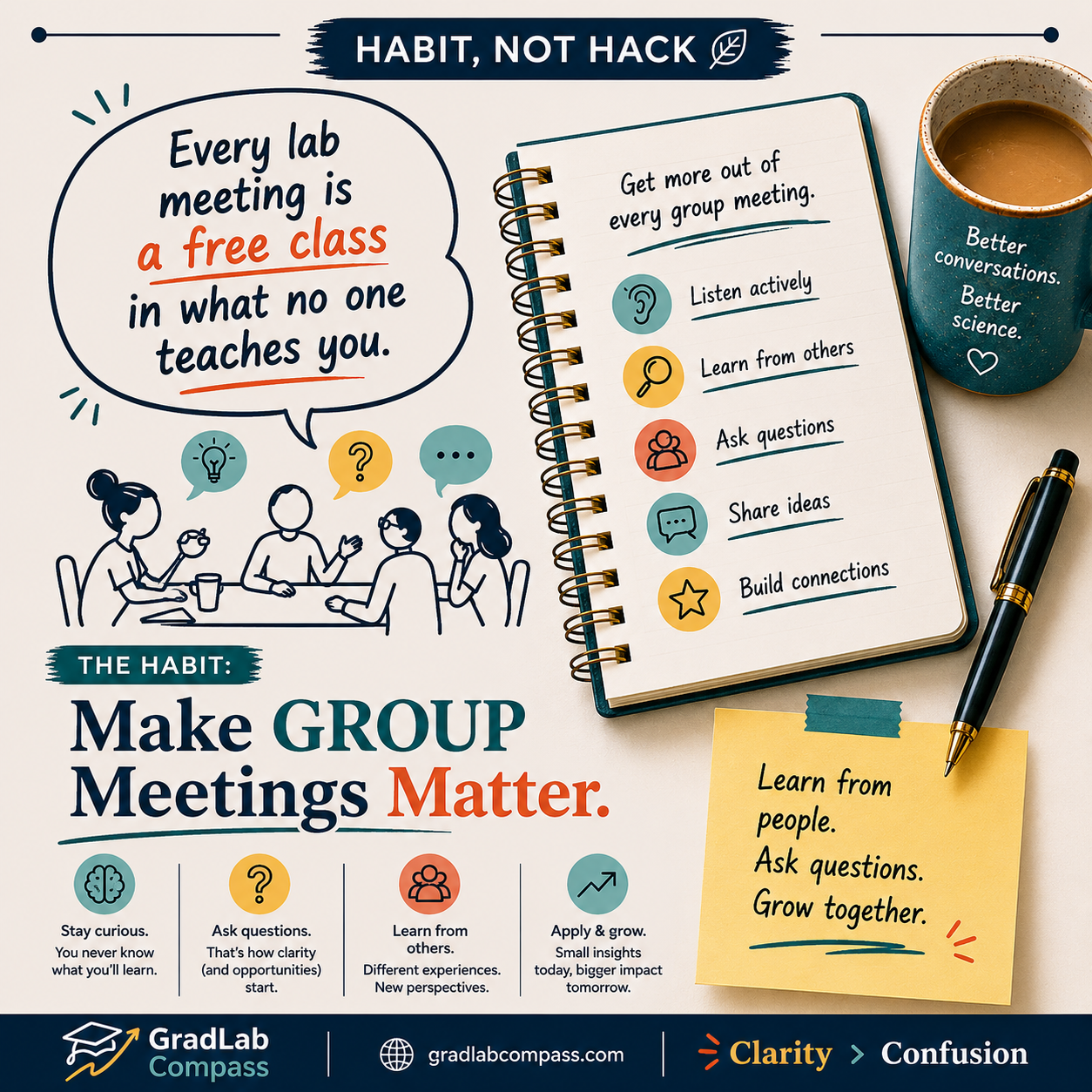
Turn passive lab meetings into growth sessions: actionable tips for grad students to prepare, engage, and thrive in every lab meeting.
Habit, Not Hack: Make Group Meetings Matter (Mentor and Audience)
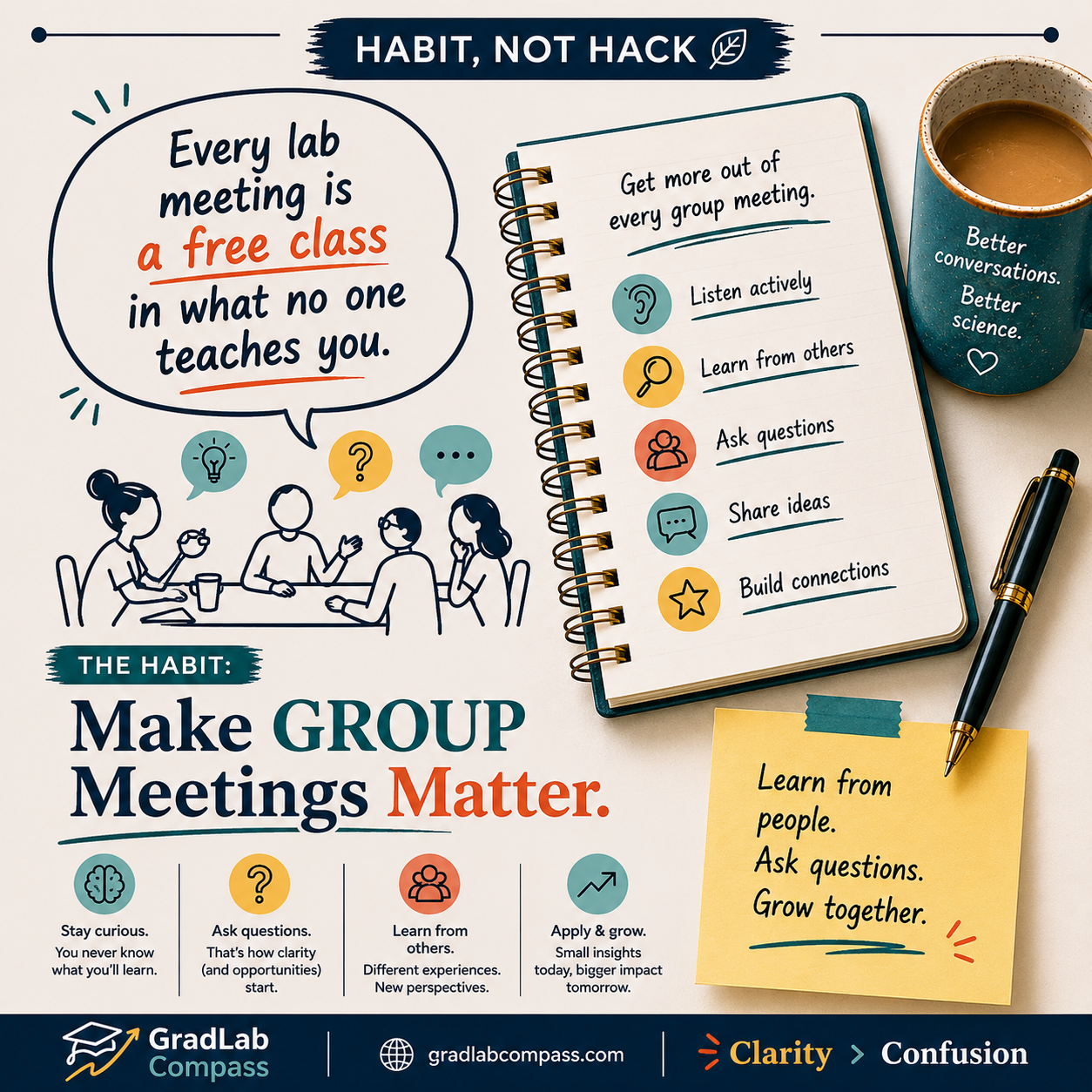
Make lab meetings matter: actionable habits for grad students and PIs to prepare, engage, and build a culture of scientific growth.