
Habits, Not Hacks: Stories and Strategies for Grad School That Stick
Our goal is to infuse the grad school conversation with emotional intelligence, resilience, and sustainable success - exactly what many students crave but often struggle to articulate. This story-driven, reflective series tailored for the unique challenges of academic life. Through short essays, mini-memoirs, and hard-earned lessons, we spotlight small but meaningful habits that make academic life more livable and less overwhelming.
Each habit also comes with a companion PI/Supervisor Edition, because sustainable success in grad school isn’t a solo effort.
All names and scenarios are fictional or composite. Any resemblance to real people is coincidental. Stories are crafted to illustrate common experiences in research training.
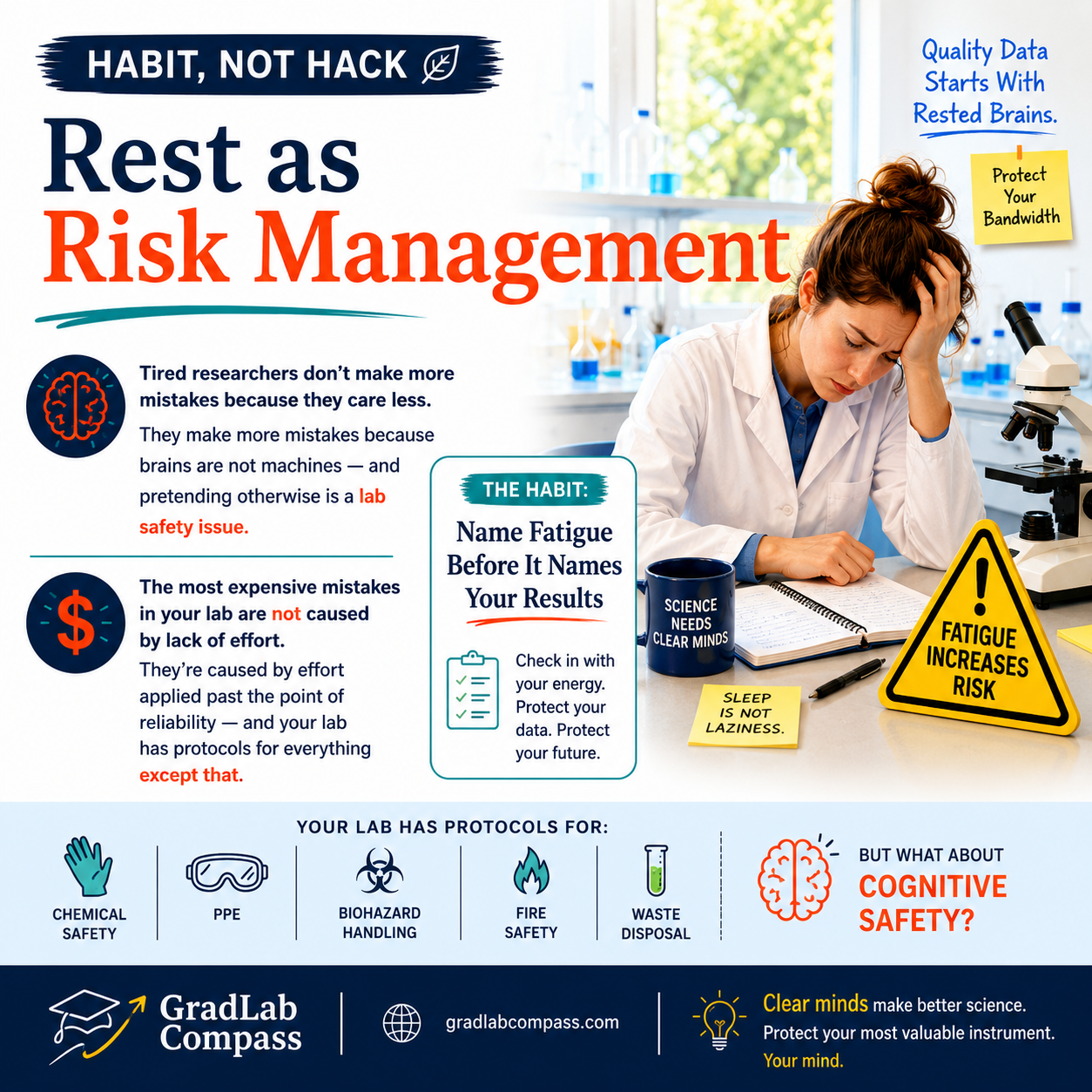
Habit, Not Hack: Rest as Risk Management (Trainee)
The most expensive mistakes in research are not made by researchers who didn't care enough. They're made by researchers who cared too much to stop — who pushed past the point of reliability in the name of commitment and produced work that had to be done again.
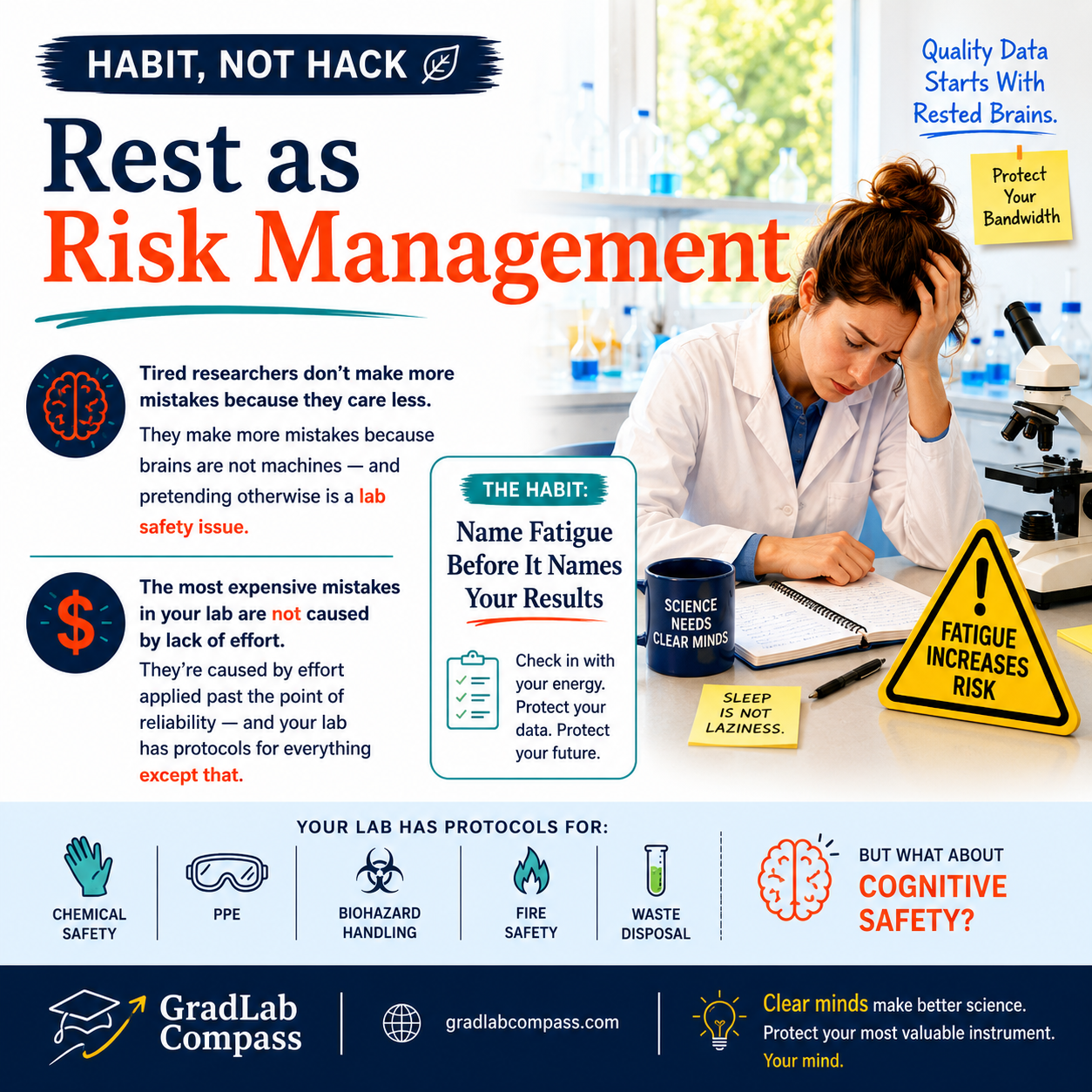
Habit, Not Hack: Rest as Risk Management (Mentor)
Your lab has protocols for uncalibrated equipment, expired reagents, and failed controls. But the most expensive mistakes aren't coming from any of those. They're coming from exhausted researchers who cared too much to stop — and a lab culture that rewarded them for it.
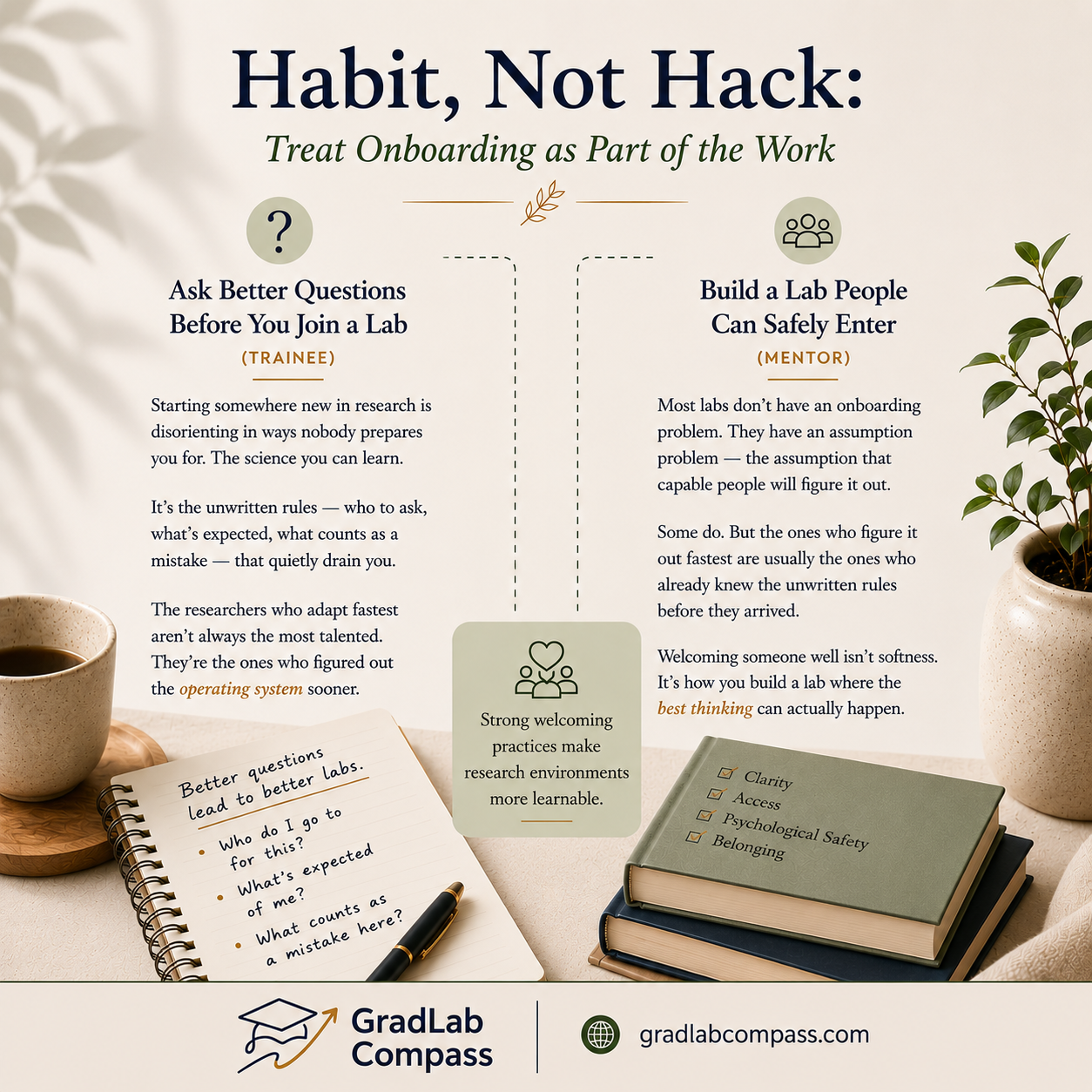
Habit, Not Hack: Ask Better Questions Before You Join a Lab (Trainee)
Starting somewhere new in research is disorienting in ways nobody prepares you for. The science you can learn. It's the unwritten rules — who to ask, what's expected, what counts as a mistake — that quietly drain you. The researchers who adapt fastest aren't always the most talented. They're the ones who figured out the operating system sooner.
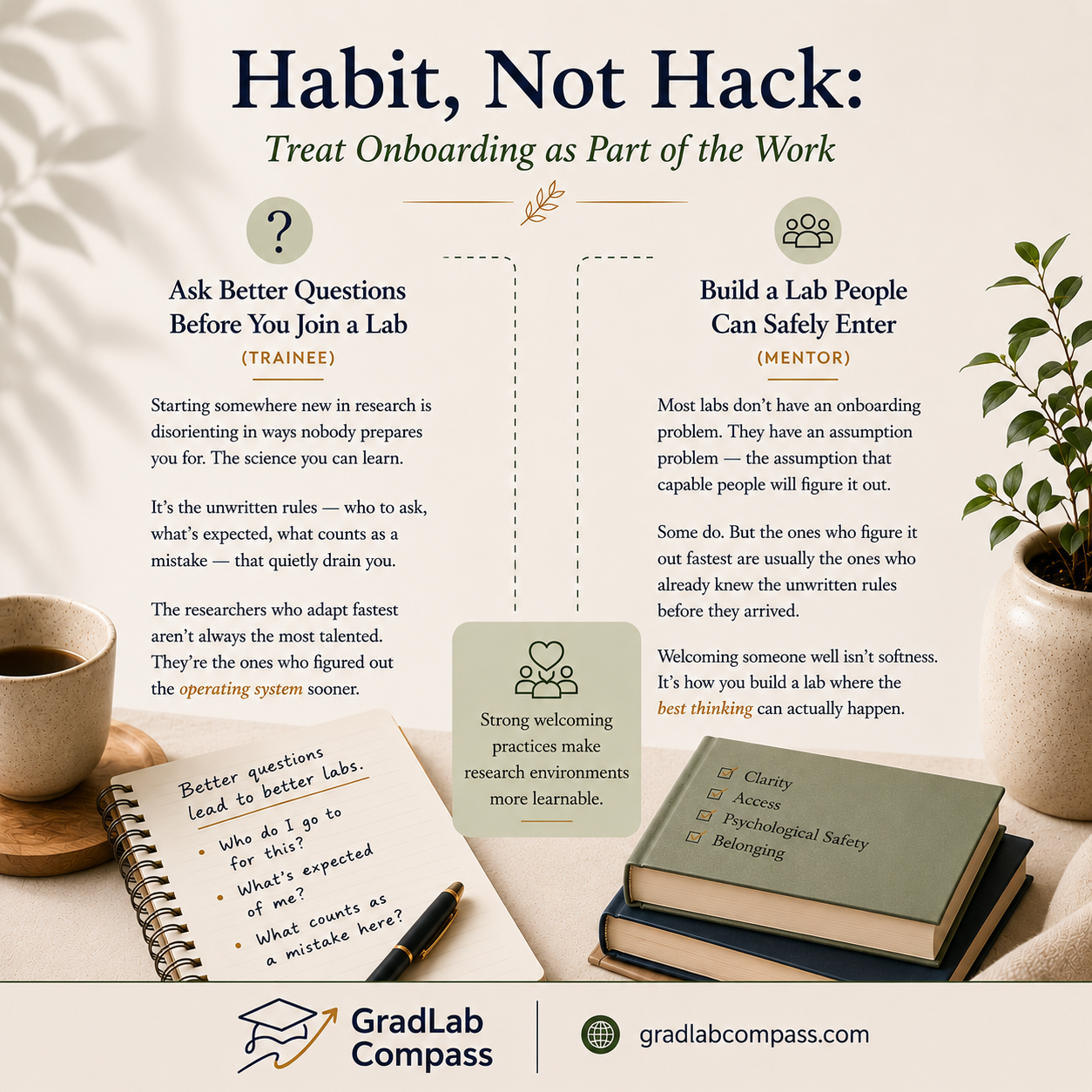
Habit, Not Hack: Build a Lab People Can Safely Enter (Mentor)
Most labs don't have an onboarding problem. They have an assumption problem — the assumption that capable people will figure it out. Some do. But the ones who figure it out fastest are usually the ones who already knew the unwritten rules before they arrived. Welcoming someone well isn't softness. It's how you build a lab where the best thinking can actually happen.
Habit, Not Hack: Following Instructions (Trainee)
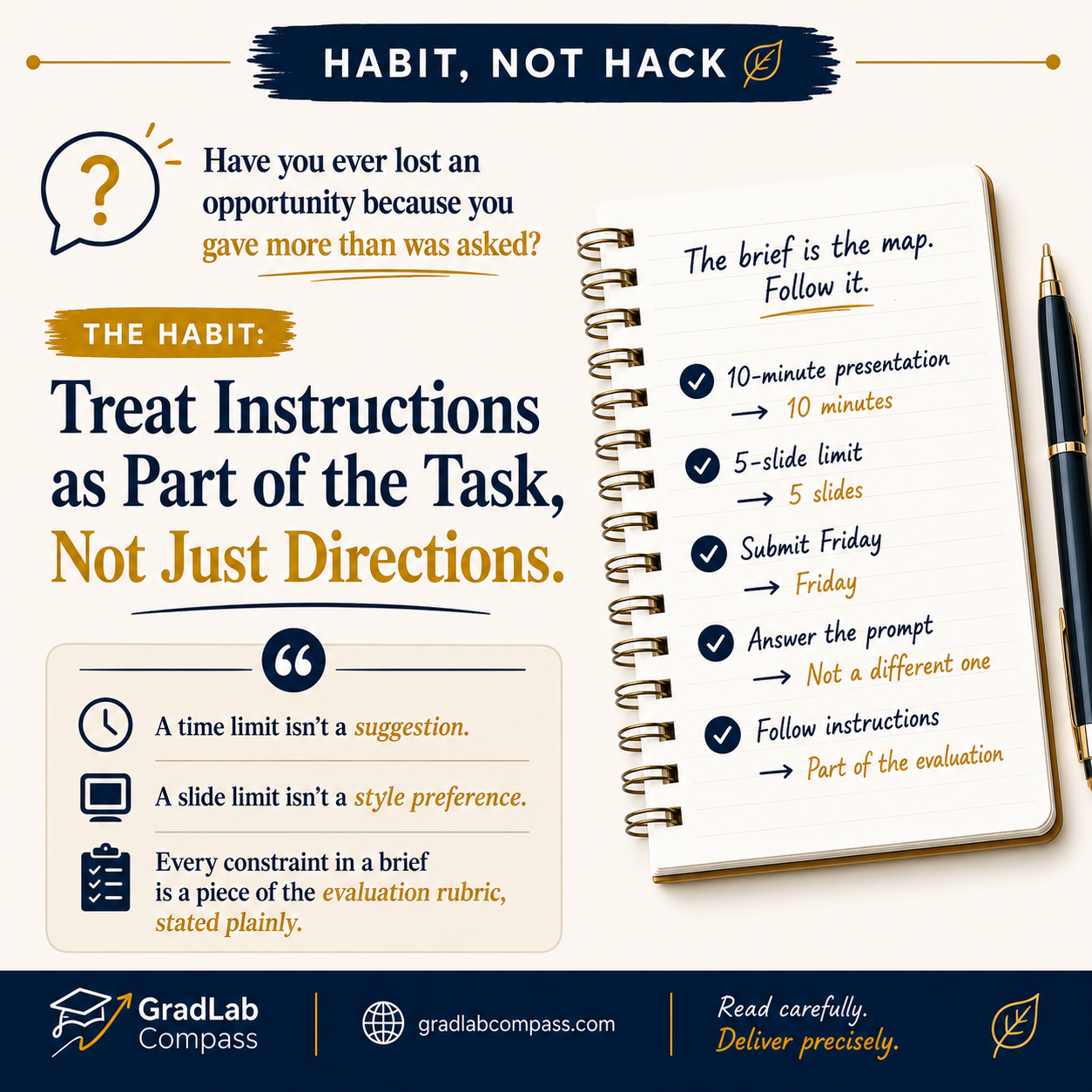
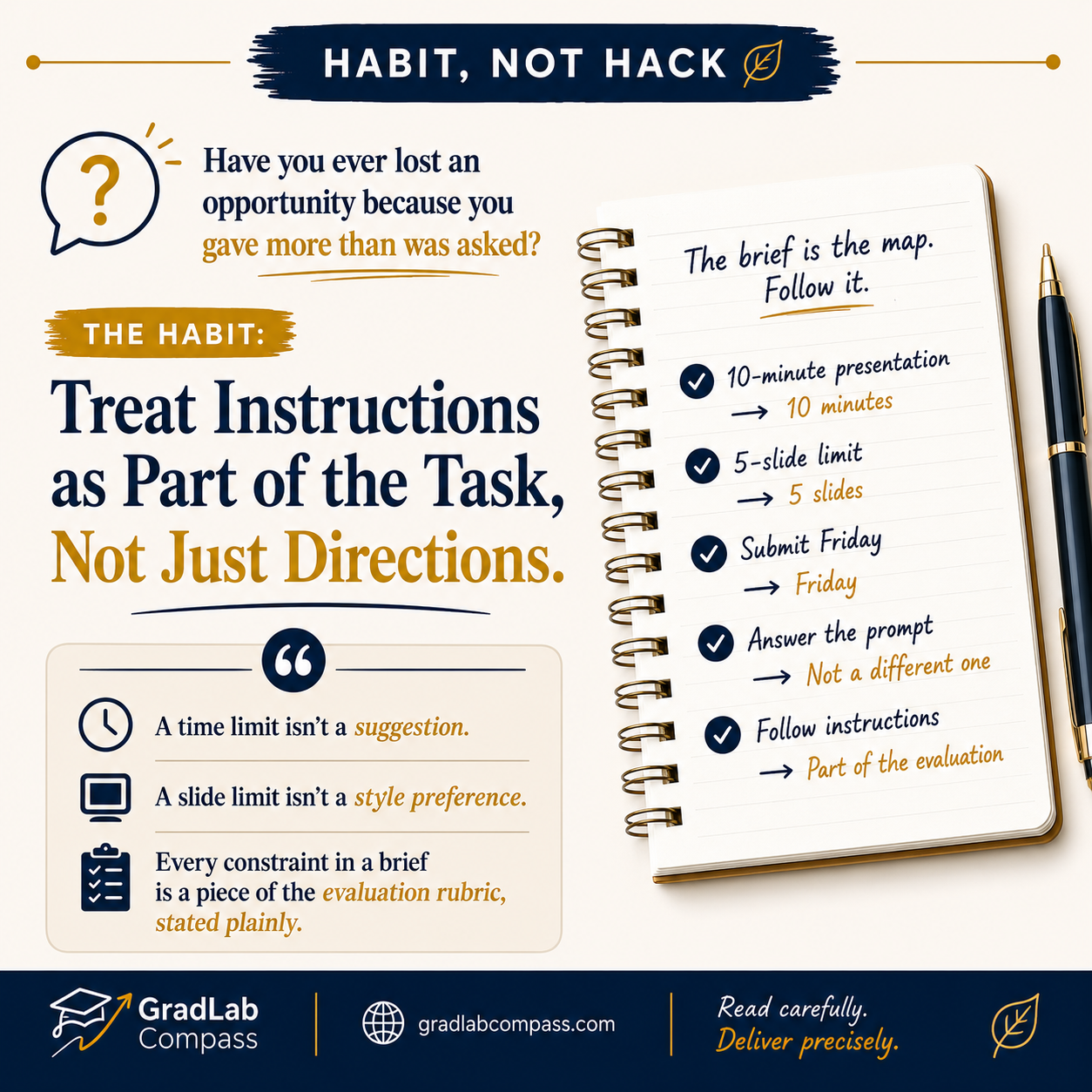
Researchers are trained for years to over-deliver — more controls, more data, more thoroughness. That instinct is valuable in most contexts. In evaluative settings, it becomes a liability. A time limit isn't a suggestion. A slide limit isn't a style preference. Every constraint in a brief is a piece of the evaluation rubric, stated plainly.
Habit, Not Hack: Following Instructions (Mentor)
Mentors spend years rewarding over-delivery — more controls, more slides, more thoroughness. Then they sit on hiring committees wondering why strong candidates can't follow a brief. The skill was never taught explicitly because it was assumed to be obvious. It isn't. And the interview room is a bad place to find that out.
Habit, Not Hack: Estimating Time Honestly (Trainee)
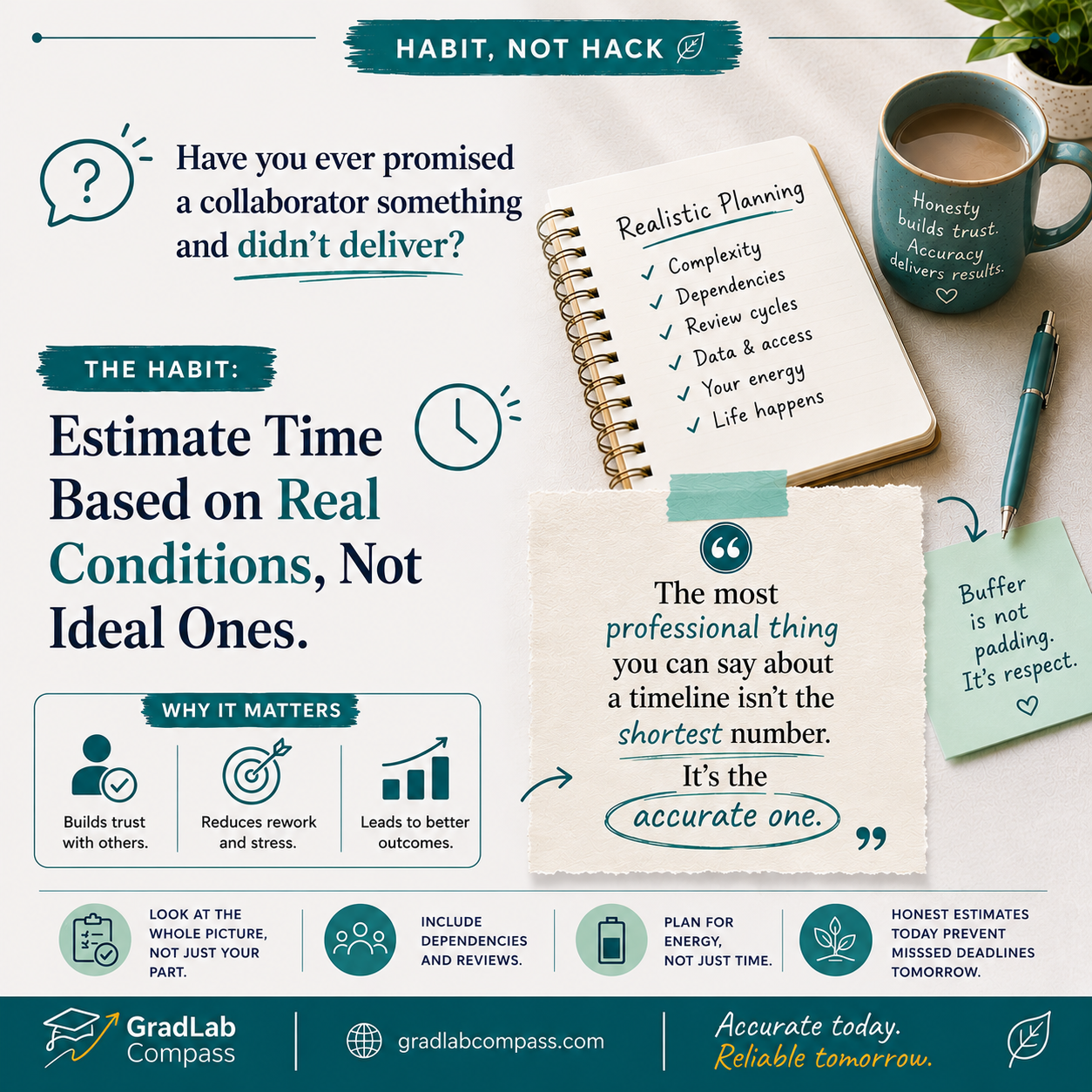
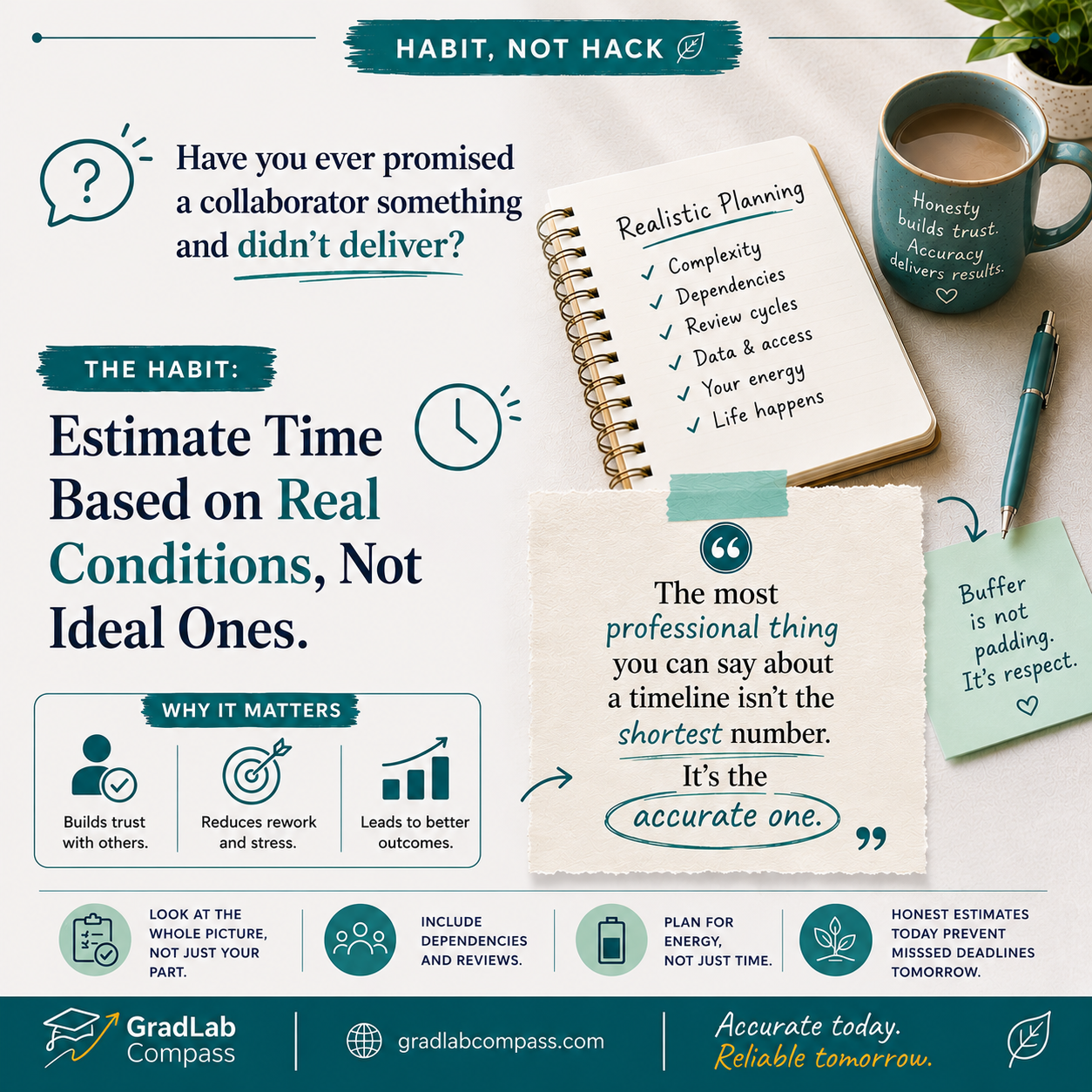
Researchers learn early that confident estimates signal competence. What takes longer to learn is that optimistic timelines aren't confident — they're borrowed time, paid back slowly in the currency of credibility. The accurate number feels risky in the moment. The inaccurate one is what actually costs you.
Habit, Not Hack: Estimating Time Honestly (Mentor)
If you have been rewarding short estimates and questioning conservative ones, you haven't built a lab with a planning problem. You've built a lab where honest estimation feels risky. Your trainees aren't giving you optimistic timelines because they can't estimate. They're giving them to you because they learned that's what you want.
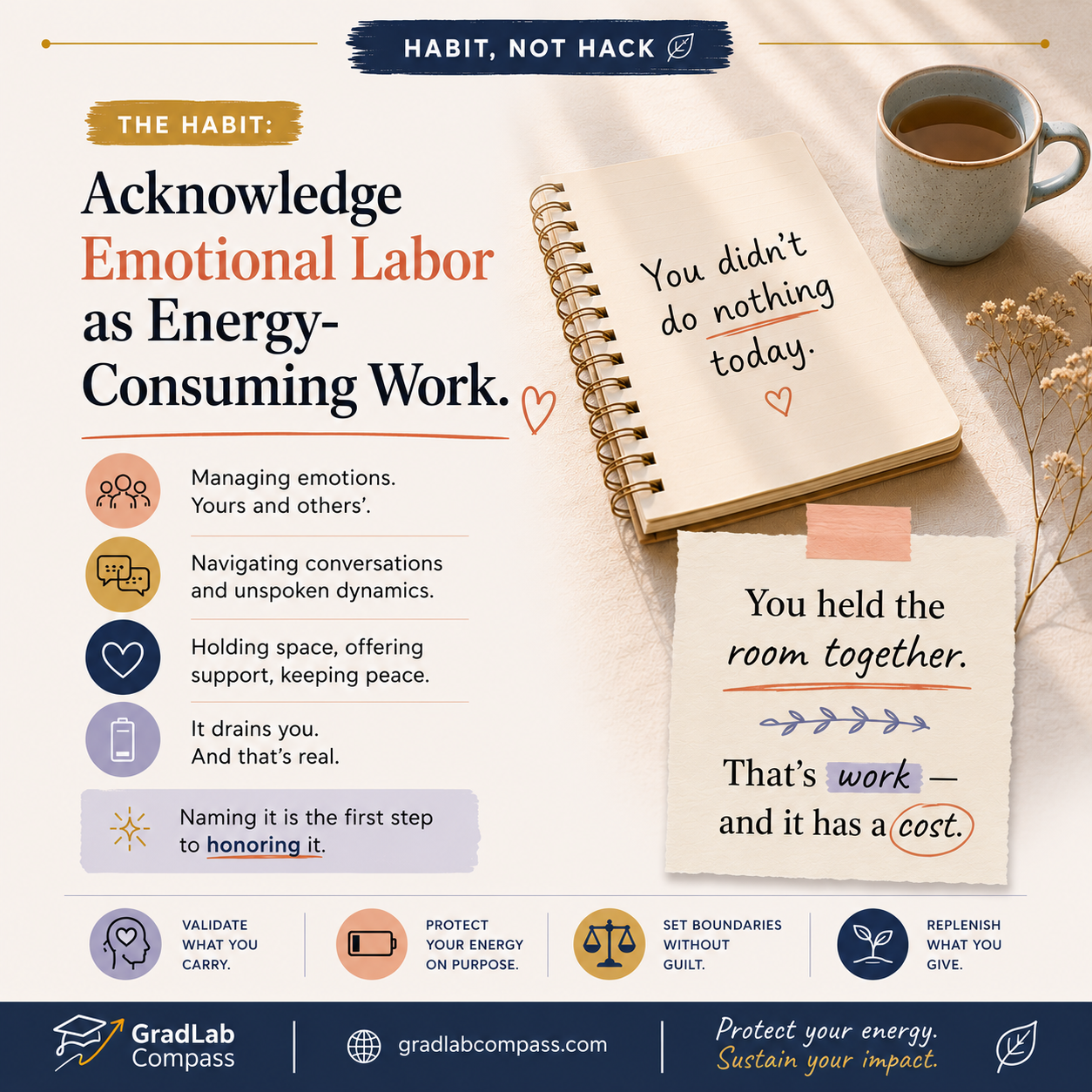
Habit, Not Hack: Naming Emotional Labor (Trainee)
Emotional labor in research doesn't show up on a progress report. It flows toward the people who are best at it, most willing to do it, or least able to decline it — and it draws from the same reserves as everything else. The researchers who sustain themselves longest aren't the ones who stop caring. They're the ones who stopped treating their emotional capacity as a free resource.
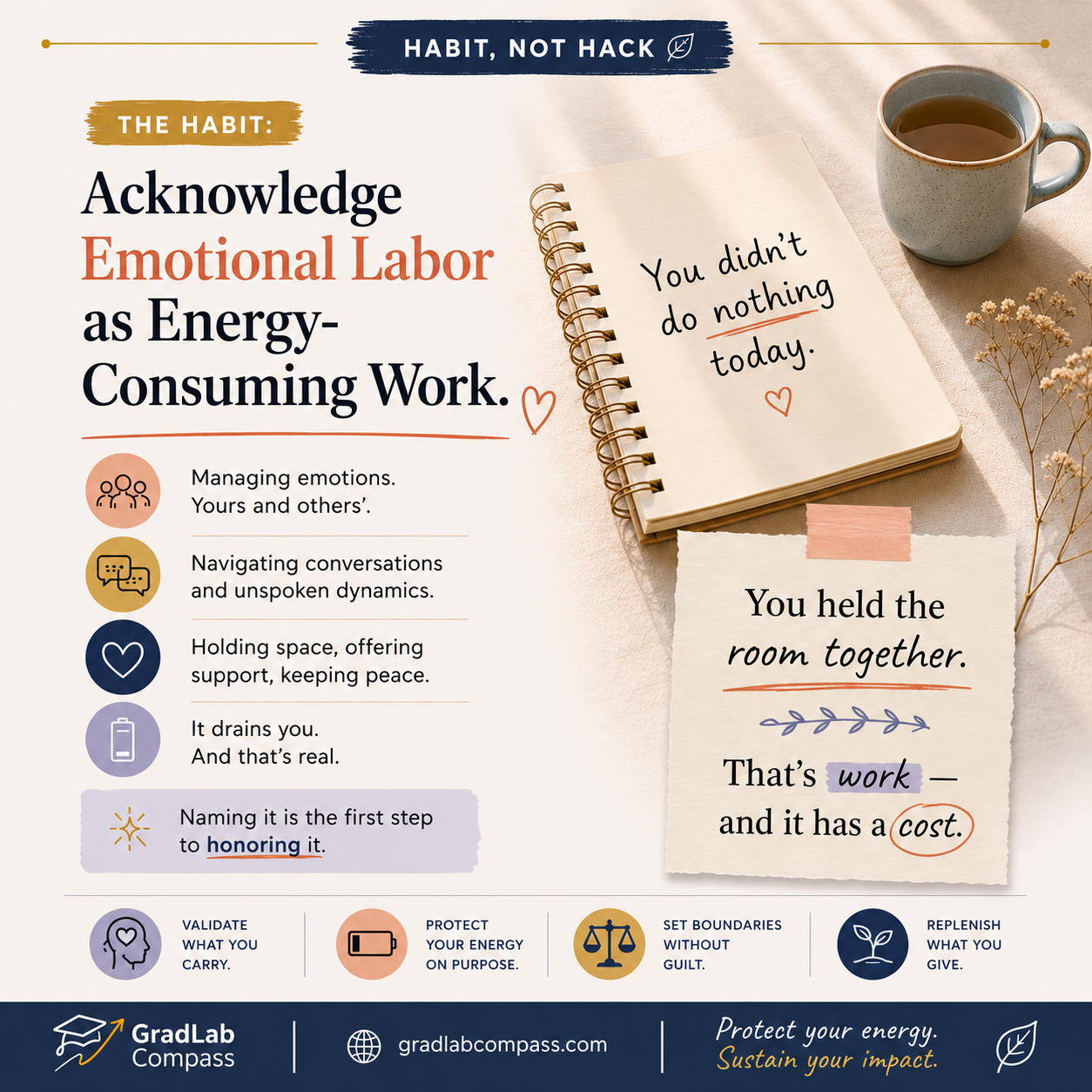
Habit, Not Hack: Naming Emotional Labor (Mentor)
Emotional labor in labs doesn't distribute itself evenly. It flows toward whoever has the most empathy, the most patience, or the least ability to decline — and because it's never named as work, it's never managed as work. Gratitude without action is just acknowledgment of a system you're choosing not to change.
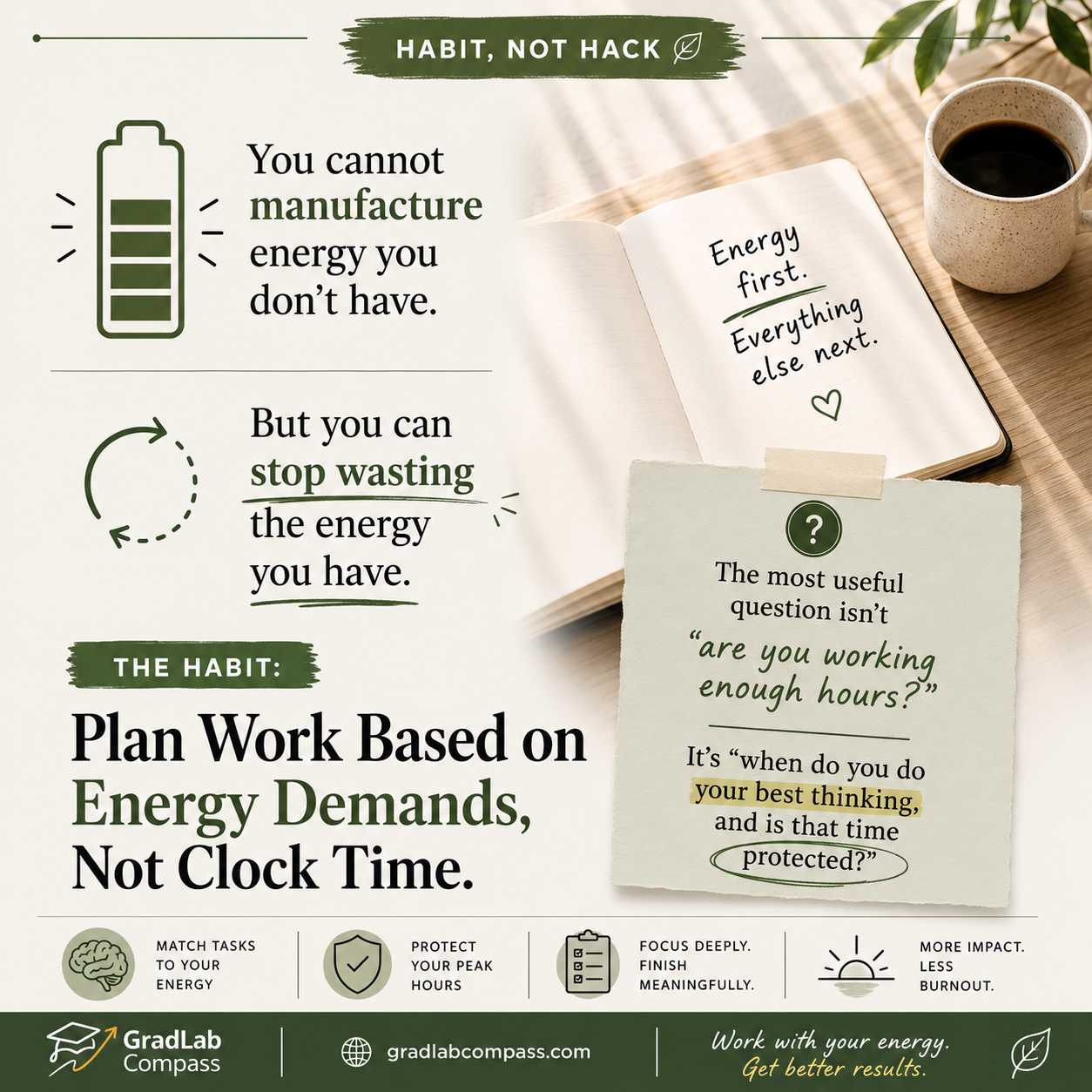
Habit, Not Hack: Design work around energy (Trainee)
The problem isn't that you're not working hard enough. It's that you're doing the hardest work at the worst possible time. Researchers are trained to measure effort in hours. But not all hours are the same, and not all work is the same — and pretending otherwise doesn't make you more productive. It just makes you more tired. You cannot manufacture energy you don't have. But you can stop wasting the energy you do. That's not a hack. That's a habit.
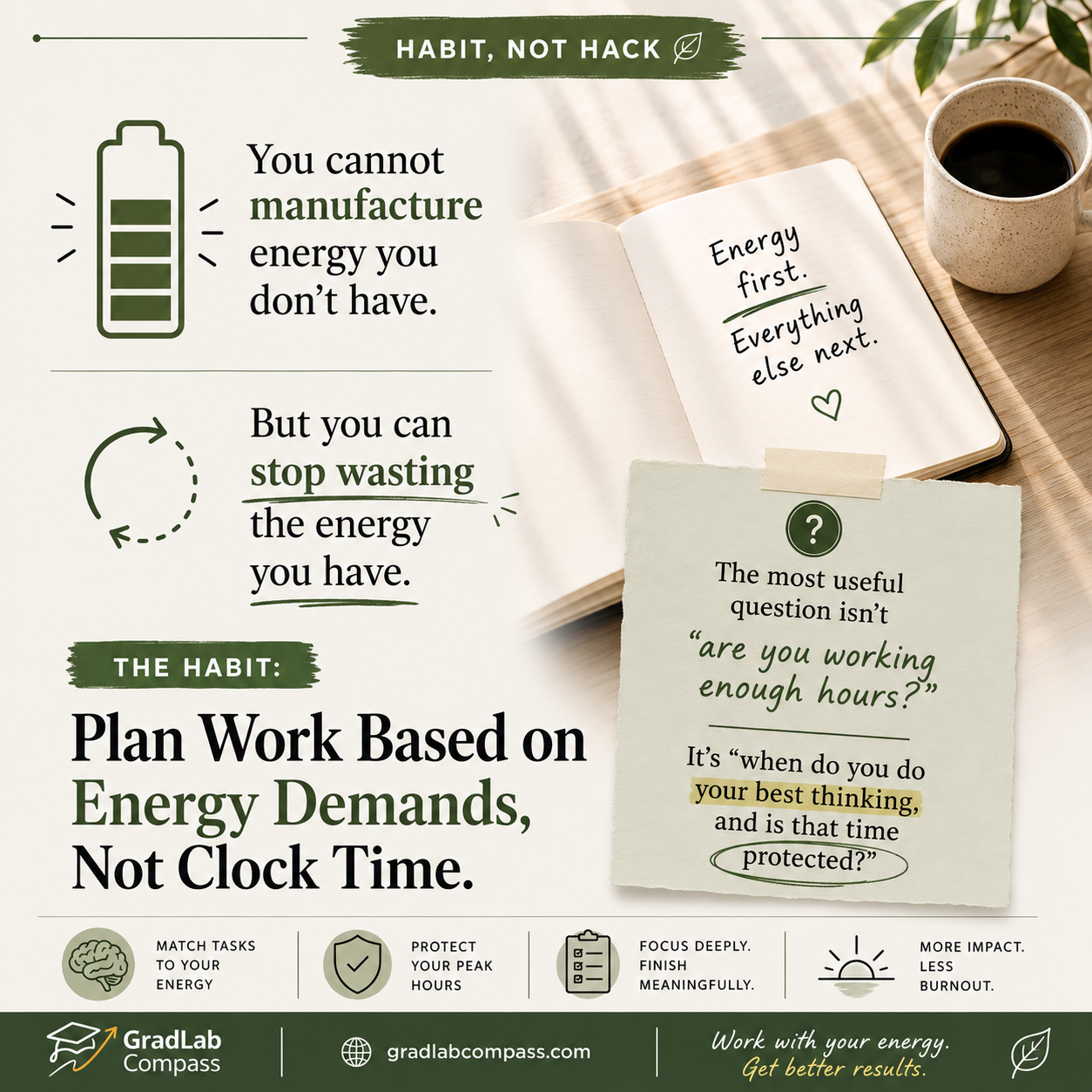
Habit, Not Hack: Design work around energy (Mentor)
The most rigorous labs aren't the ones that always do more. They're the ones that know exactly why. Mentors who never define "done" don't create rigor — they create endless work. When trainees can't tell the difference between a must-have and a nice-to-have, they don't know when they're allowed to stop. And a trainee who can't stop isn't being thorough. They're just waiting for permission. Clarity about enough doesn't lower standards. It protects them.