
Habits, Not Hacks: Stories and Strategies for Grad School That Stick
Our goal is to infuse the grad school conversation with emotional intelligence, resilience, and sustainable success - exactly what many students crave but often struggle to articulate. This story-driven, reflective series tailored for the unique challenges of academic life. Through short essays, mini-memoirs, and hard-earned lessons, we spotlight small but meaningful habits that make academic life more livable and less overwhelming.
Each habit also comes with a companion PI/Supervisor Edition, because sustainable success in grad school isn’t a solo effort.
All names and scenarios are fictional or composite. Any resemblance to real people is coincidental. Stories are crafted to illustrate common experiences in research training.
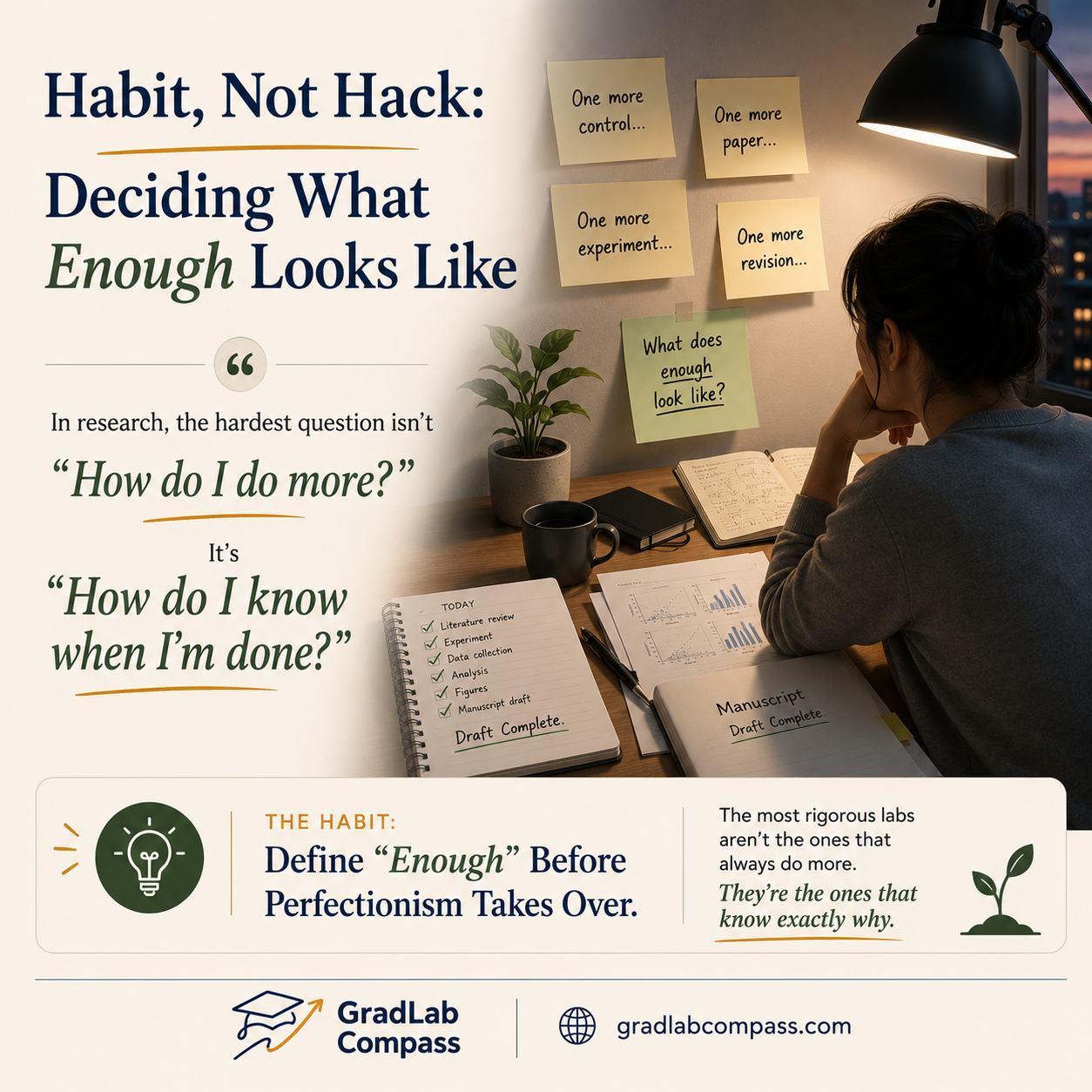
Habit, Not Hack: Deciding What Enough Looks Like (Trainee)
In research, the hardest question isn't "how do I do more?" It's "how do I know when I'm done? Perfectionism in research isn't always a personality trait. Sometimes it's a systems failure — nobody defined what done looks like, so done never arrives. The researchers who finish things aren't always the ones who care less. They're the ones who care enough to be precise about what they're aiming for. Define the line. Reach it. Then move.
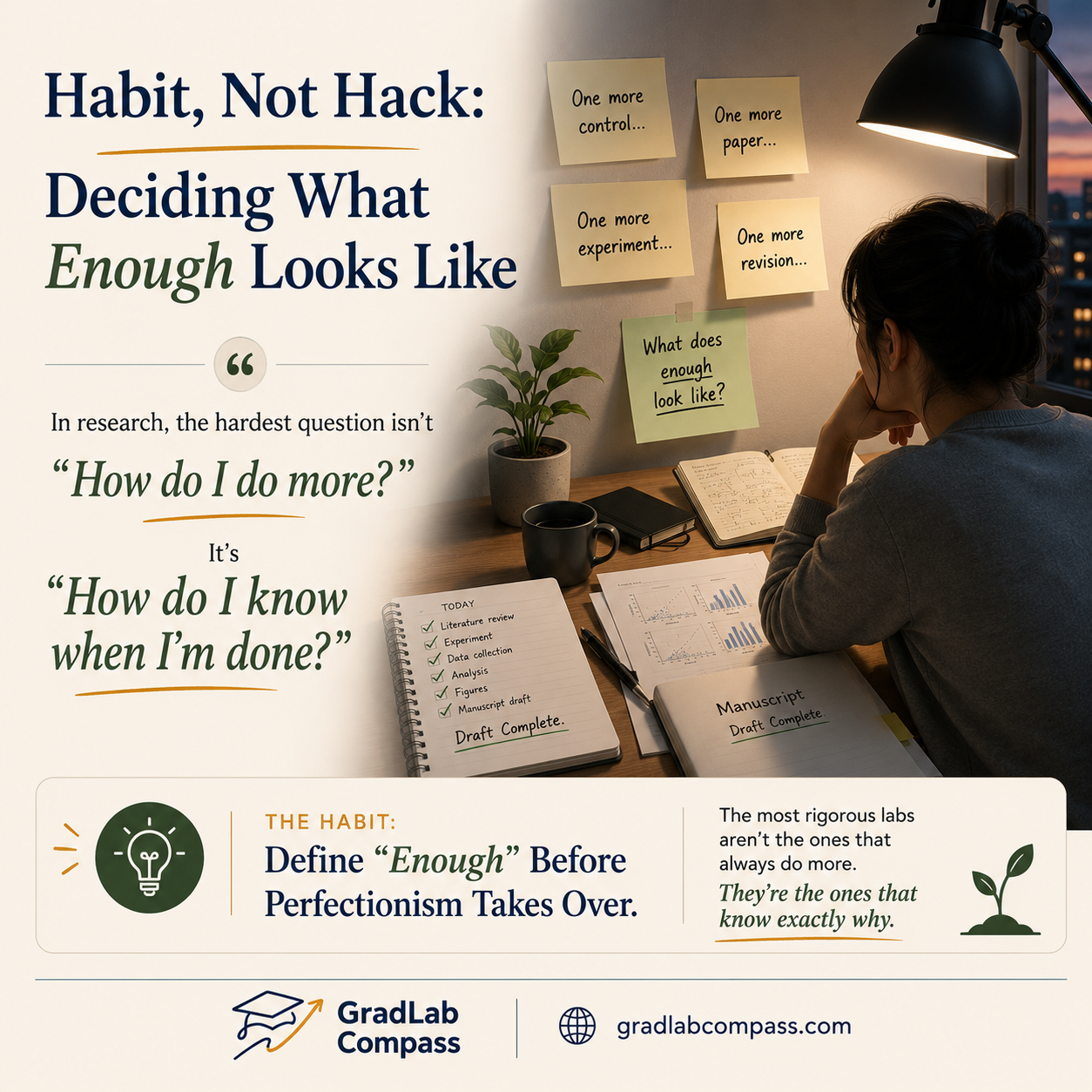
Habit, Not Hack: Helping Trainees Decide What Enough Looks Like (Mentor)
The most rigorous labs aren't the ones that always do more. They're the ones that know exactly why. Mentors who never define "done" don't create rigor — they create endless work. When trainees can't tell the difference between a must-have and a nice-to-have, they don't know when they're allowed to stop. And a trainee who can't stop isn't being thorough. They're just waiting for permission. Clarity about enough doesn't lower standards. It protects them.
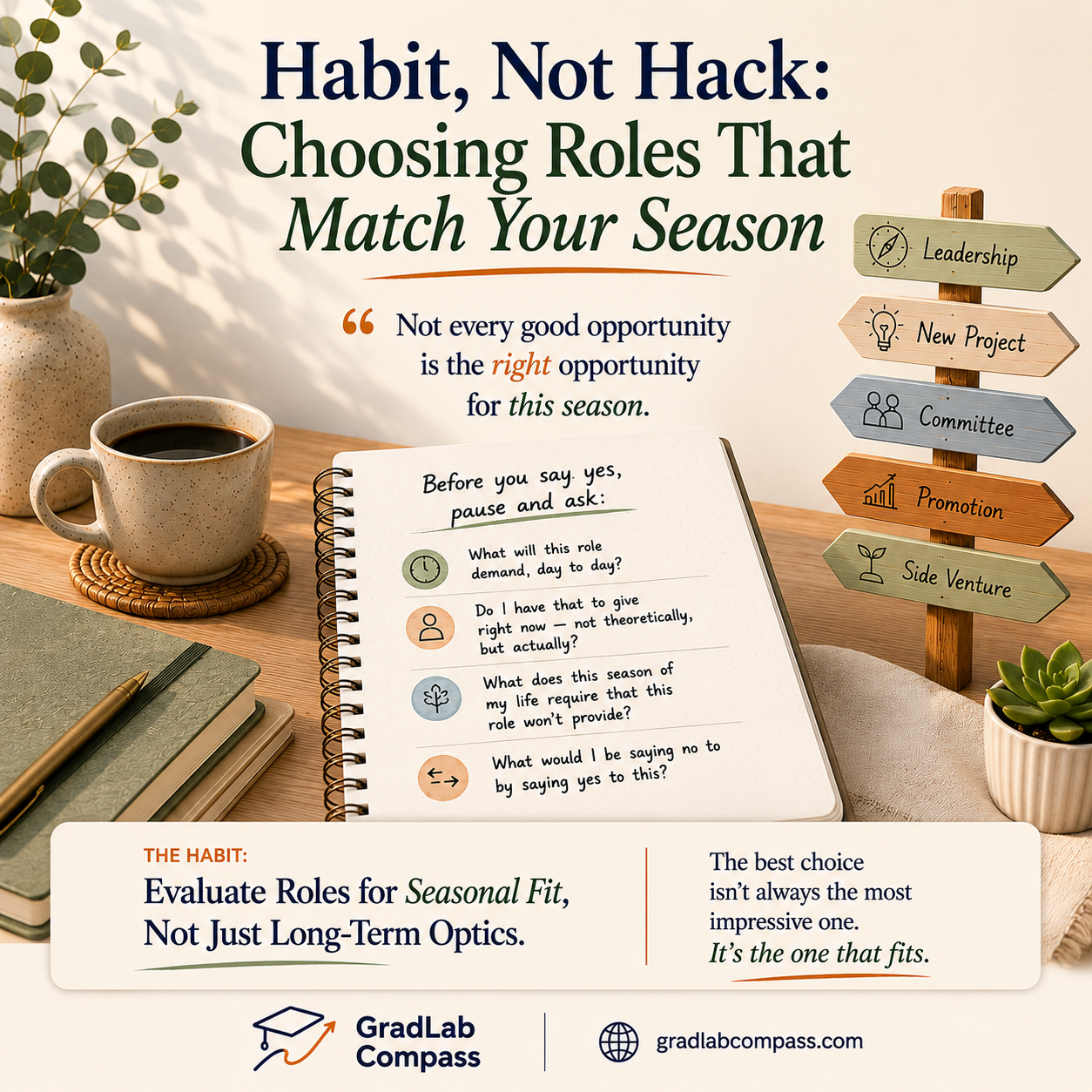
Habit, Not Hack : Choosing Roles That Match Your Season (Trainee)
The best career move isn't always the next one. Sometimes it's the right one. Researchers are trained to say yes — to opportunities, visibility, momentum. But no title compensates for misalignment, and a prestigious role at the wrong time doesn't accelerate your career. It drains the reserves you need for the next thing. The habit isn't waiting. It's reading — yourself, your capacity, your season — and choosing accordingly.
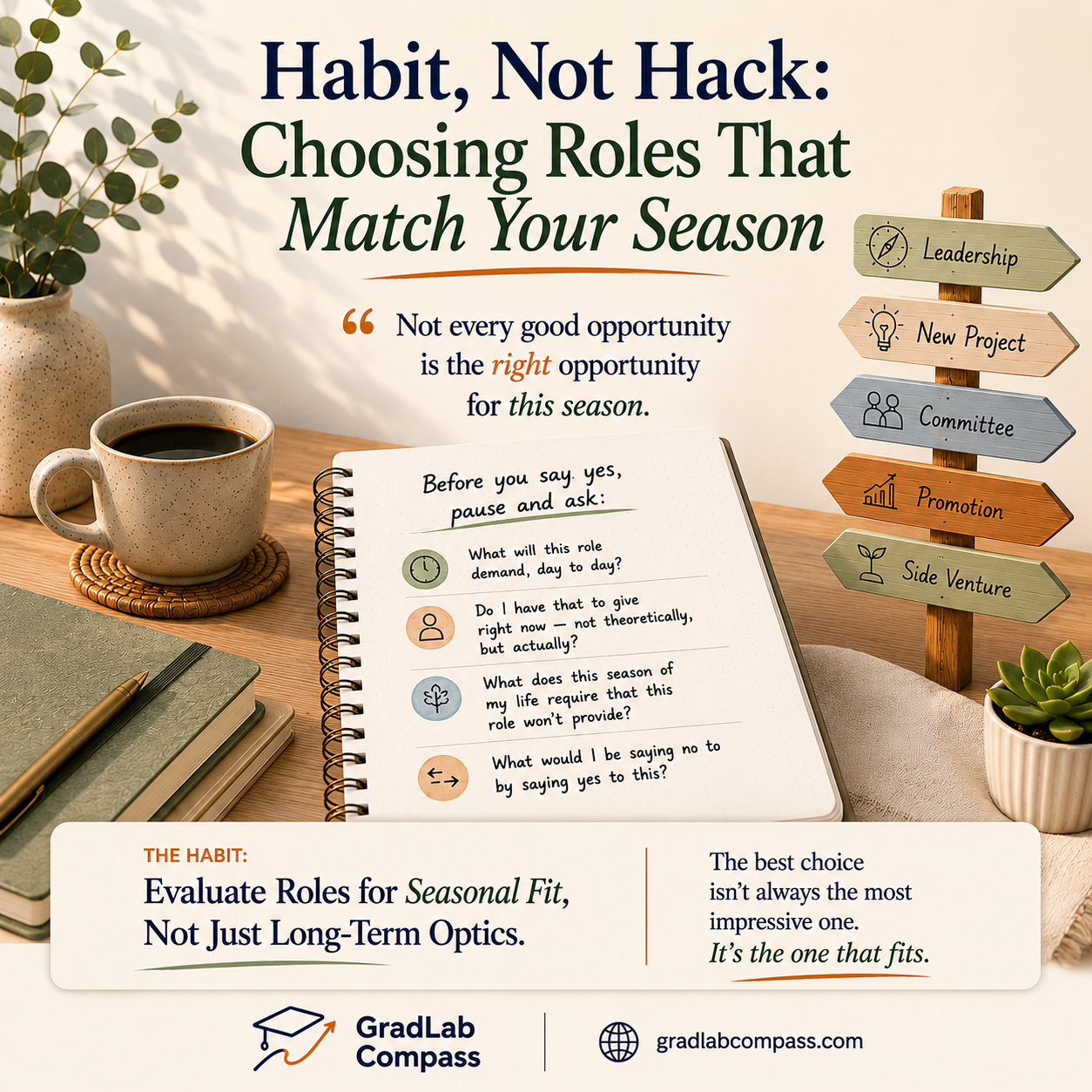
Habit, Not Hack: Helping Trainees Choose Roles That Fit Their Season (Mentor)
The best career advice you can give isn't always "go for it." Sometimes it's "is now the right time?" Mentors are trained to encourage ambition — apply broadly, say yes, keep moving. But the trainees who advance fastest aren't always the ones who thrive longest. Some burn out quietly. Some leave entirely. And often, no one thought to ask what season they were actually in. The habit isn't lowering expectations. It's calibrating advice to the person in front of you, not the abstract career arc you're imagining for them.
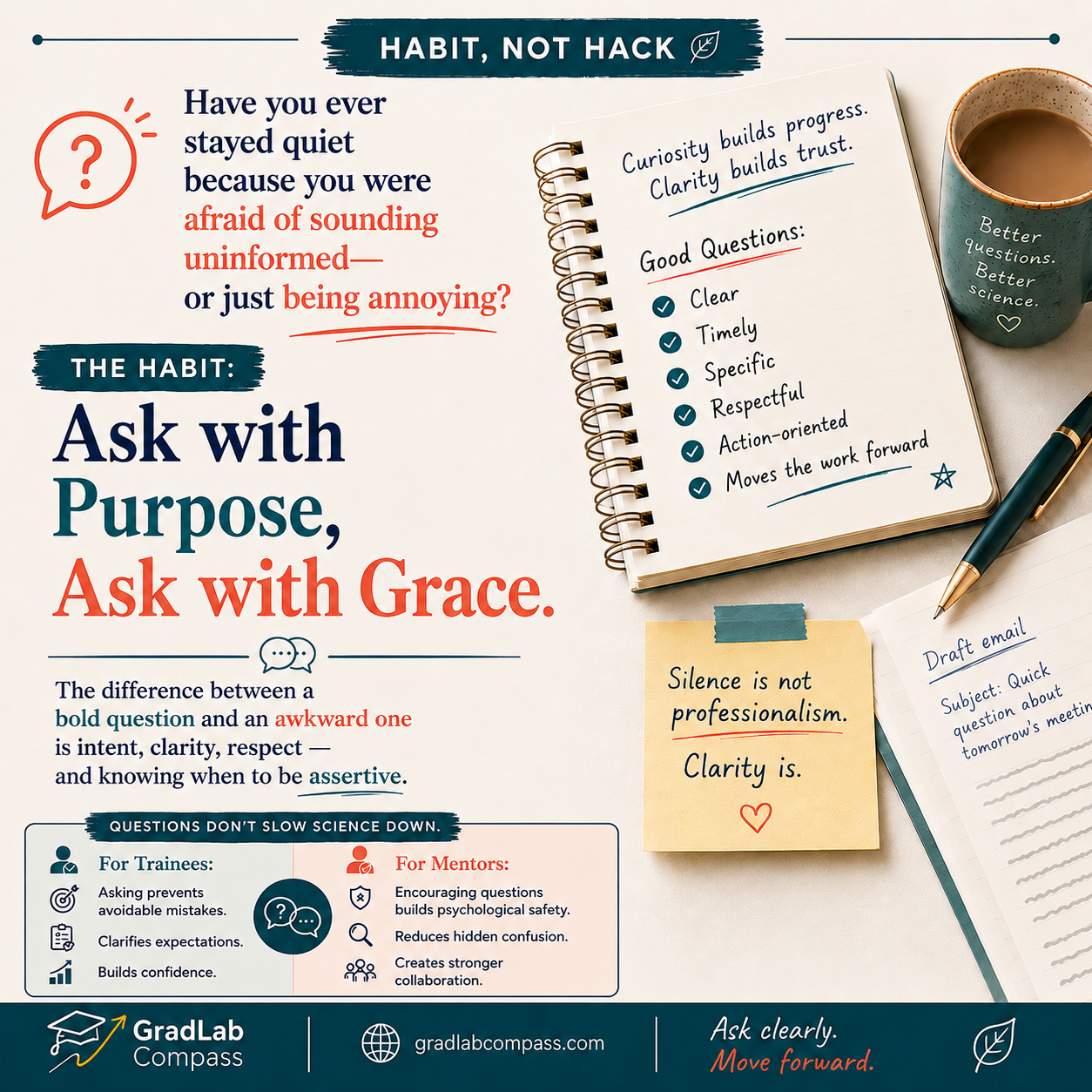
Habit, Not Hack: Asking Questions (Trainee)
Researchers often hesitate to ask for fear of sounding needy or unprofessional. But clear, timely, and courteous questions, whether requesting feedback, reagents, or insight, are essential to scientific progress. This post provides a guide for proper inquiry - a skill that serves as a catalyst for collaboration, clarity, and moving your work forward.
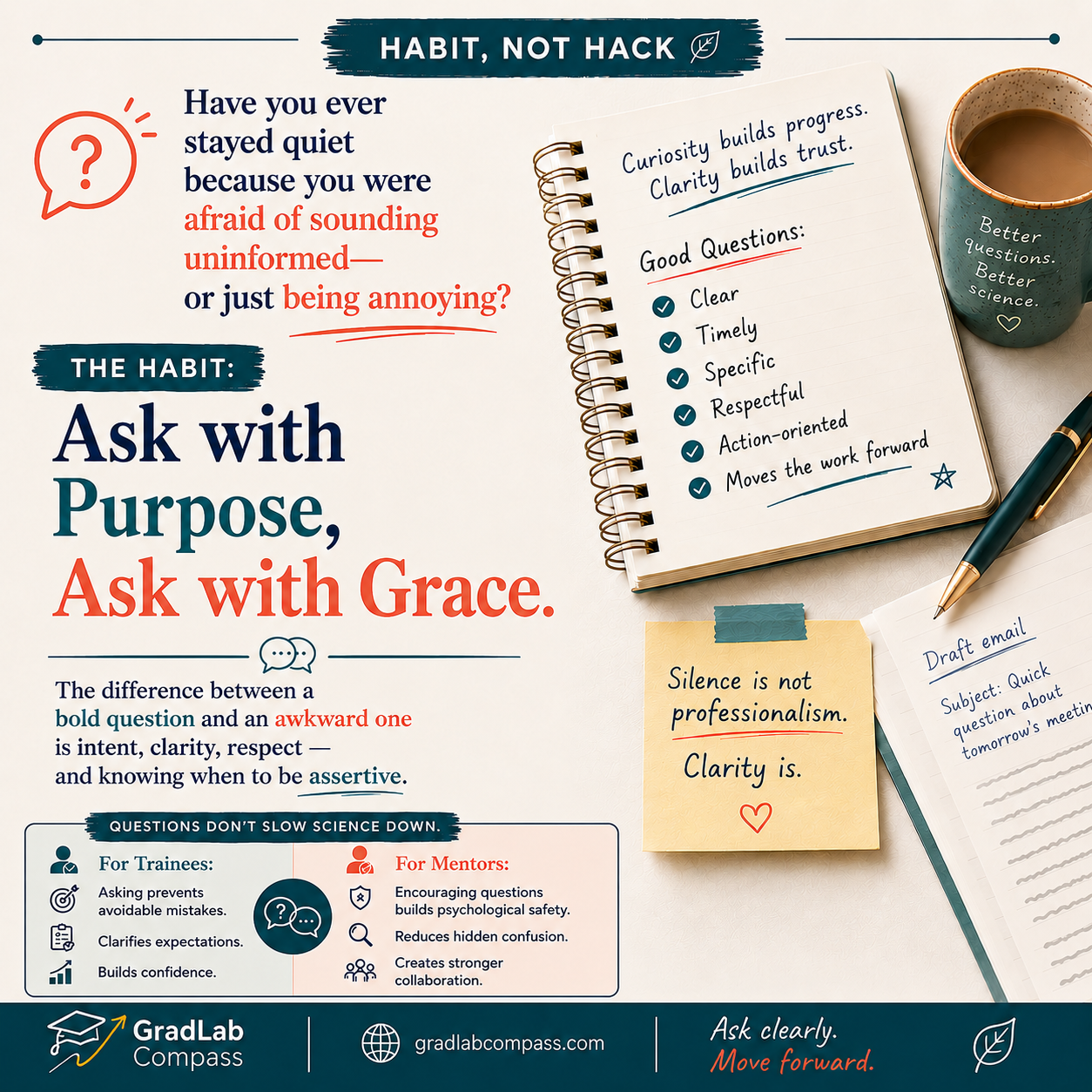
Habit, Not Hack: Asking Questions (Mentor)
Many trainees hesitate to ask questions, fearing they may appear unprofessional or disruptive. Your responsibility as a PI exceeds directing experiments, you shape the lab culture. By actively encouraging clear queries, respecting team member timelines, and modeling gracious follow-up, you transform hesitation into confidence.
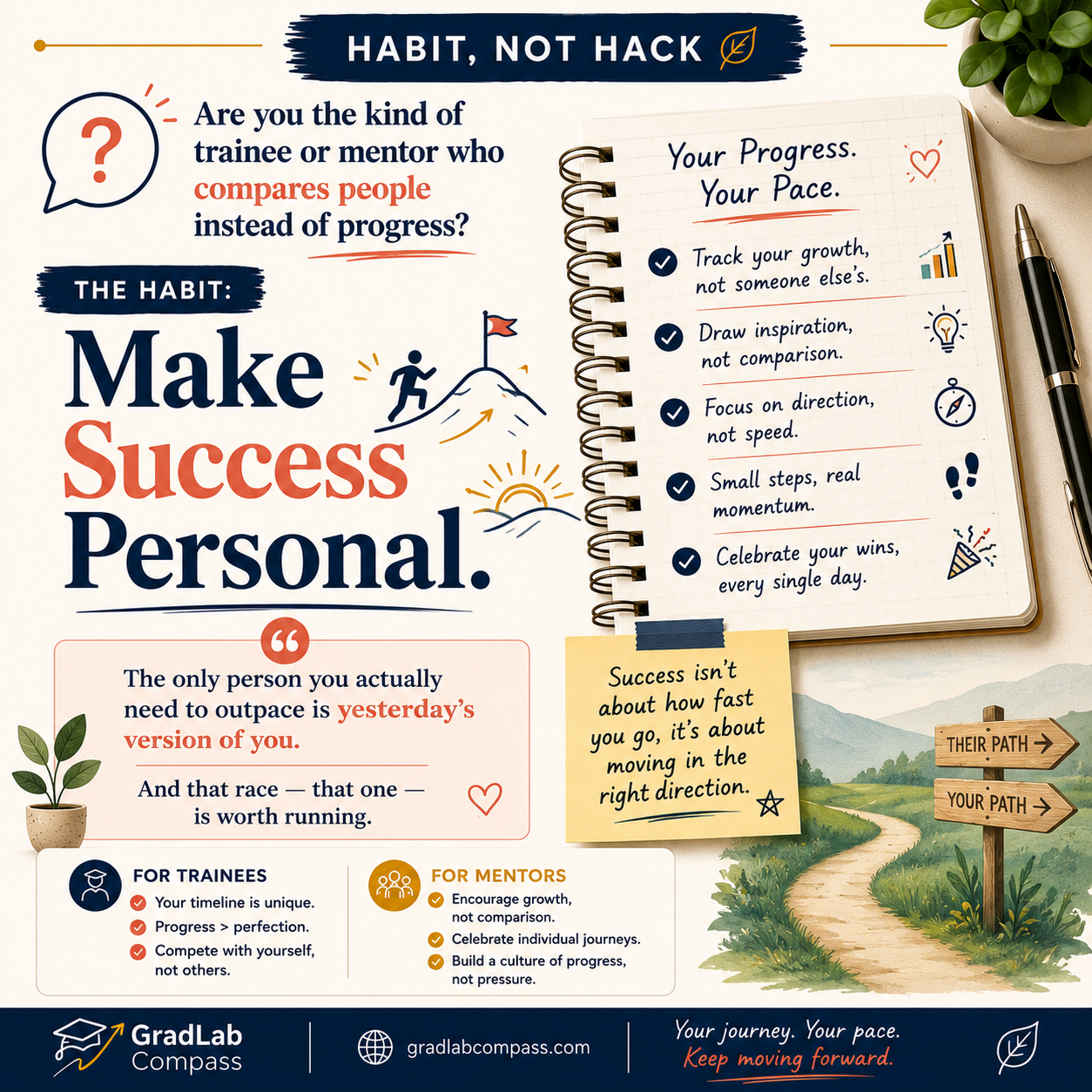
Habit, Not Hack: Define Your Own Win (Trainee)
In research, everyone’s path looks different, so why compare timelines? Learn how to track your own progress, draw inspiration from others without self-judgment, and build momentum at your own pace. Because success isn’t about how fast you go, it’s about moving in the right direction.
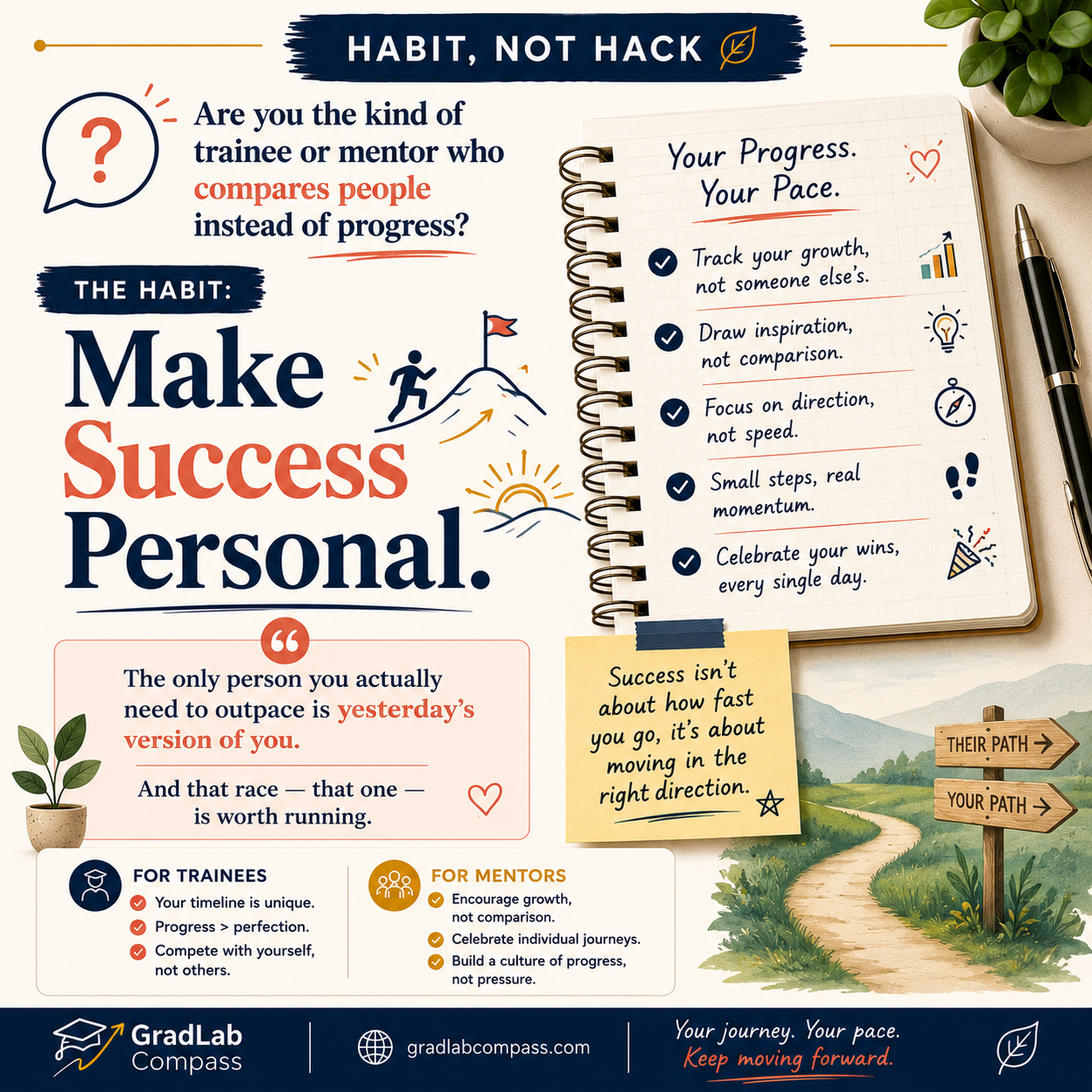
Habit, Not Hack – Define Your Own Win (Mentor)
Comparing students to past lab stars might seem harmless, but it can quietly erode confidence and trust. Learn how to support individual growth, celebrate diverse strengths, and build a lab culture rooted in calibration, not comparison.
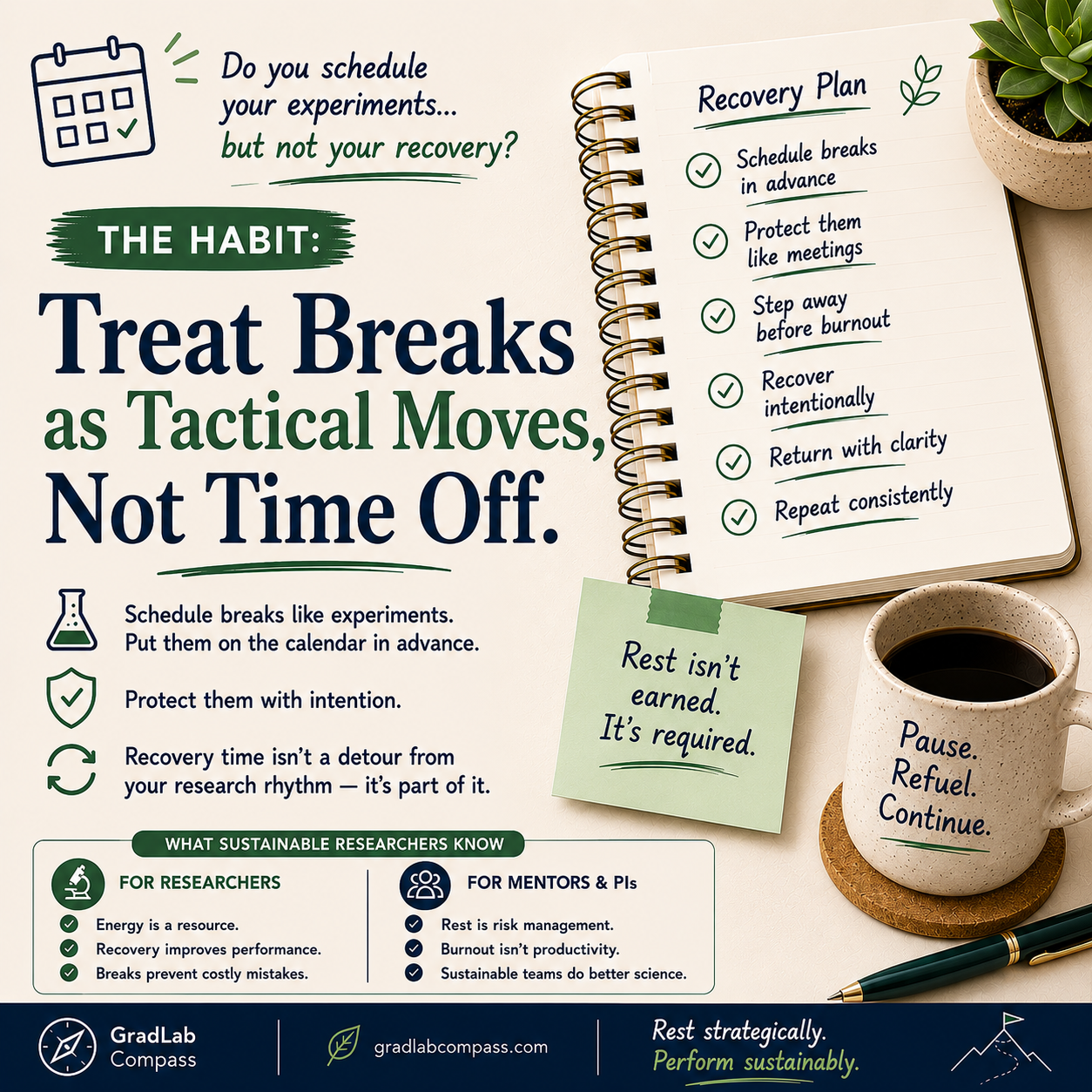
Habit, Not Hack – Rest Without Apology (Trainee)
Many grad students struggle to step away from the work without guilt. But rest isn’t a reward - it’s a research essential. Learn why breaks matter, how to schedule recovery with intention, and why guilt is often just a byproduct of a broken system, not a reflection of your commitment.
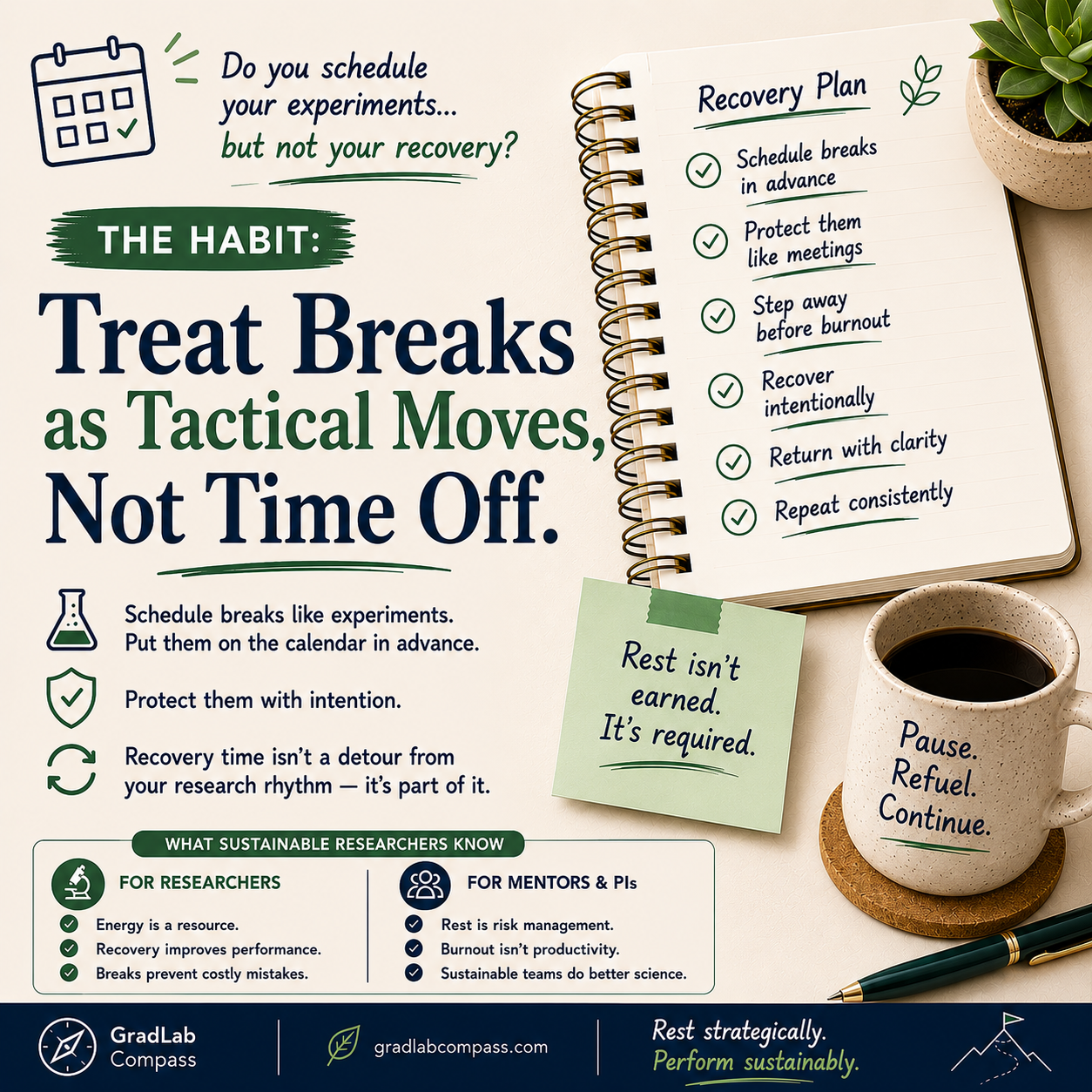
Habit, Not Hack – Rest Without Apology (Mentor)
When PIs model rest without guilt, the whole lab benefits. Learn how modeling rest, setting seasonal expectations, and saying the quiet part out loud (“You don’t have to earn a break”) can help create a healthier, more sustainable research culture.
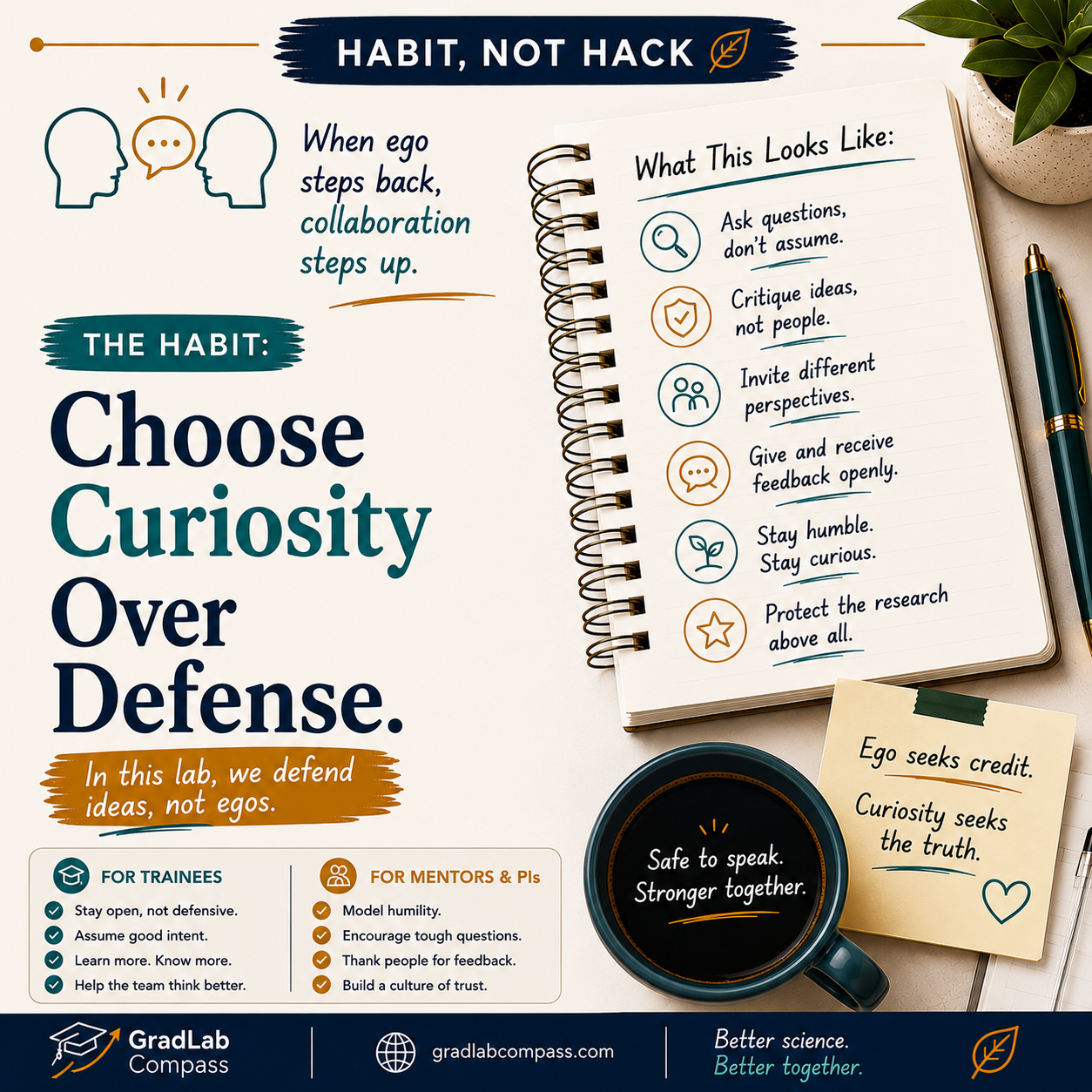
Habit, Not Hack: Park the Ego, Protect the Research (Trainee)
In research spaces, unchecked ego can silence curiosity and stall collaboration. This post explores how one lab shifted from defensiveness to open dialogue by normalizing humility, modeling healthy feedback, and prioritizing psychological safety.
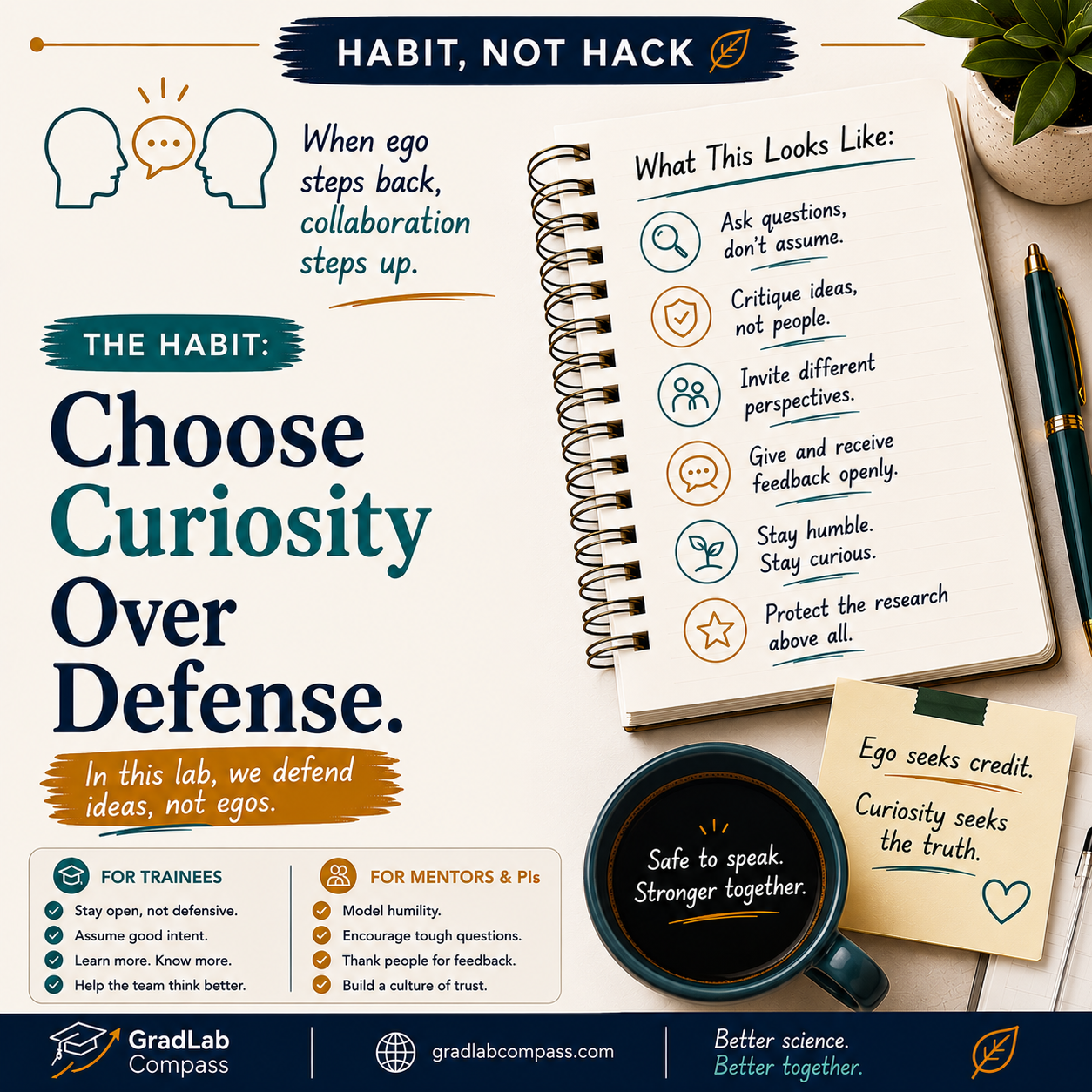
Habit, Not Hack: Park the Ego, Protect the Research (Mentor)
Learn how to build a research environment where inquiry is protected, feedback is welcomed, and silence isn’t mistaken for respect.