
Habits, Not Hacks: Stories and Strategies for Grad School That Stick
Our goal is to infuse the grad school conversation with emotional intelligence, resilience, and sustainable success - exactly what many students crave but often struggle to articulate. This story-driven, reflective series tailored for the unique challenges of academic life. Through short essays, mini-memoirs, and hard-earned lessons, we spotlight small but meaningful habits that make academic life more livable and less overwhelming.
Each habit also comes with a companion PI/Supervisor Edition, because sustainable success in grad school isn’t a solo effort.
All names and scenarios are fictional or composite. Any resemblance to real people is coincidental. Stories are crafted to illustrate common experiences in research training.
Habit, Not Hack: Nurturing Strengths and Accepting Weaknesses (Trainee)
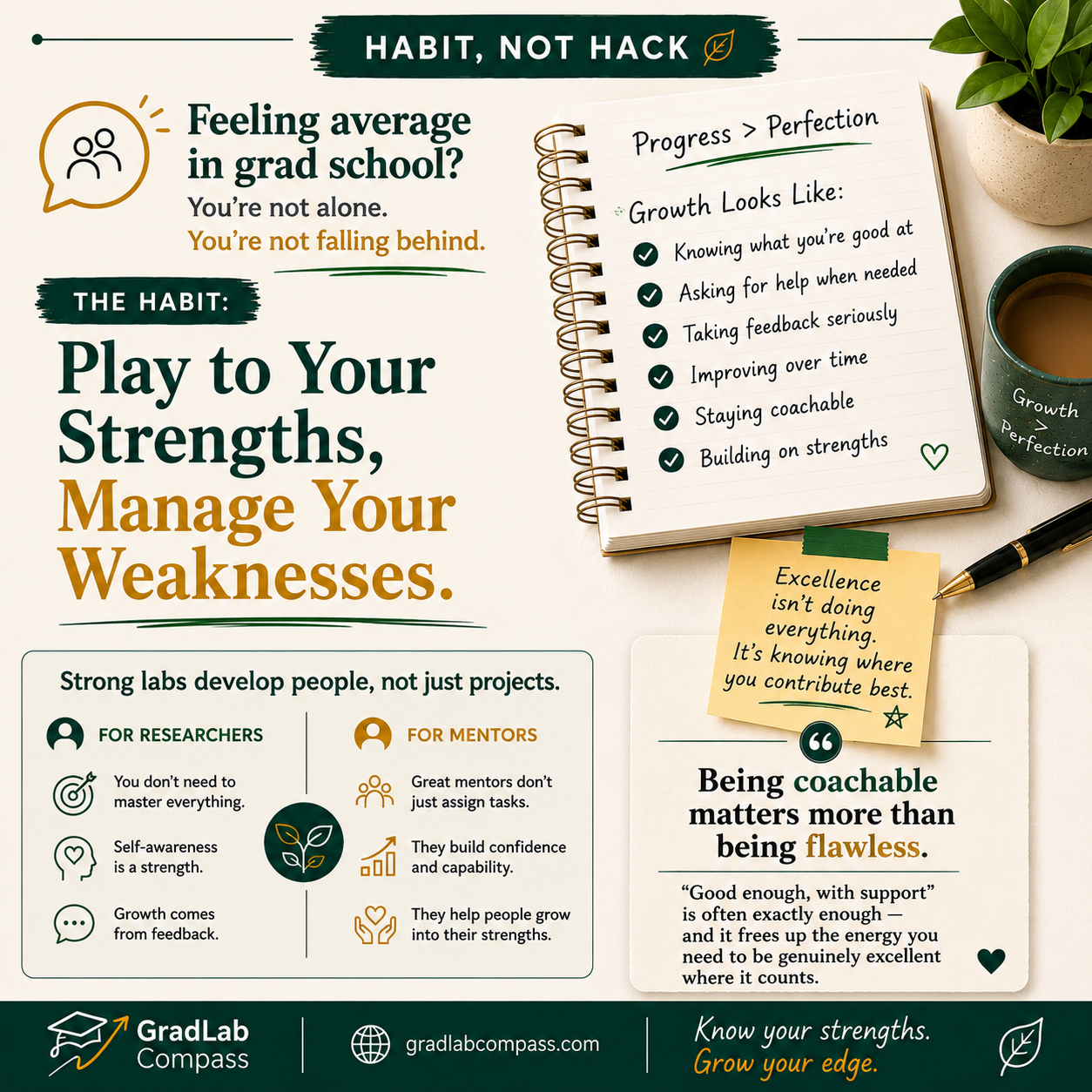
Feeling average in grad school? You’re not alone and you’re not falling behind. You don’t need to master everything to succeed in grad school, you just need to know what you’re great at and stay open to growth. Learn why being coachable matters more than being flawless, and how to turn self-awareness into your most powerful academic advantage.

Habit, Not Hack: Time Tactics That Stick (Trainee)
If your perfect planner keeps falling apart by midweek, you’re not alone and you’re not failing. Grad school time management isn’t about flawless calendars or color-coded routines. It’s about building a flexible system that keeps moving when experiments fail, meetings shift, and life gets messy. This guide will help you ditch productivity guilt, build buffers, create realistic Plan Bs, and track momentum (not just tasks). Because the goal isn’t perfection, it’s resilience.
Habit, Not Hack: Nurturing Strengths and Accepting Weaknesses (Mentor)
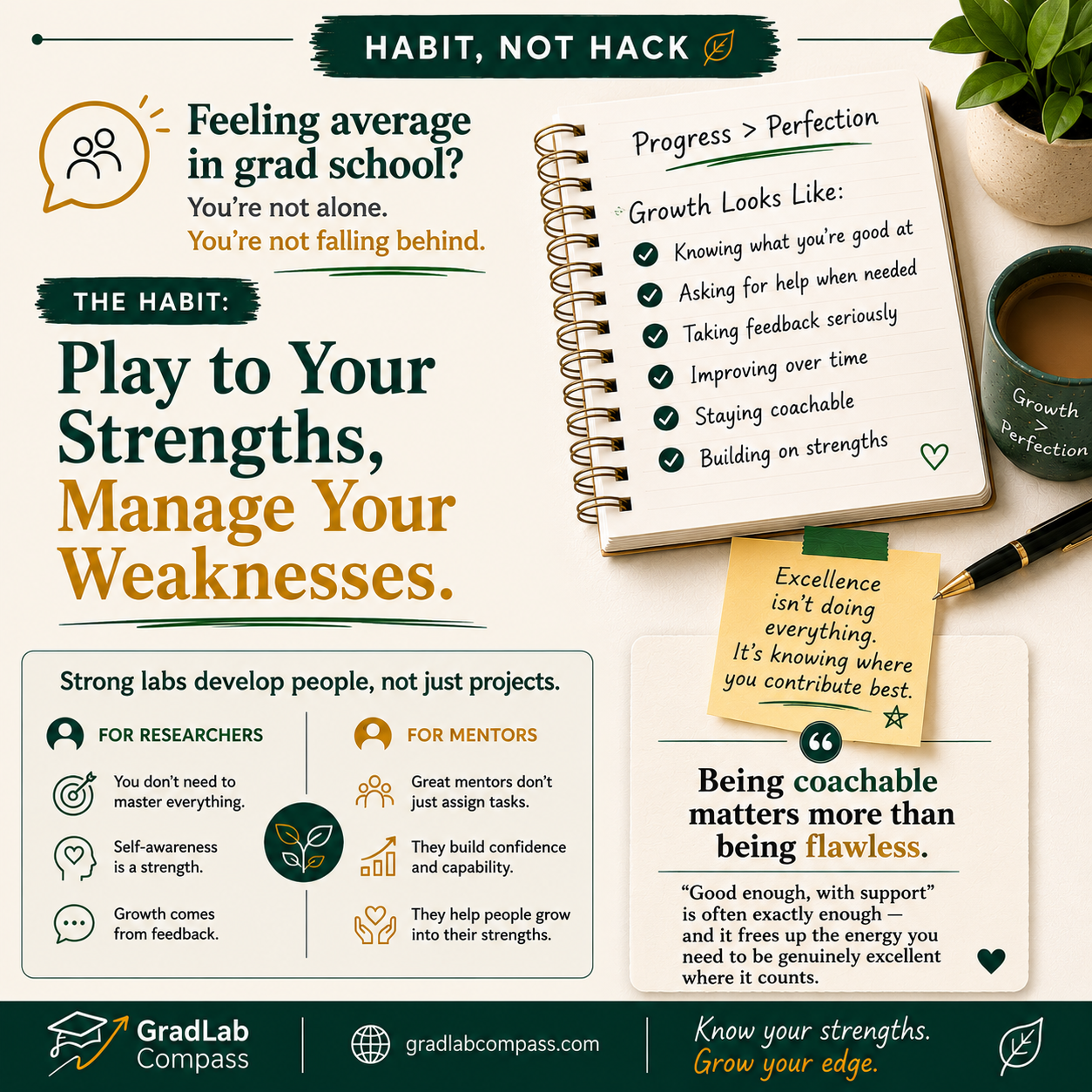
Great mentors don’t just assign tasks, they develop people. Learn how to lead with strengths, coach through challenges, and support real growth in your trainees. Build a lab culture where researchers thrive, not just produce.
Habit, Not Hack: Time Tactics That Stick (Mentor)
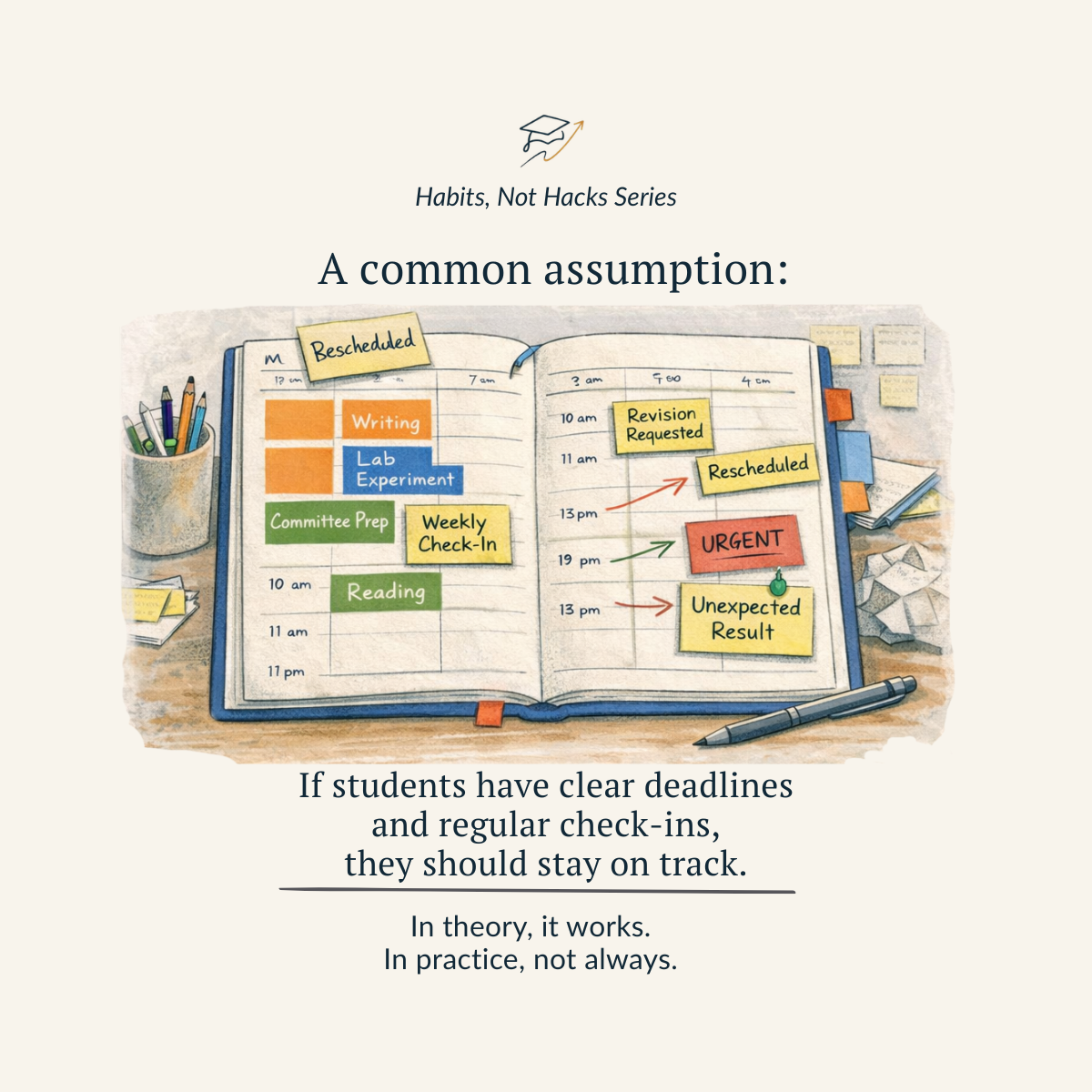
Struggling with student deadlines, late experiments, or missed milestones? This post reframes time management in the lab not as a battle over schedules, but as a practice in building resilience systems. Learn how to coach adaptive planning, model real-world deadline handling, and shift your lab culture from reactive chaos to intentional, flexible execution.
Habit, Not Hack: Managing Expectations Before They Manage You (Trainee)
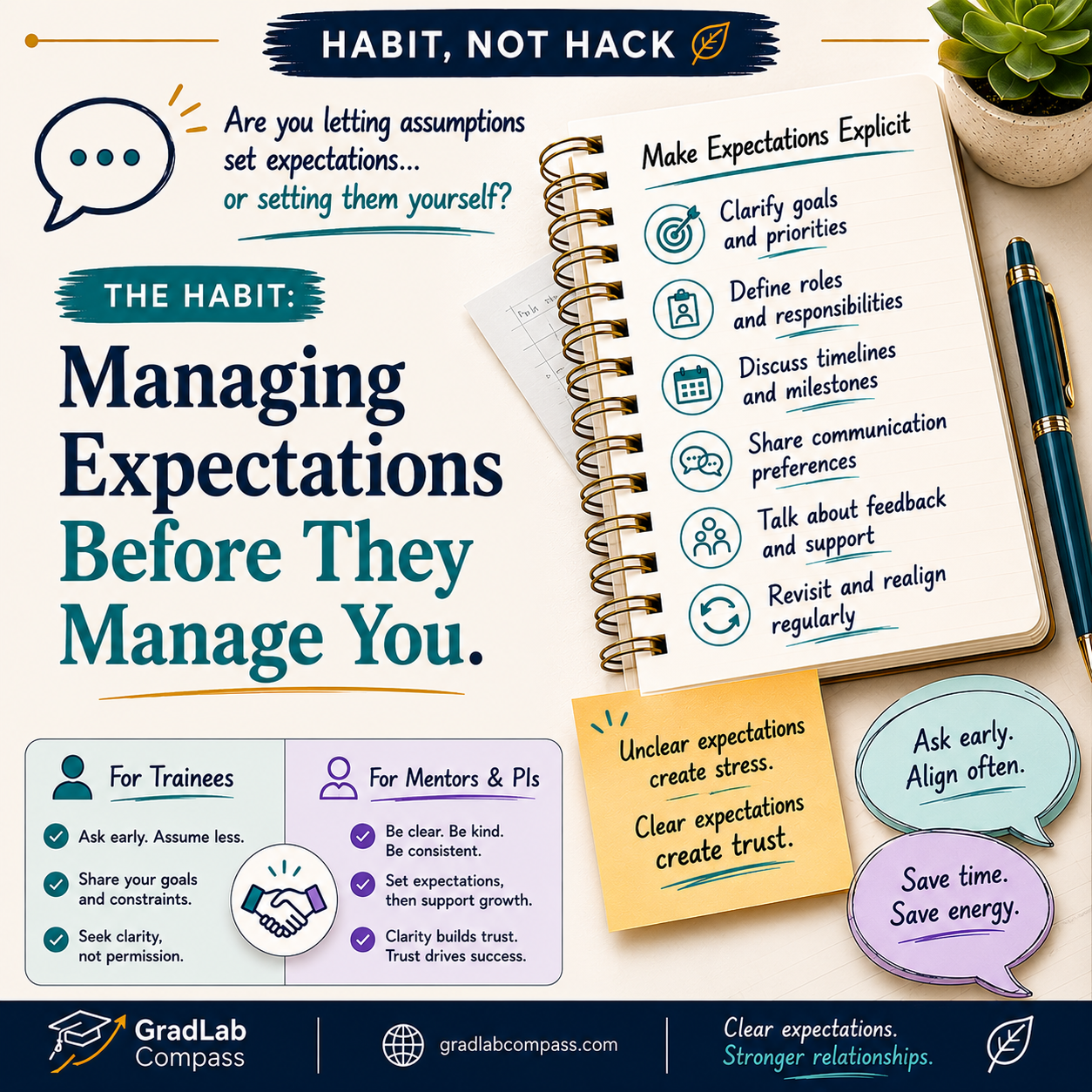
Learn how managing expectations can transform your grad school experience. It can reduce miscommunication, ease anxiety, and build stronger mentoring relationships.
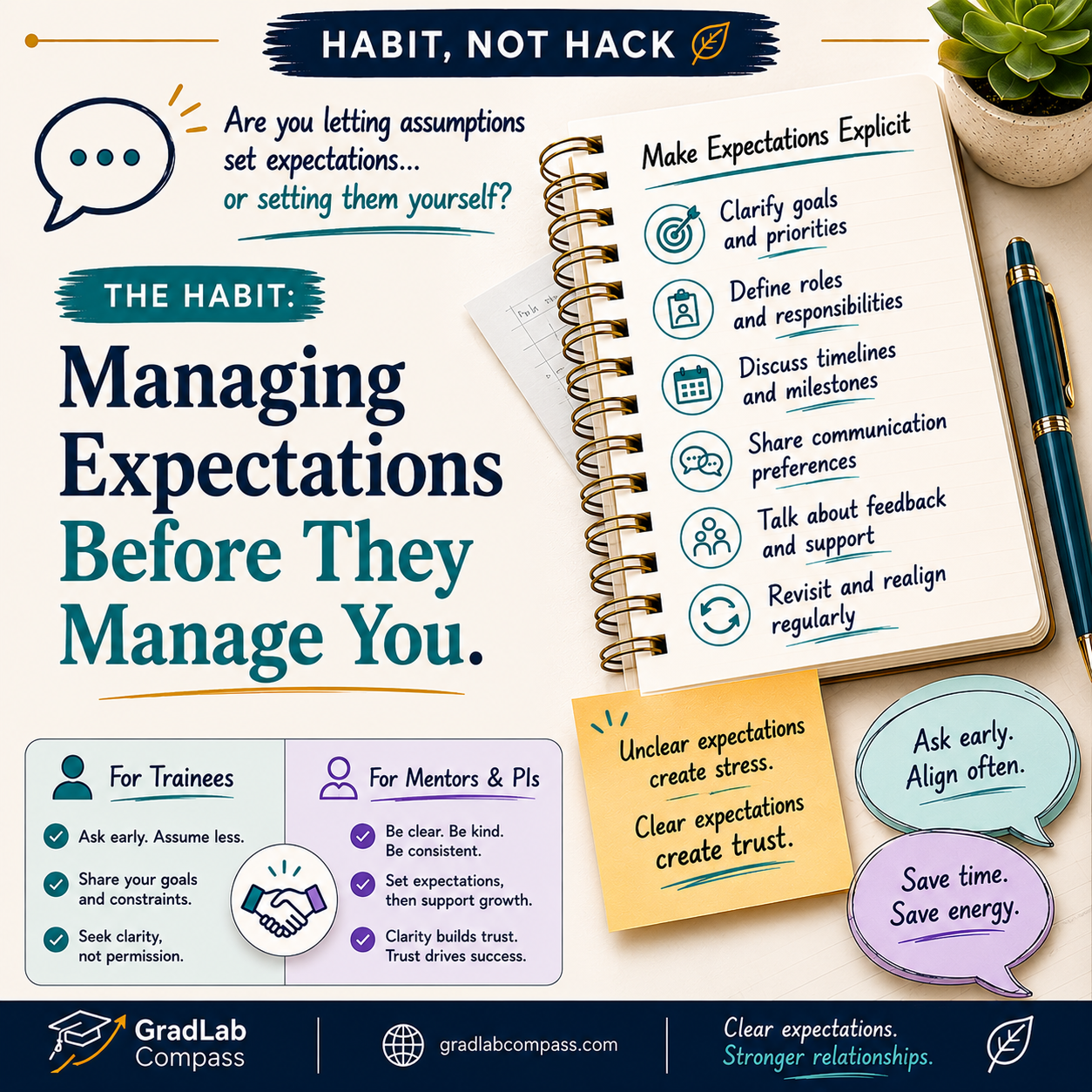
Habit, Not Hack: Managing Expectations Before They Manage You (Mentor)
Learn how making expectations explicit can strengthen your mentorship from the start. This post offers practical insights for advisors and PIs on building trust, reducing confusion, and creating psychologically safe research environments.
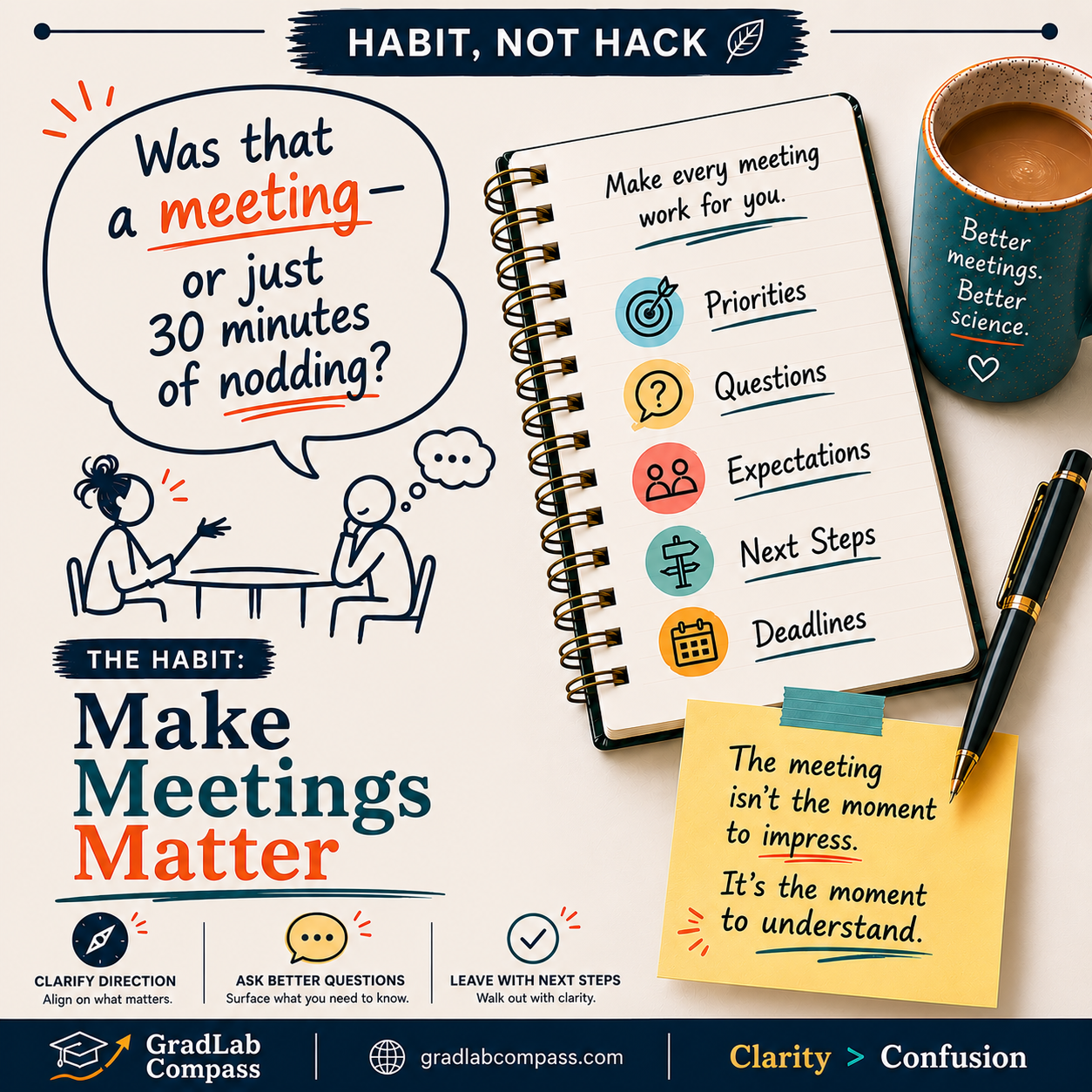
Habit, Not Hack: Make Meetings Matter (Trainee)
Don’t just attend your meetings, make them matter. This post breaks down a simple pre-, during-, and post-meeting routine that transforms advisor check-ins into strategic moments for clarity, feedback, and progress.
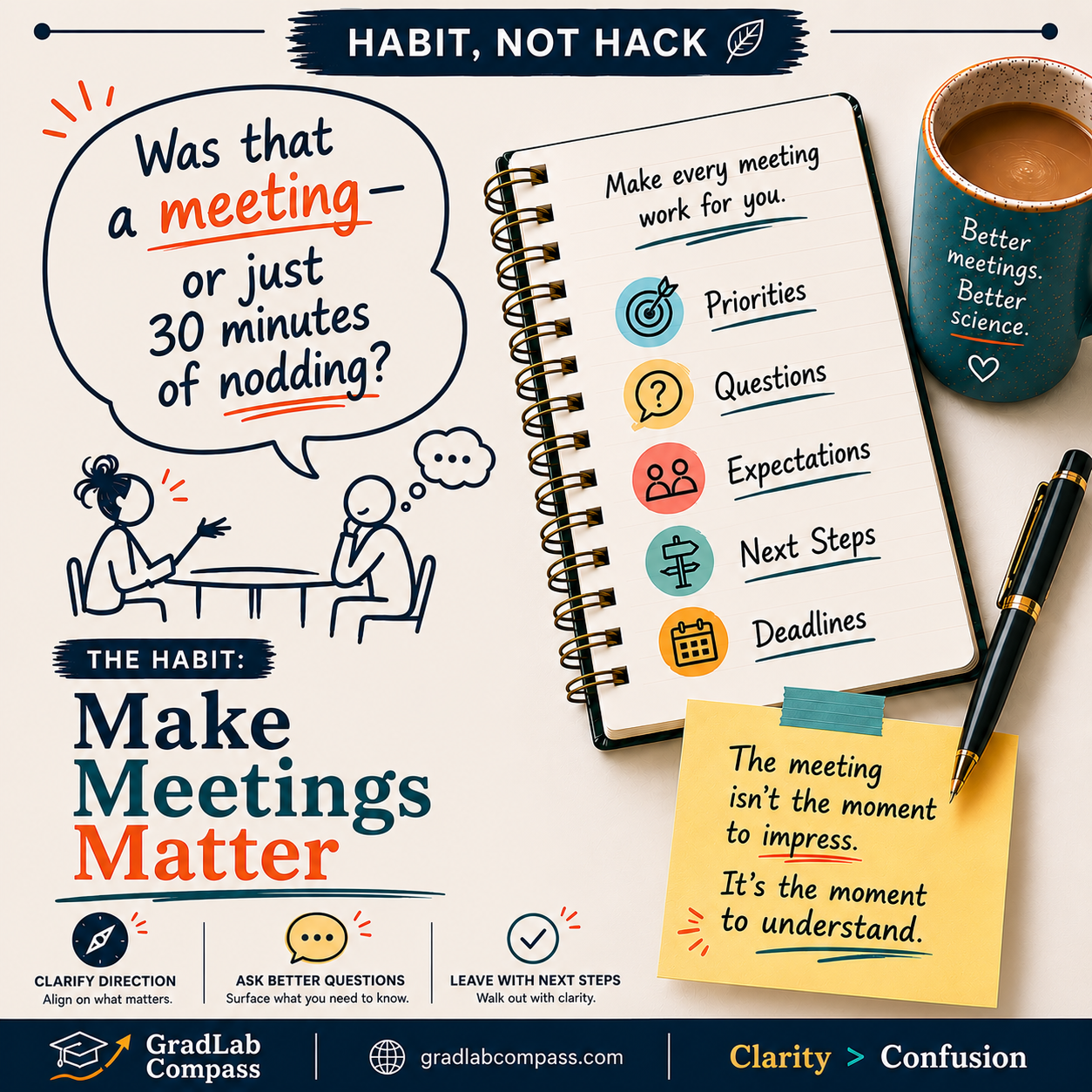
Habit, Not Hack: Make Meetings Matter (Mentor)
Meetings aren’t just check-ins; they’re where real mentorship happens. In this post, learn a simple habit to make your meetings more intentional, clear, and effective. Discover how asking the right questions and following up can turn routine conversations into high-impact moments of connection and growth.
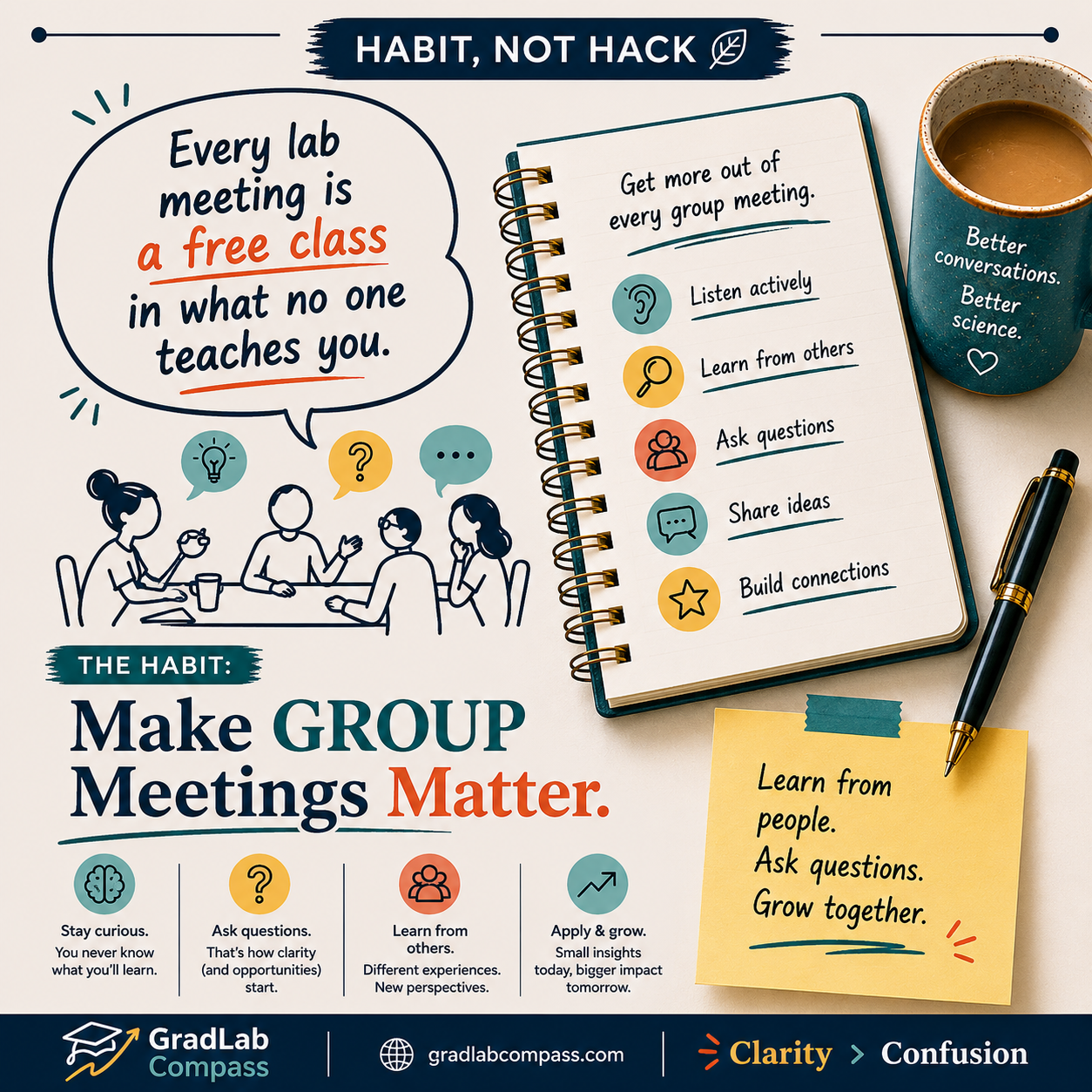
Habit, Not Hack: Make Group Meetings Matter (Trainee)
Turn passive lab meetings into growth sessions: actionable tips for grad students to prepare, engage, and thrive in every lab meeting.
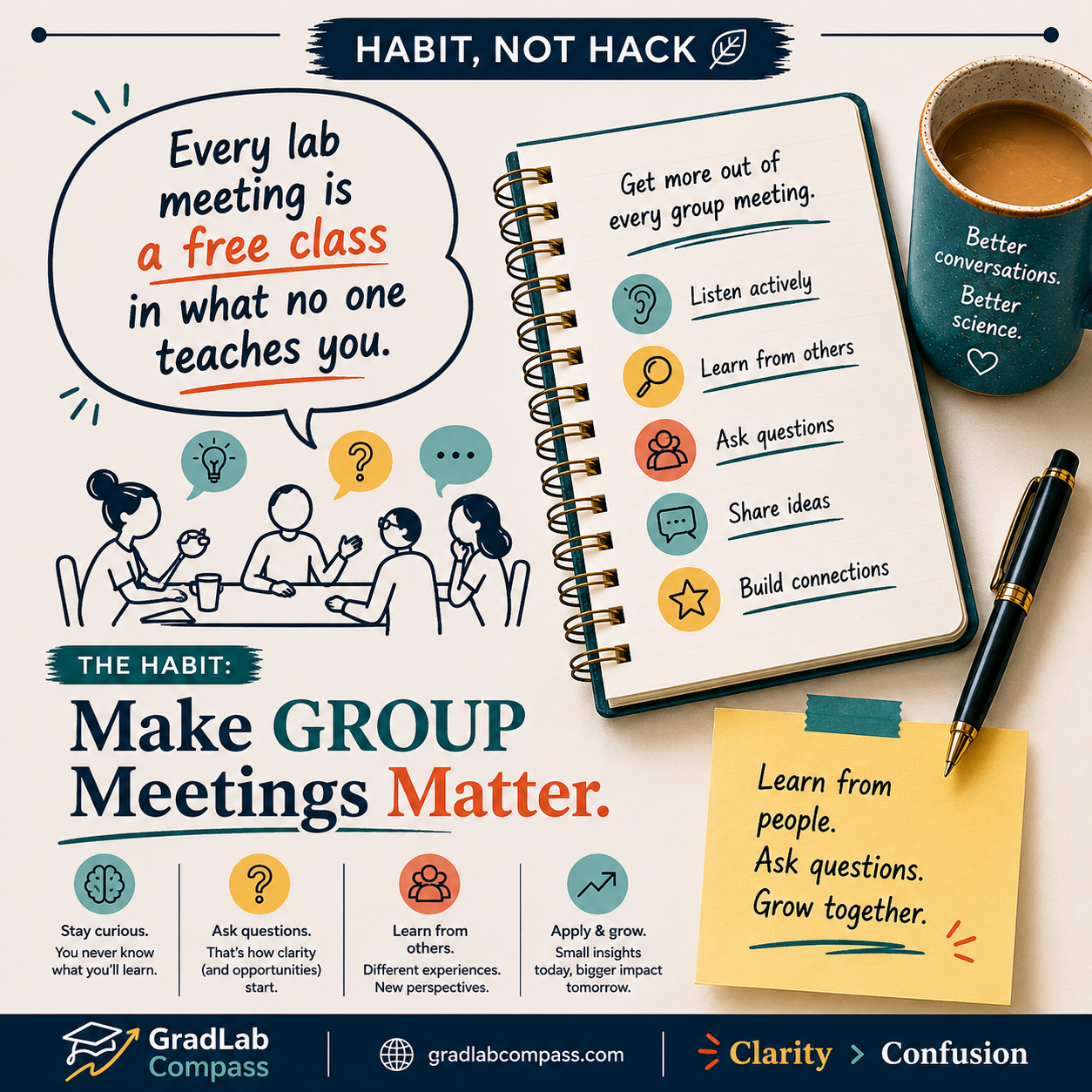
Habit, Not Hack: Make Group Meetings Matter (Mentor and Audience)
Make lab meetings matter: actionable habits for grad students and PIs to prepare, engage, and build a culture of scientific growth.