
Habits, Not Hacks: Stories and Strategies for Grad School That Stick
Our goal is to infuse the grad school conversation with emotional intelligence, resilience, and sustainable success - exactly what many students crave but often struggle to articulate. This story-driven, reflective series tailored for the unique challenges of academic life. Through short essays, mini-memoirs, and hard-earned lessons, we spotlight small but meaningful habits that make academic life more livable and less overwhelming.
Each habit also comes with a companion PI/Supervisor Edition, because sustainable success in grad school isn’t a solo effort.
All names and scenarios are fictional or composite. Any resemblance to real people is coincidental. Stories are crafted to illustrate common experiences in research training.
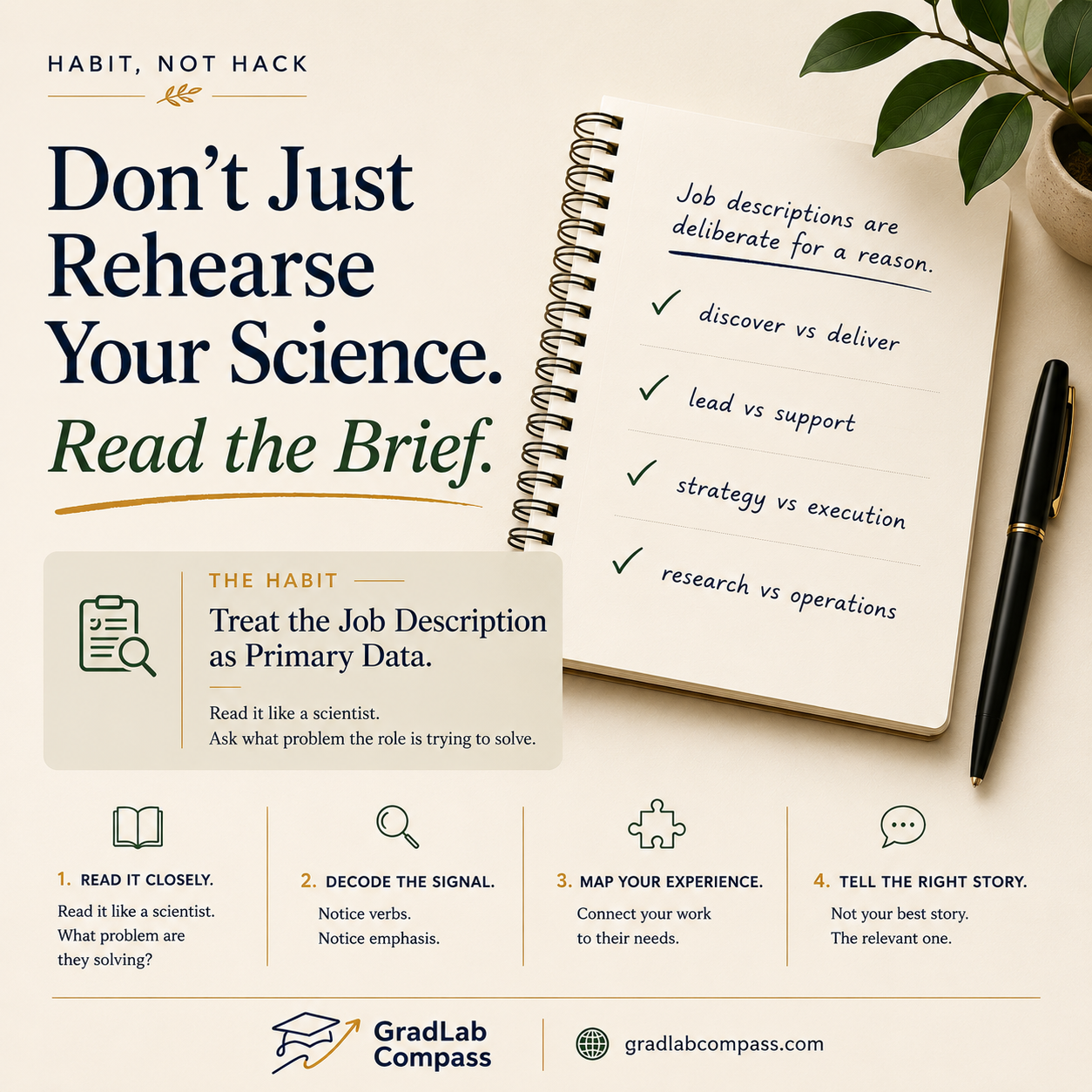
Habit, Not Hack: Reading The Actual Job Description (Trainee)
Researchers prepare for job interviews by polishing their story — the research narrative, the scientific contribution, the standard questions. What they don't do is read the job description as primary data. The verbs are deliberate. The emphasis is intentional. The distinction between discover and deliver, between lead and support — these tell you exactly what problem the role is hired to solve. Tell that story. Not your best story. The right one.
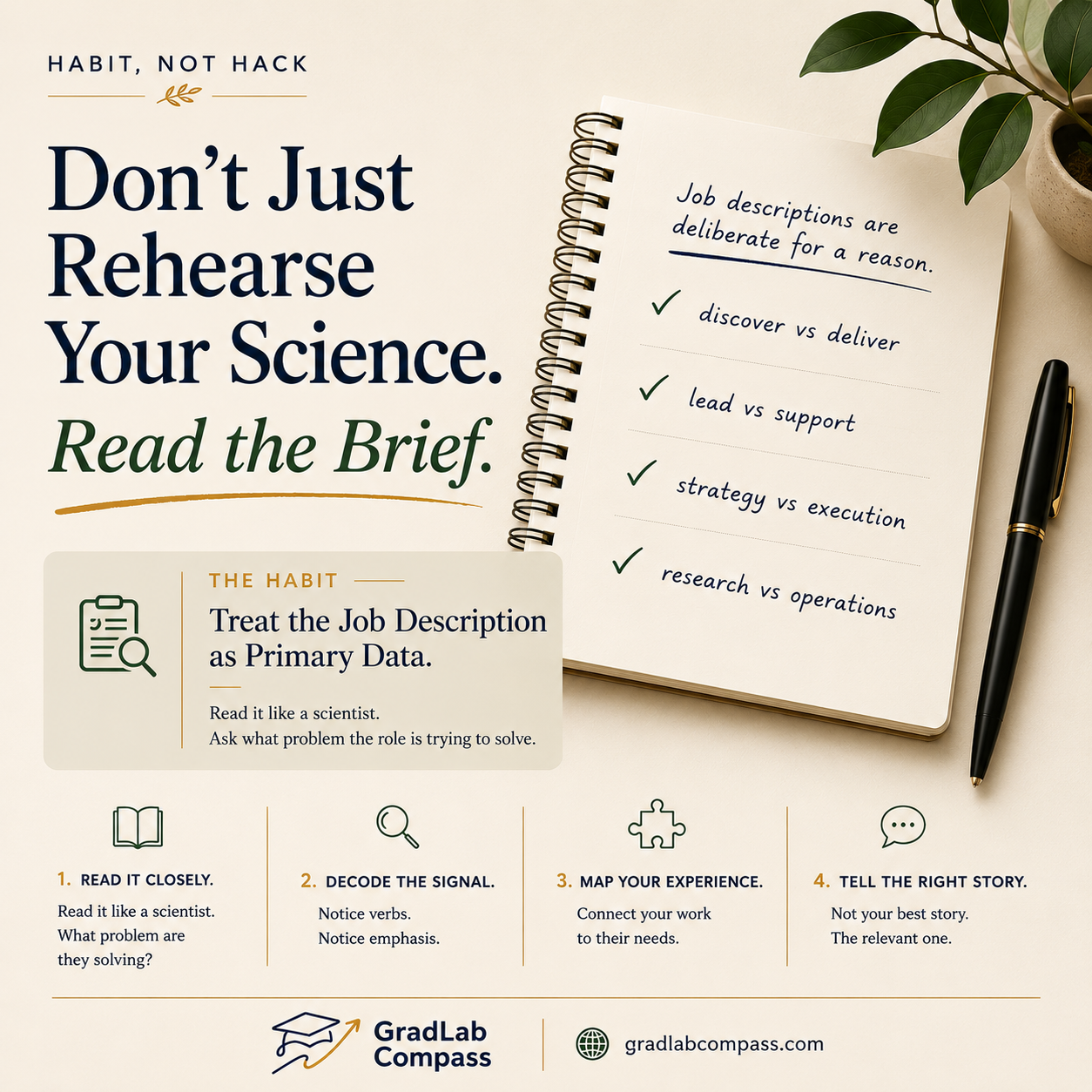
Habit, Not Hack: Reading The Actual Job Description (Mentor)
Most job preparation starts with the CV and ends with the research story. The job description gets skimmed for confirmation that the role is worth applying to, then filed away. But the description is the clearest available statement of what the hiring panel is actually evaluating — and the trainees who read it that way send fewer applications and have more interviews. Success isn't about being impressive in general. It's about being relevant on purpose.
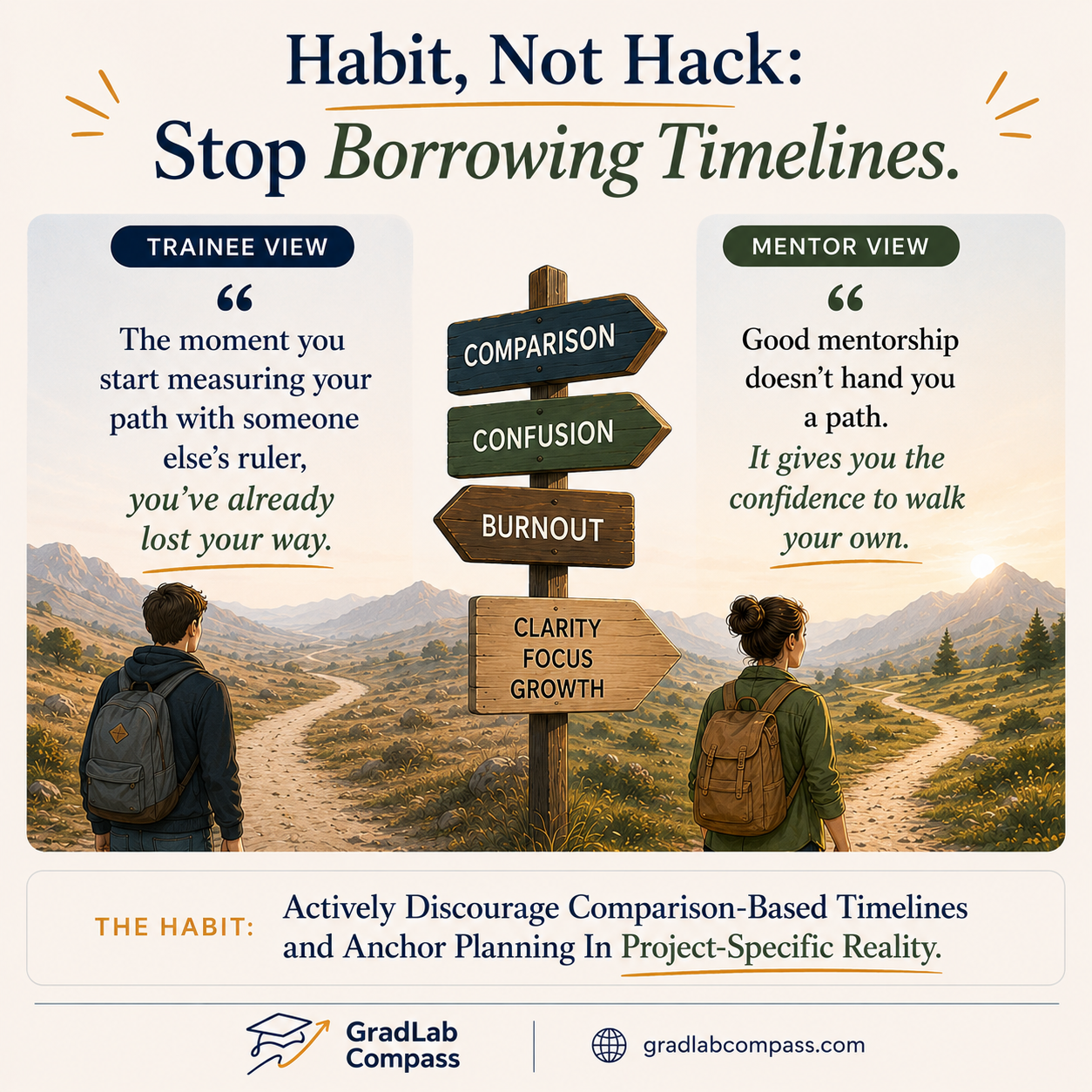
Habit, Not Hack: Stop Borrowing Timelines (Trainee)
Hallway conversations. LinkedIn announcements. Other people's milestones. Learn how invisible rulers quietly take over your timeline — and how to get it back.
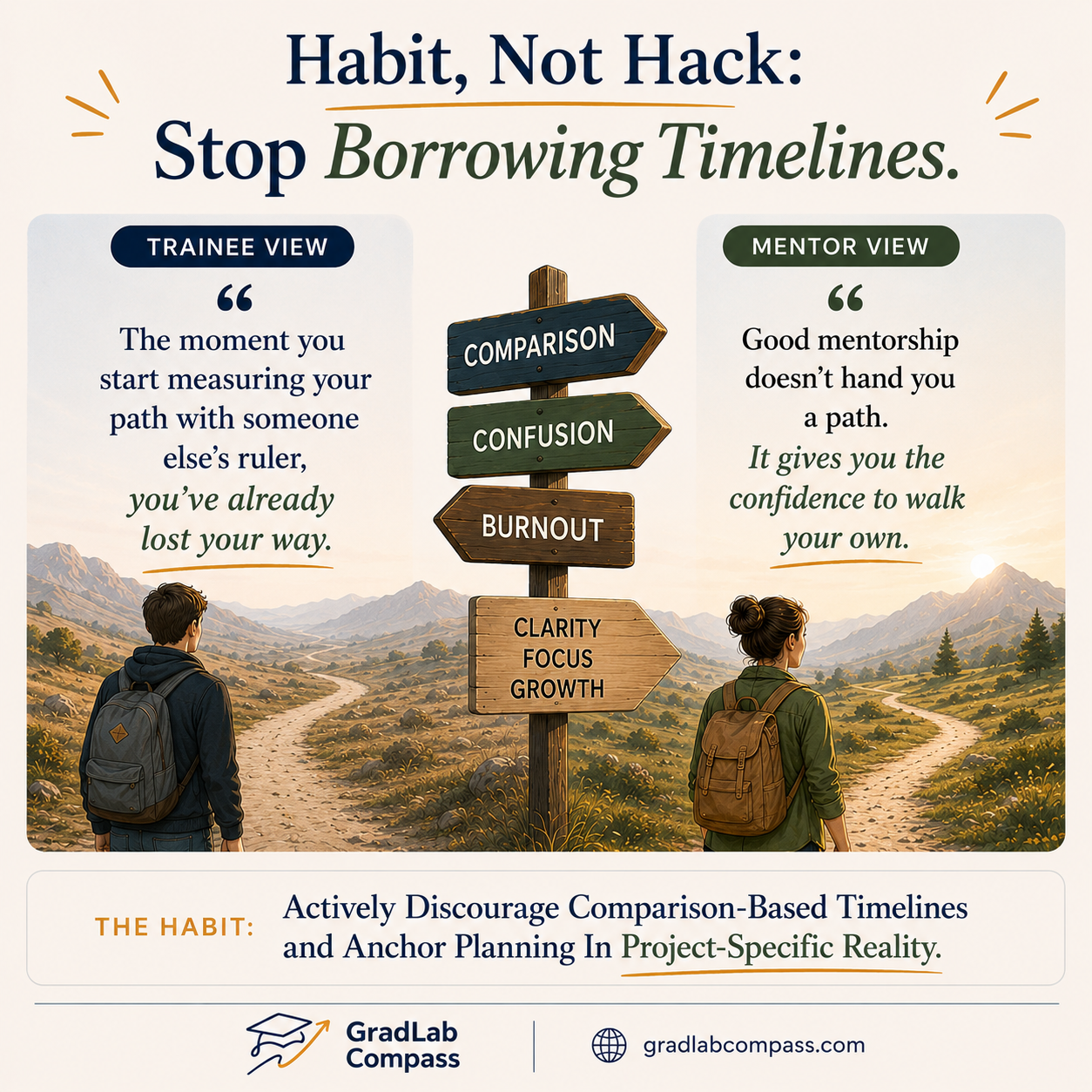
Habit, Not Hack: Stop Borrowing Timelines (Mentor)
Actively discourage comparison-based timelines and anchor planning in project-specific reality. No motivational speech fixes structural mismatch. This habit works because it removes invisible pressure and replaces it with shared accountability.
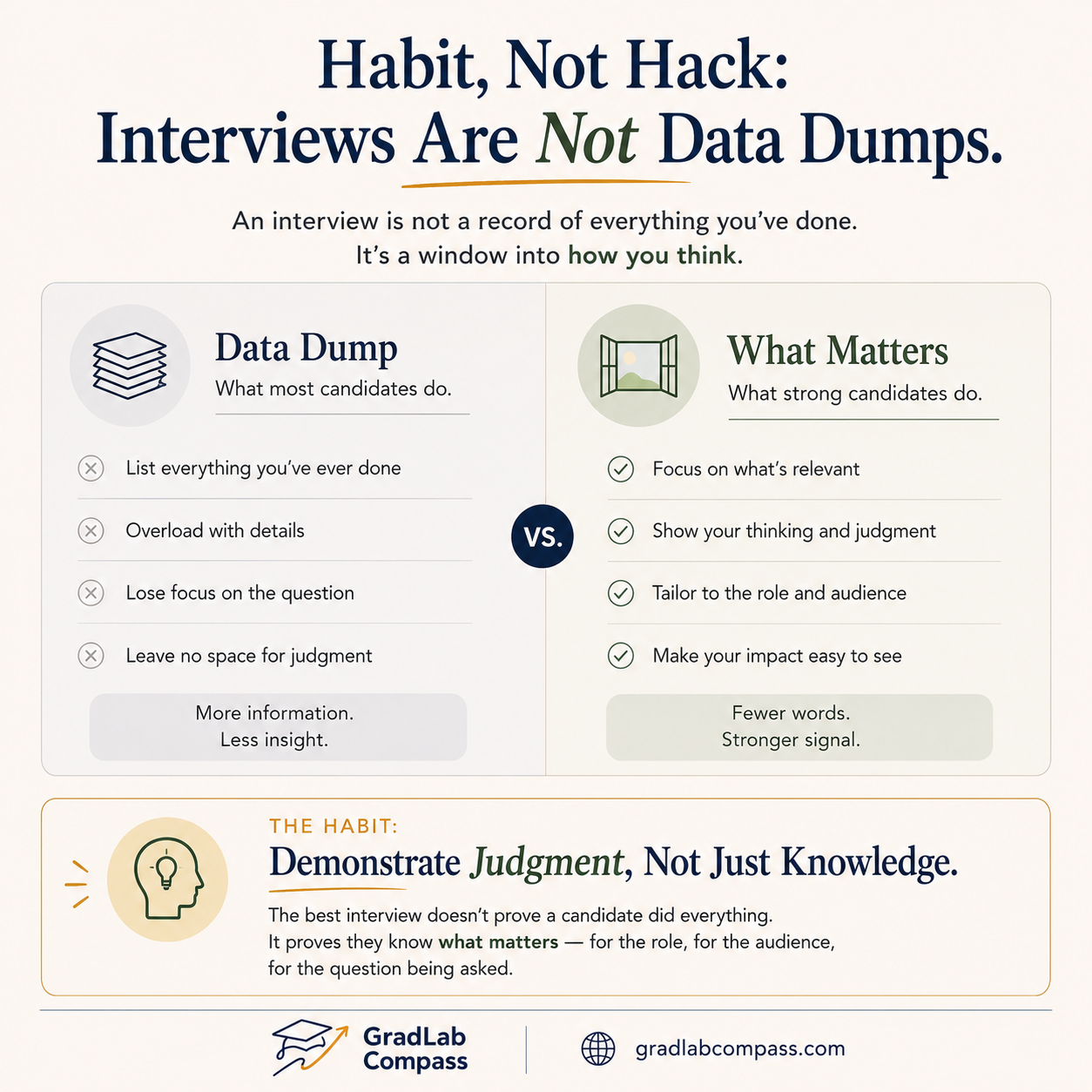
Habit, Not Hack: Interviews Are Not Data Dumps (Trainee)
An interview is not a record of everything you've done. It's a window into how you think. Most candidates never open it.
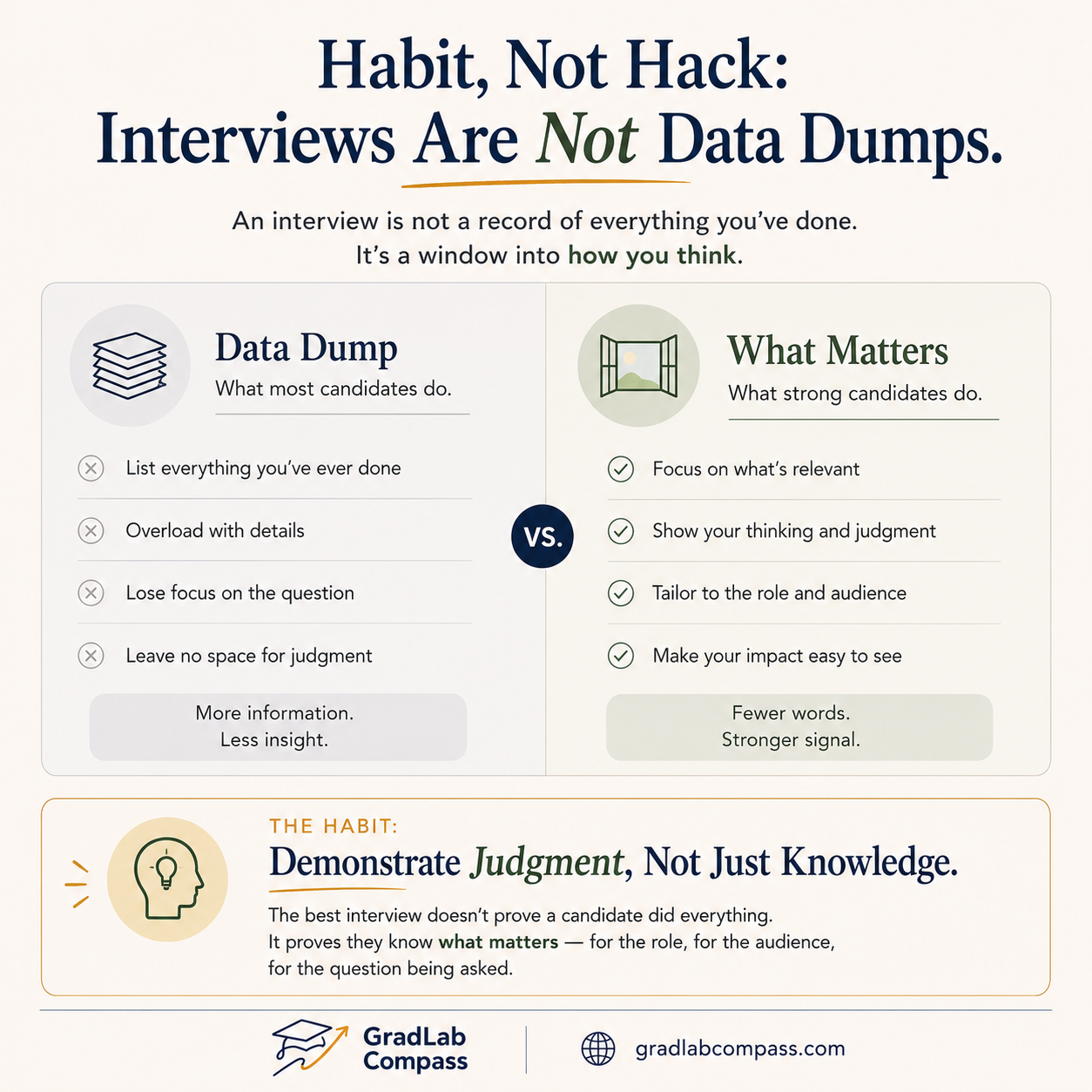
Habit, Not Hack: Interviews Are Not Data Dumps (Mentor)
Panels don't debrief about technical merit. They debrief about clarity, judgment, and fit. The best interview doesn't prove a candidate did everything. It proves they know what matters.
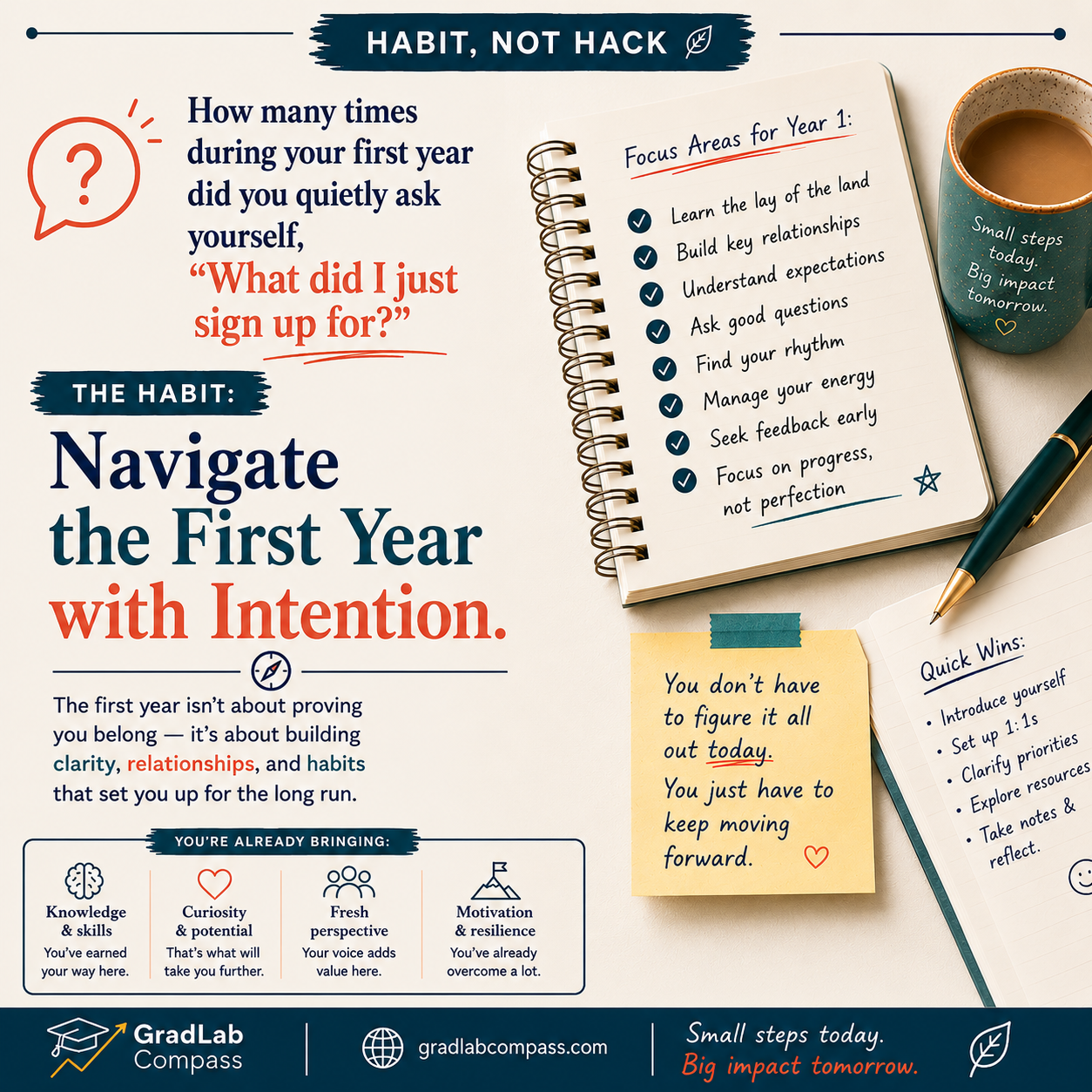
Habit, Not Hack: Navigating The First Year (Trainee)
You didn't arrive empty-handed. You arrived with four years of experience, real skills, and a record of figuring things out. The first year isn't where you prove you belong. It's where you learn what to do with what you already have.
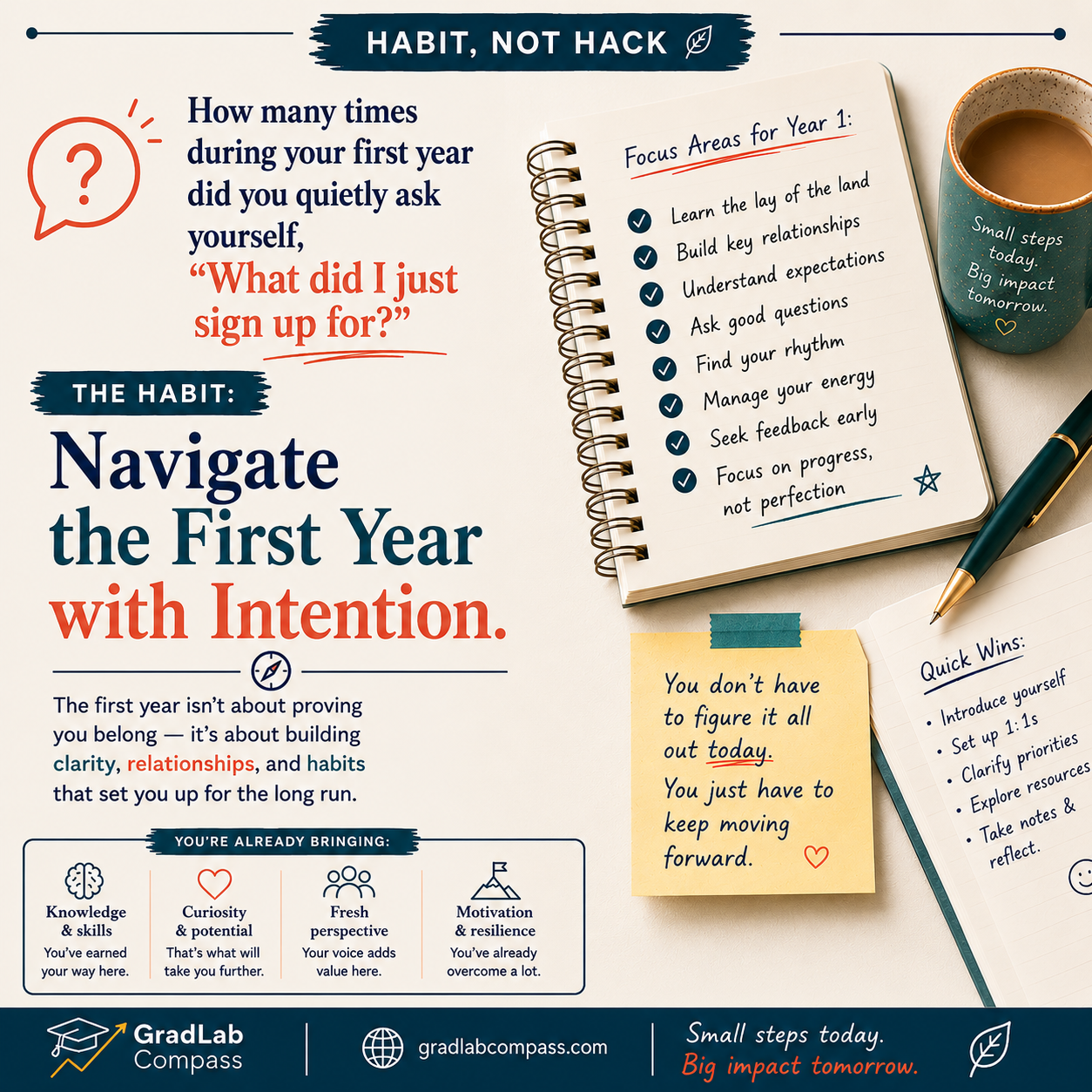
Habit, Not Hack: The First Year Looks Different From the Other Side of the Desk (Mentor)
The first year doesn't just test the graduate student. It tests whether the mentor knows the difference between the trainee in front of them and the version of themselves they remember.
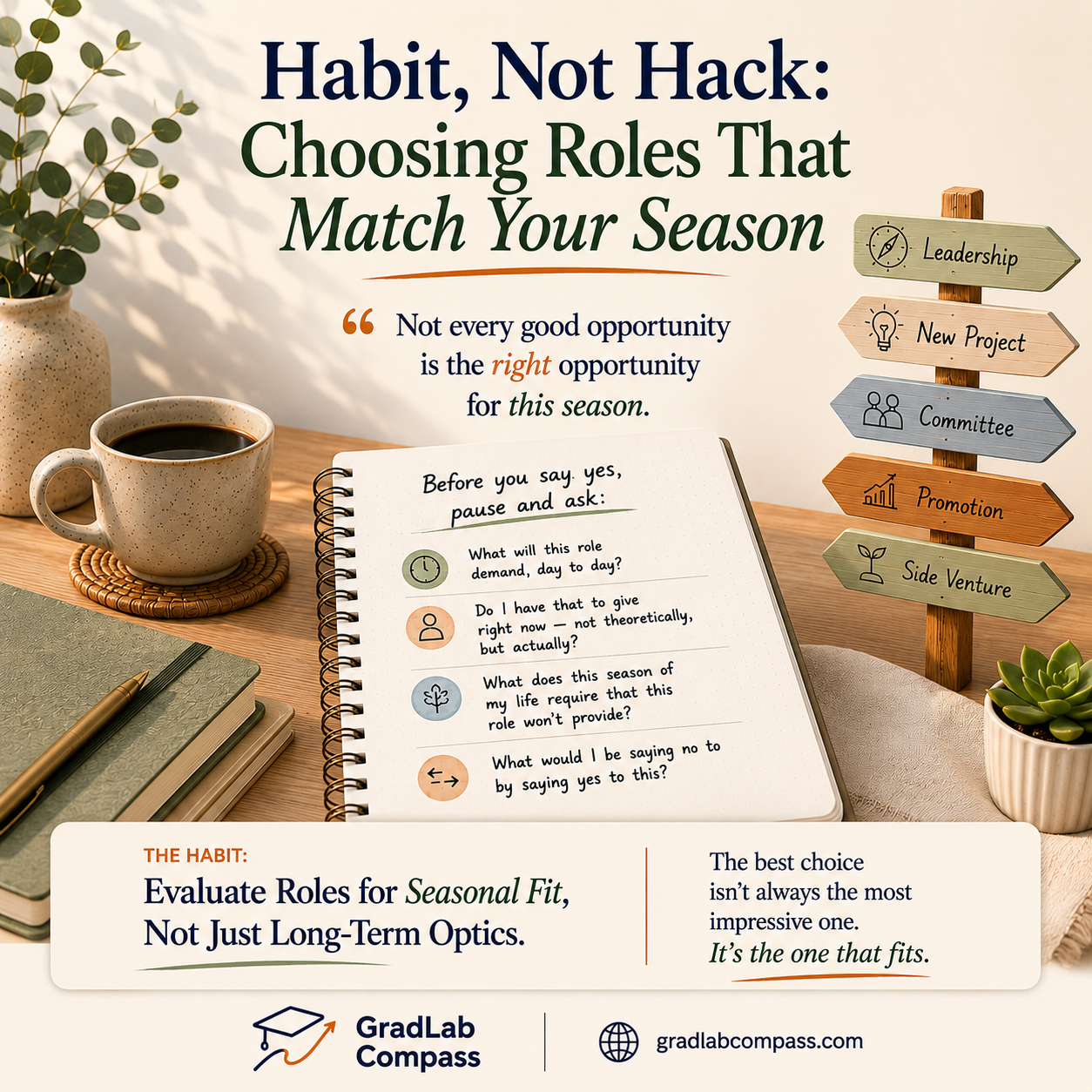
Habit, Not Hack : Choosing Roles That Match Your Season (Trainee)
The best career move isn't always the next one. Sometimes it's the right one. Researchers are trained to say yes — to opportunities, visibility, momentum. But no title compensates for misalignment, and a prestigious role at the wrong time doesn't accelerate your career. It drains the reserves you need for the next thing. The habit isn't waiting. It's reading — yourself, your capacity, your season — and choosing accordingly.

Habit, Not Hack: Time Tactics That Stick (Trainee)
If your perfect planner keeps falling apart by midweek, you’re not alone and you’re not failing. Grad school time management isn’t about flawless calendars or color-coded routines. It’s about building a flexible system that keeps moving when experiments fail, meetings shift, and life gets messy. This guide will help you ditch productivity guilt, build buffers, create realistic Plan Bs, and track momentum (not just tasks). Because the goal isn’t perfection, it’s resilience.
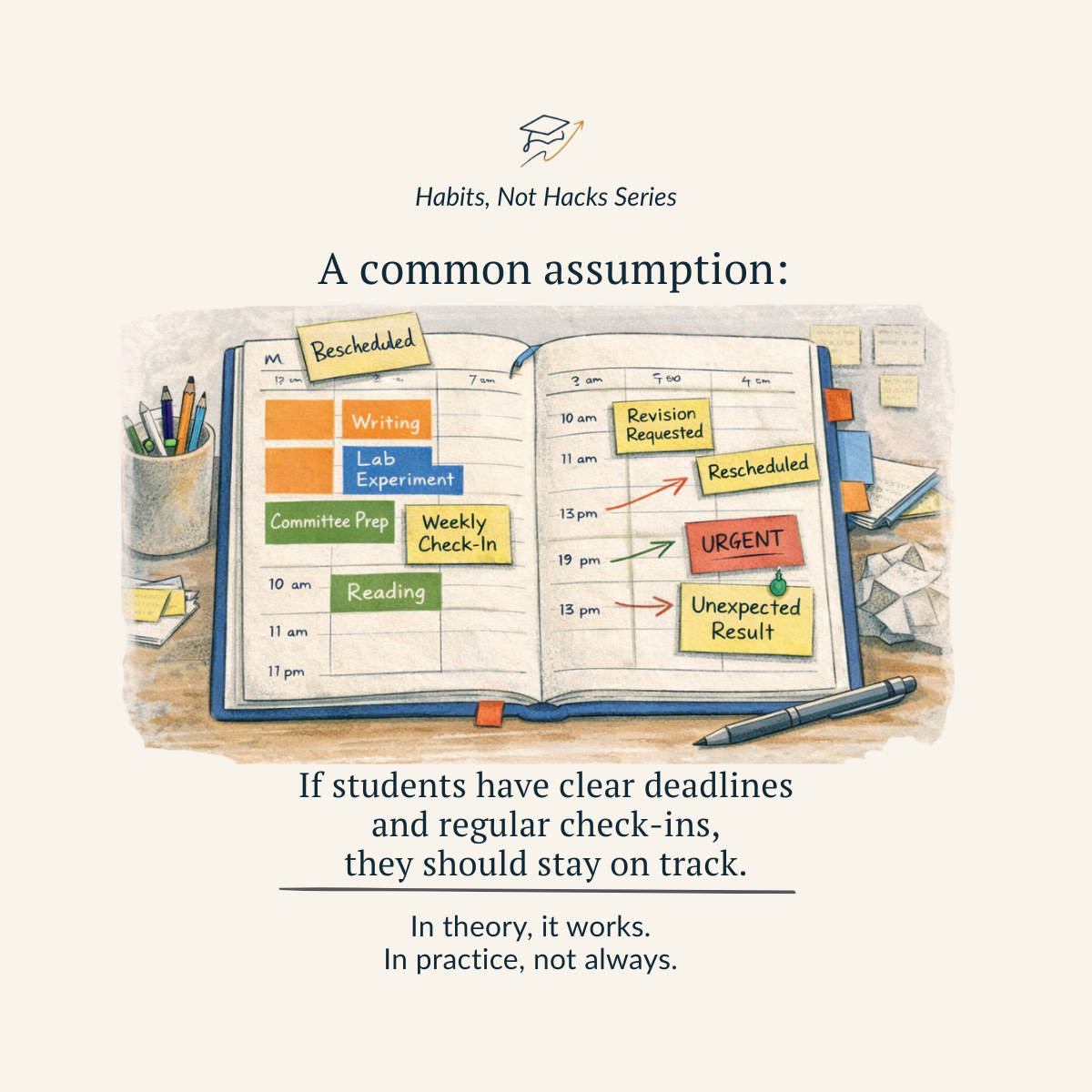
Habit, Not Hack: Time Tactics That Stick (Mentor)
Struggling with student deadlines, late experiments, or missed milestones? This post reframes time management in the lab not as a battle over schedules, but as a practice in building resilience systems. Learn how to coach adaptive planning, model real-world deadline handling, and shift your lab culture from reactive chaos to intentional, flexible execution.