
Habits, Not Hacks: Stories and Strategies for Grad School That Stick
Our goal is to infuse the grad school conversation with emotional intelligence, resilience, and sustainable success - exactly what many students crave but often struggle to articulate. This story-driven, reflective series tailored for the unique challenges of academic life. Through short essays, mini-memoirs, and hard-earned lessons, we spotlight small but meaningful habits that make academic life more livable and less overwhelming.
Each habit also comes with a companion PI/Supervisor Edition, because sustainable success in grad school isn’t a solo effort.
All names and scenarios are fictional or composite. Any resemblance to real people is coincidental. Stories are crafted to illustrate common experiences in research training.
Habit, Not Hack: Saying I Don’t Know Early (Trainee)
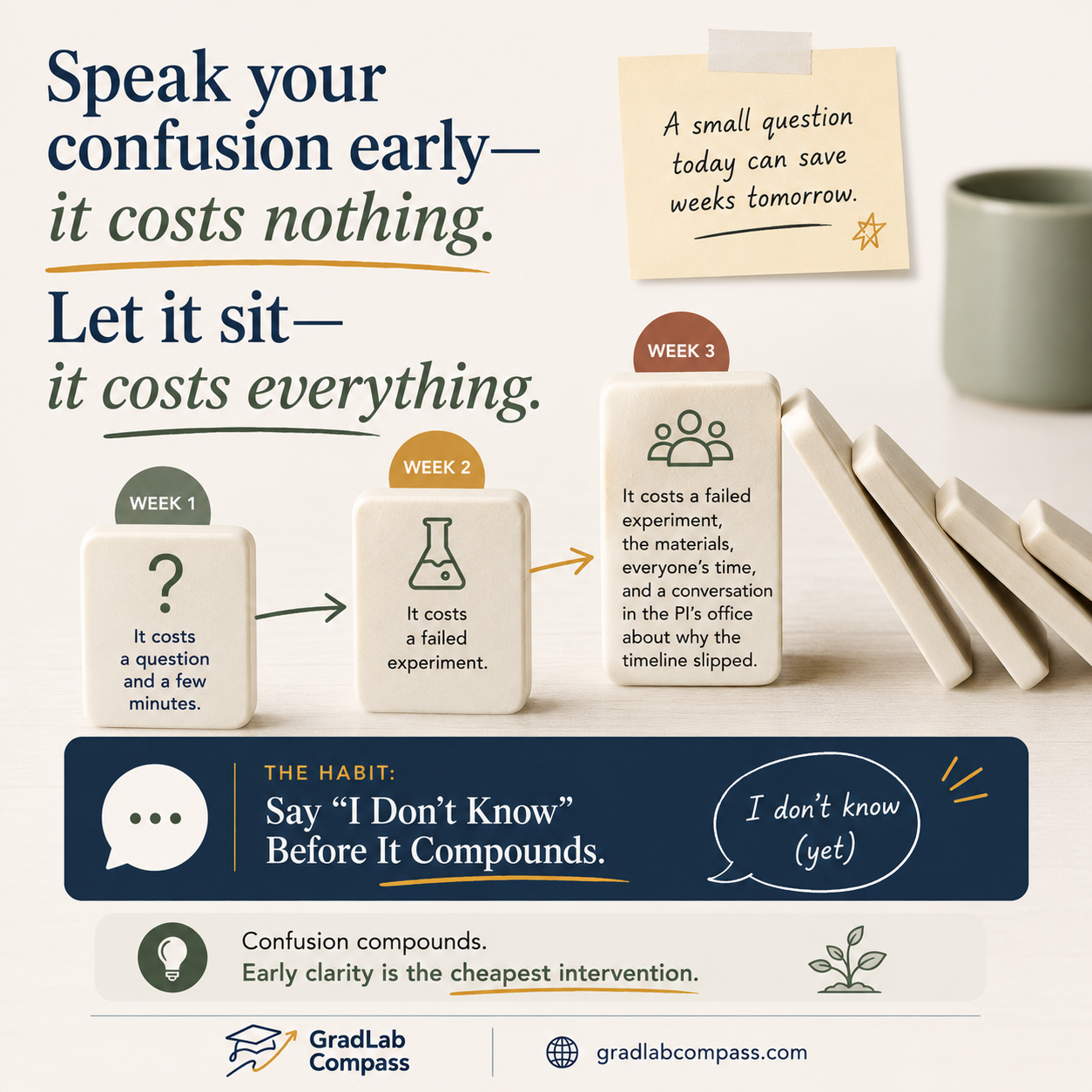
Researchers are trained to figure things out independently — and that instinct is mostly right. What it misses is the specific failure mode where independent effort has clearly stalled, confusion is not resolving, and silence has gone from "I'll work on this" to "I'm stuck and haven't said so." That gap compounds. The question that felt too costly in week one becomes the cheapest possible intervention in retrospect.
Habit, Not Hack: Saying I Don’t Know Early (Mentor)
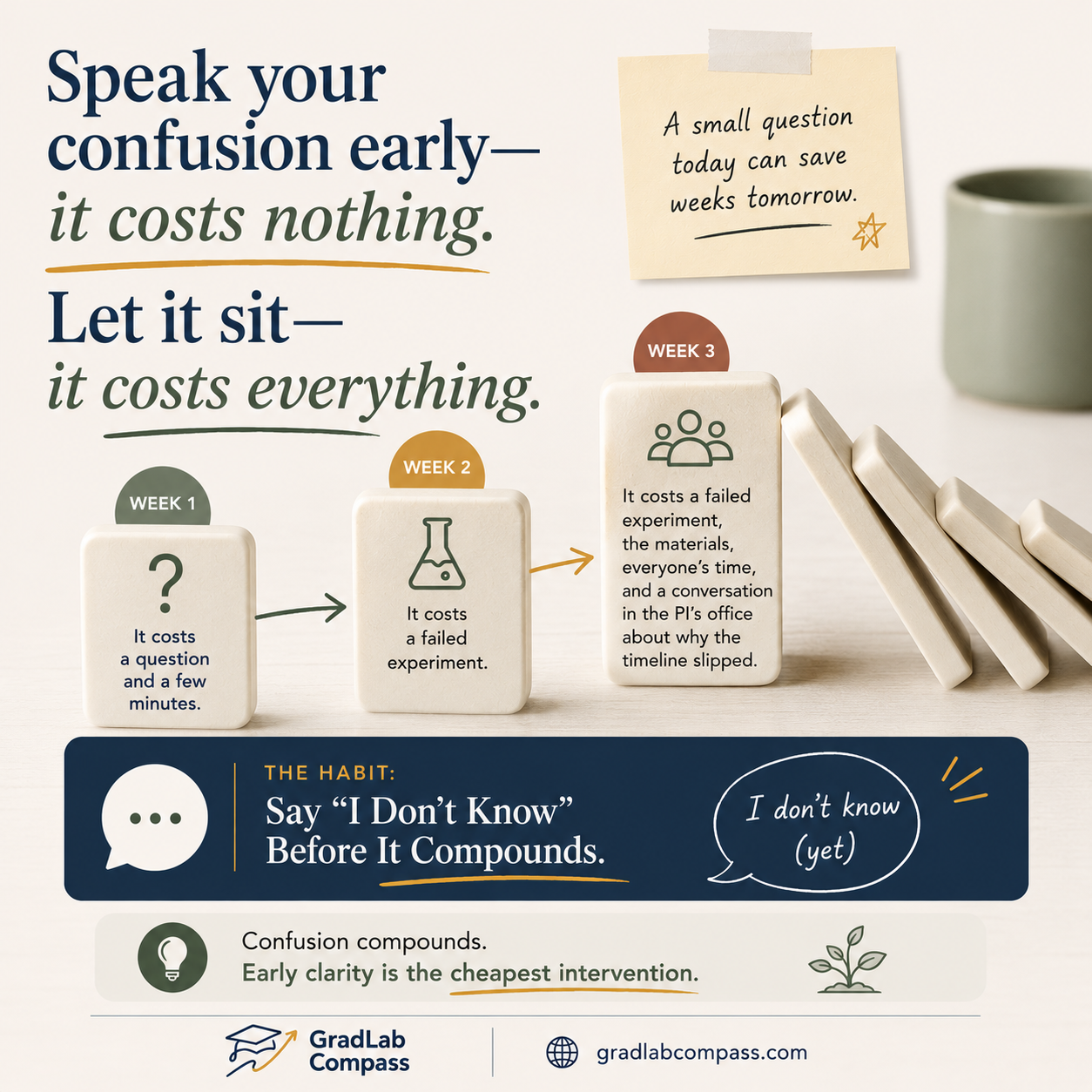
Most mentors read a quiet room as a clear one. It isn't. It's a room full of people who have assessed the cost of speaking up and decided silence was safer. That assessment was built by your language, your responses, and the culture you've created — one meeting at a time. Change the question. Change the calculation.
Habit, Not Hack: Saying No (Mentor)
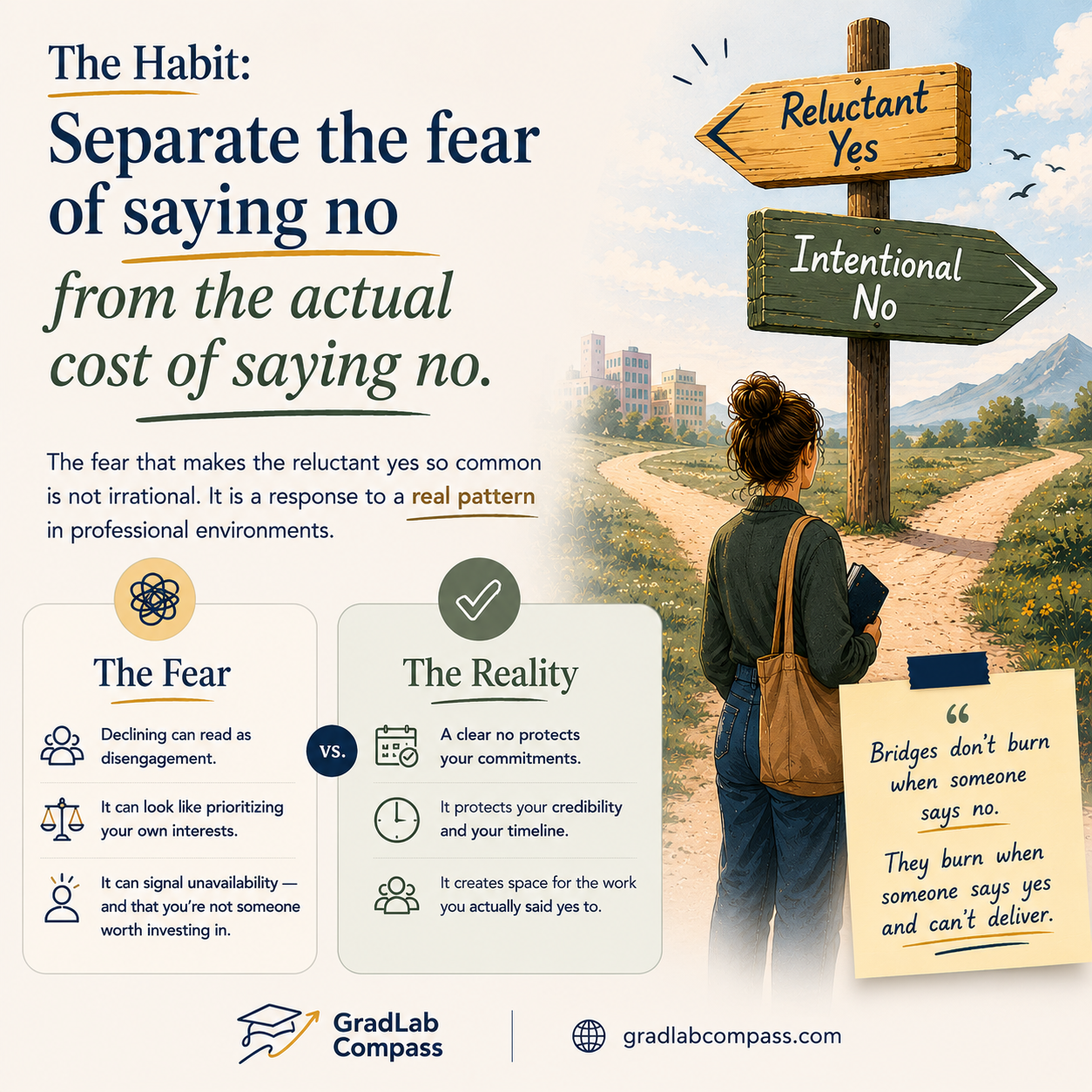
Bridges don't burn when someone says no. They burn when someone says yes and can't deliver. The most reliable trainees become the most overloaded ones — because reliability makes them the easiest to ask, and nobody taught them that no was a professional option. They say yes until something breaks. Then the reliability that made them valuable becomes the unreliability that damages trust. The lesson that would have prevented it was never in the curriculum. A clear no now is kinder than a weak yes later.
Habit, Not Hack: Navigating The First Year (Trainee)
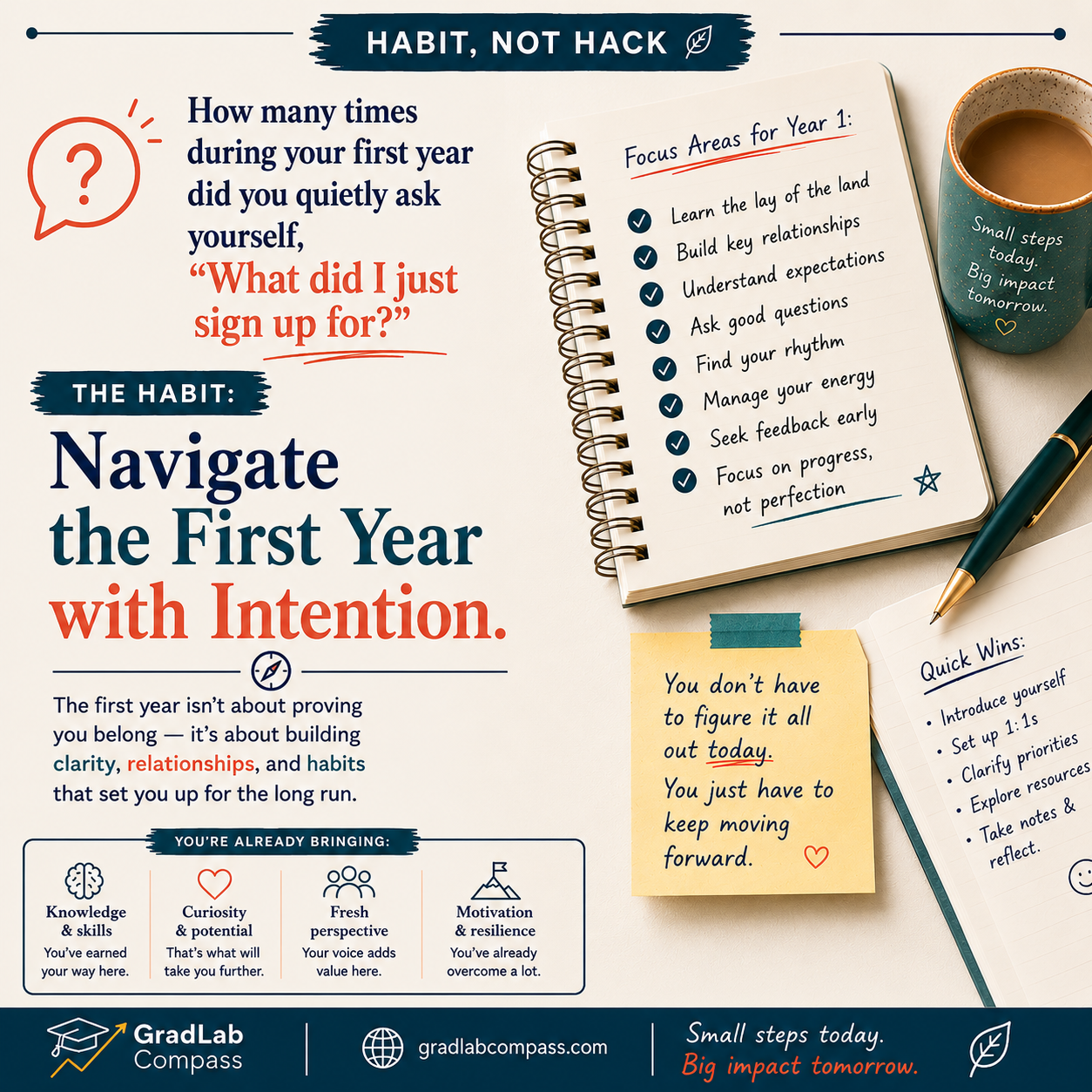
You didn't arrive empty-handed. You arrived with four years of experience, real skills, and a record of figuring things out. The first year isn't where you prove you belong. It's where you learn what to do with what you already have.
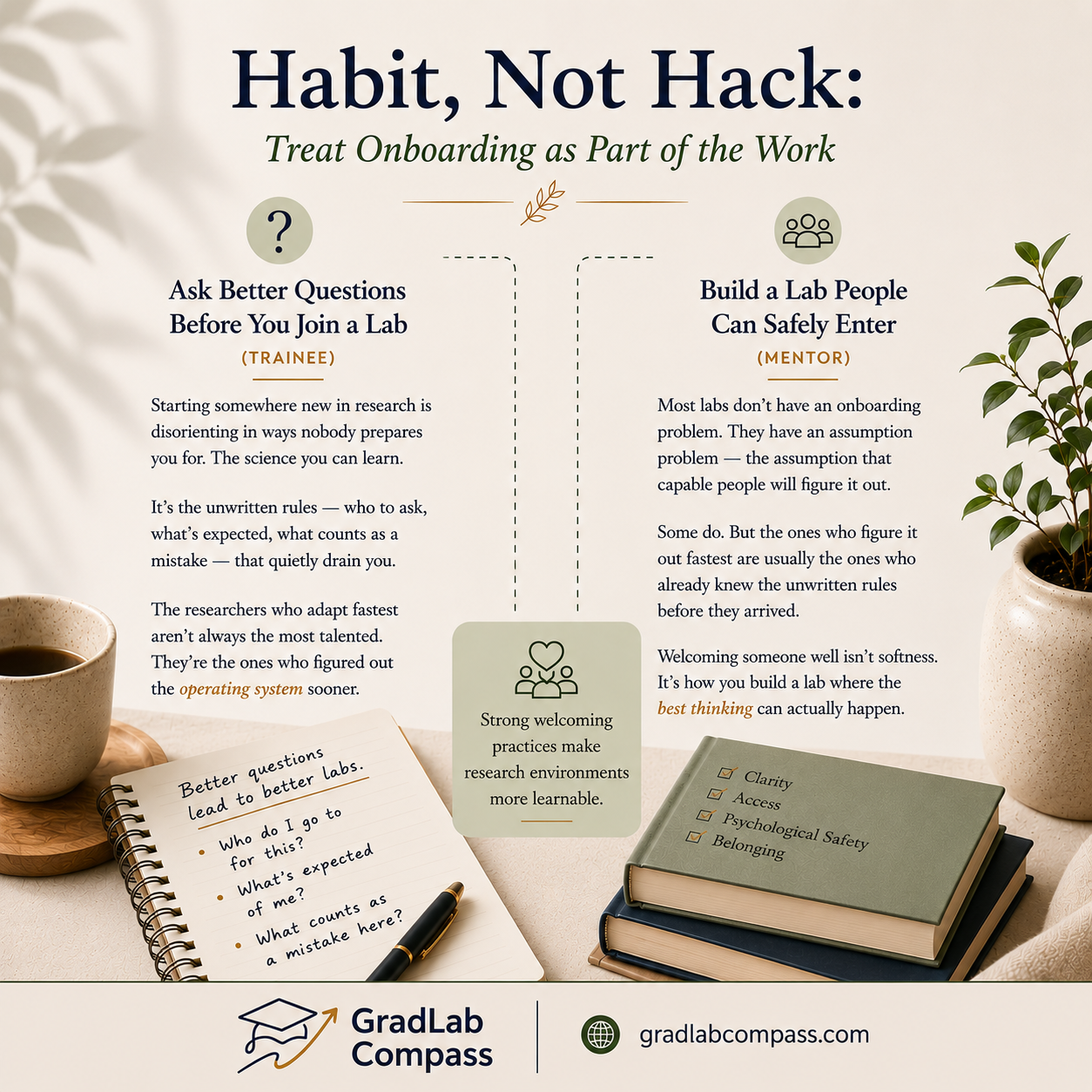
Habit, Not Hack: Build a Lab People Can Safely Enter (Mentor)
Most labs don't have an onboarding problem. They have an assumption problem — the assumption that capable people will figure it out. Some do. But the ones who figure it out fastest are usually the ones who already knew the unwritten rules before they arrived. Welcoming someone well isn't softness. It's how you build a lab where the best thinking can actually happen.
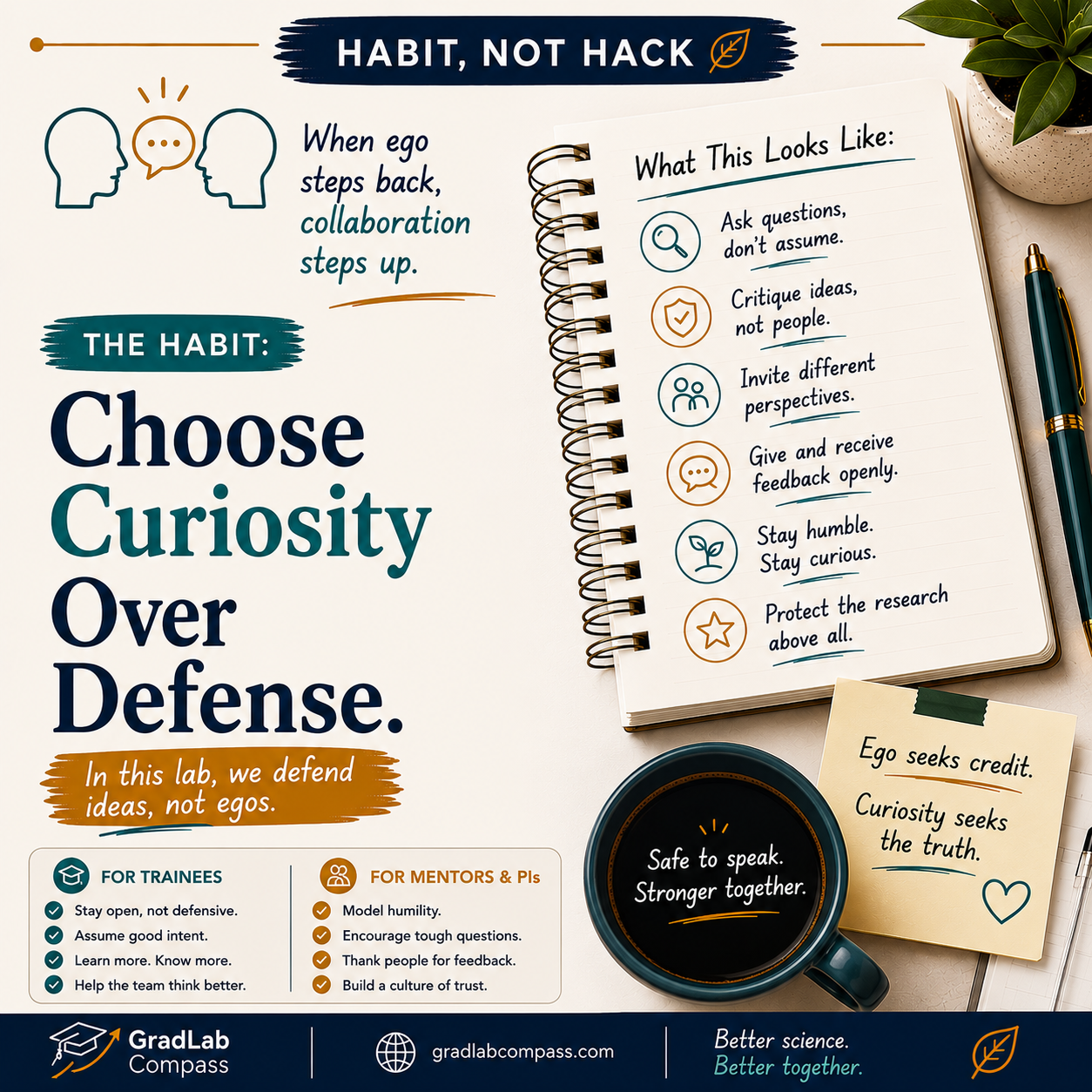
Habit, Not Hack: Park the Ego, Protect the Research (Trainee)
In research spaces, unchecked ego can silence curiosity and stall collaboration. This post explores how one lab shifted from defensiveness to open dialogue by normalizing humility, modeling healthy feedback, and prioritizing psychological safety.
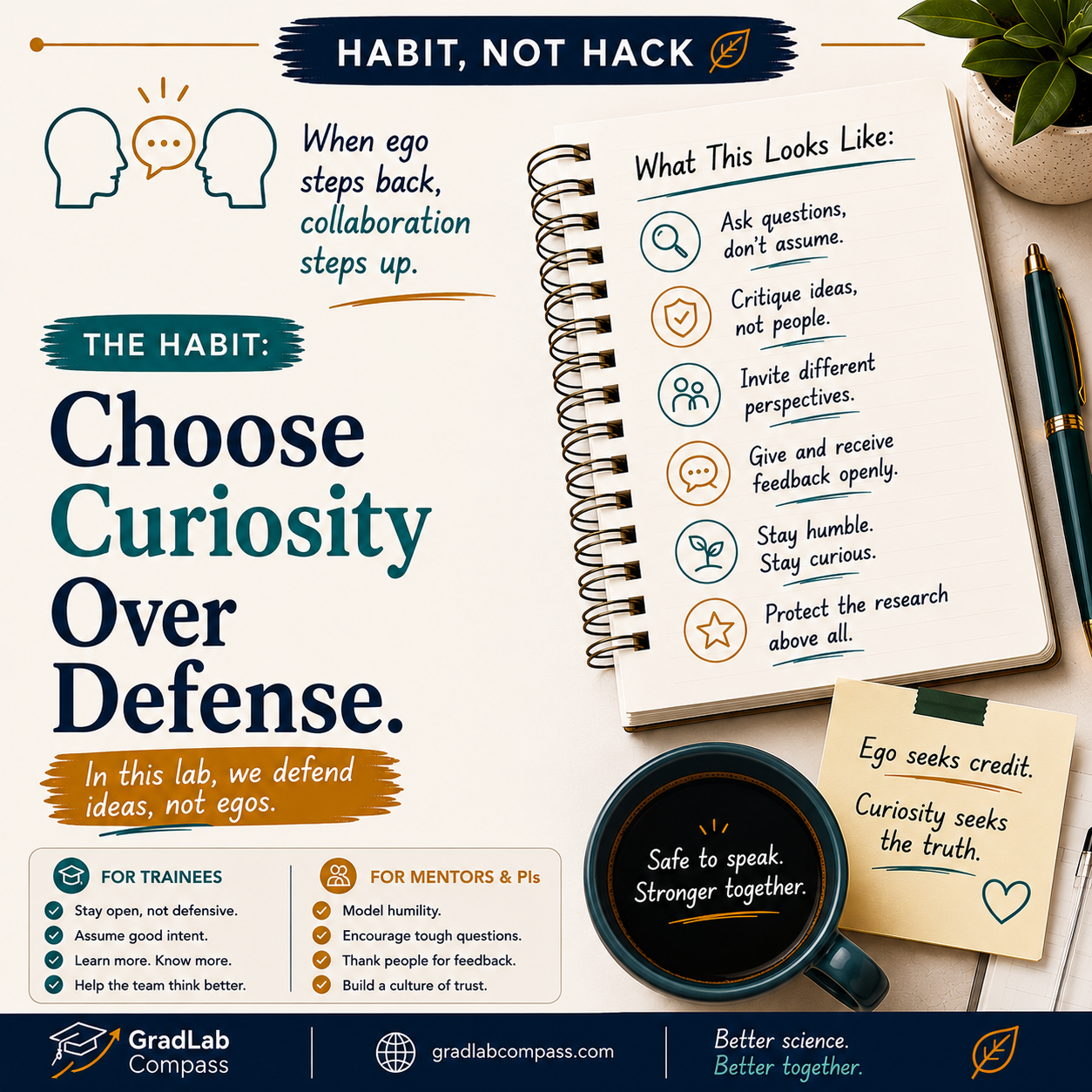
Habit, Not Hack: Park the Ego, Protect the Research (Mentor)
Learn how to build a research environment where inquiry is protected, feedback is welcomed, and silence isn’t mistaken for respect.
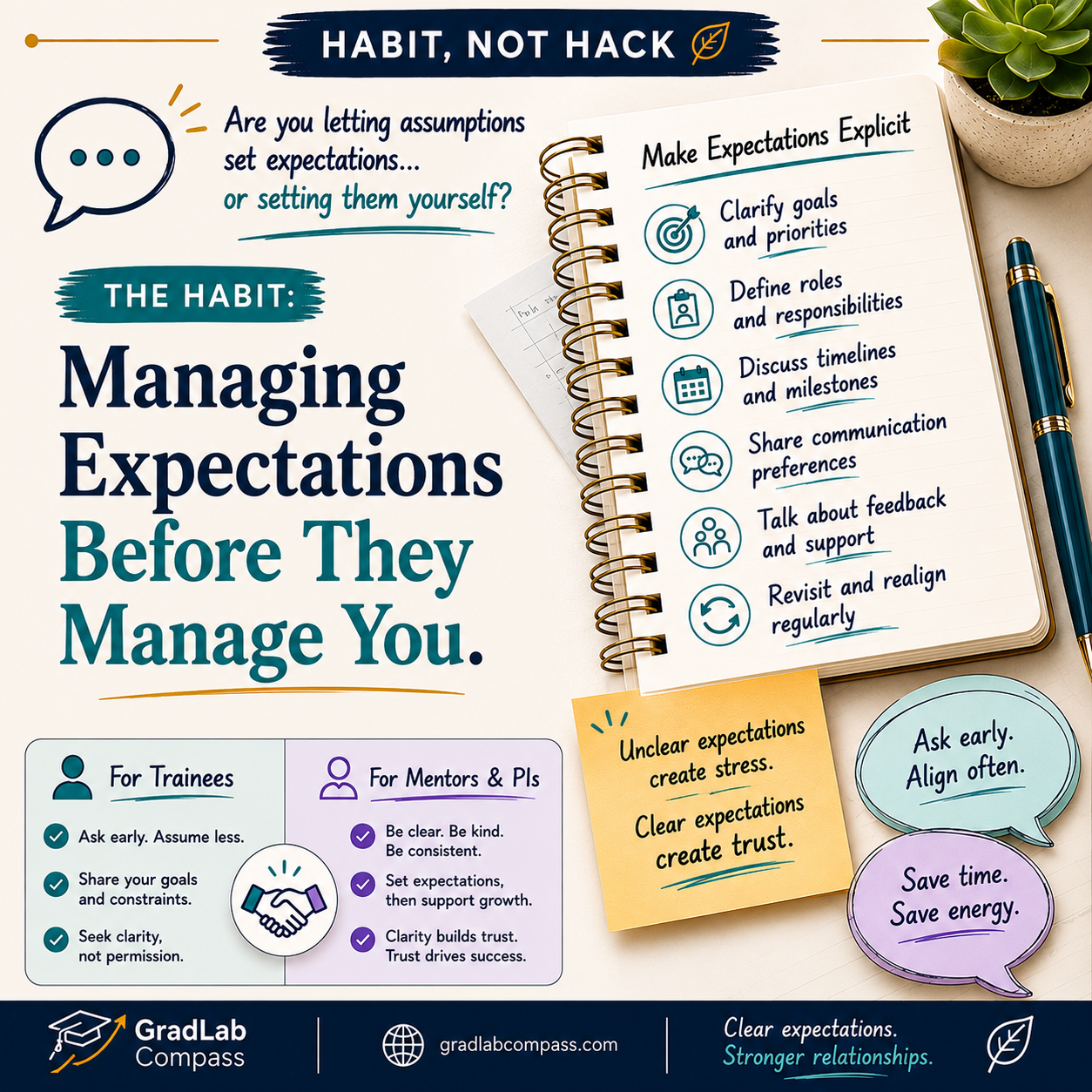
Habit, Not Hack: Managing Expectations Before They Manage You (Trainee)
Learn how managing expectations can transform your grad school experience. It can reduce miscommunication, ease anxiety, and build stronger mentoring relationships.
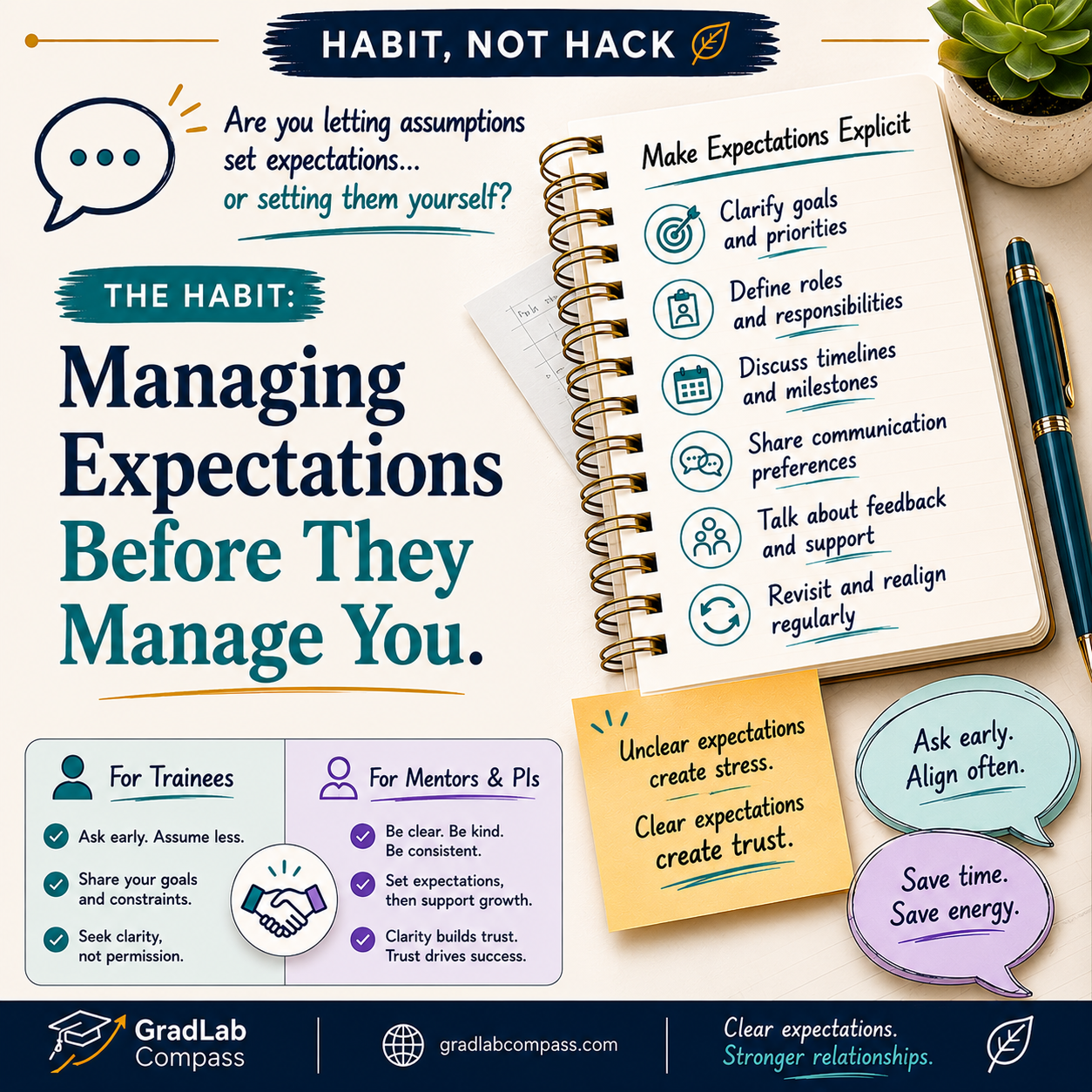
Habit, Not Hack: Managing Expectations Before They Manage You (Mentor)
Learn how making expectations explicit can strengthen your mentorship from the start. This post offers practical insights for advisors and PIs on building trust, reducing confusion, and creating psychologically safe research environments.